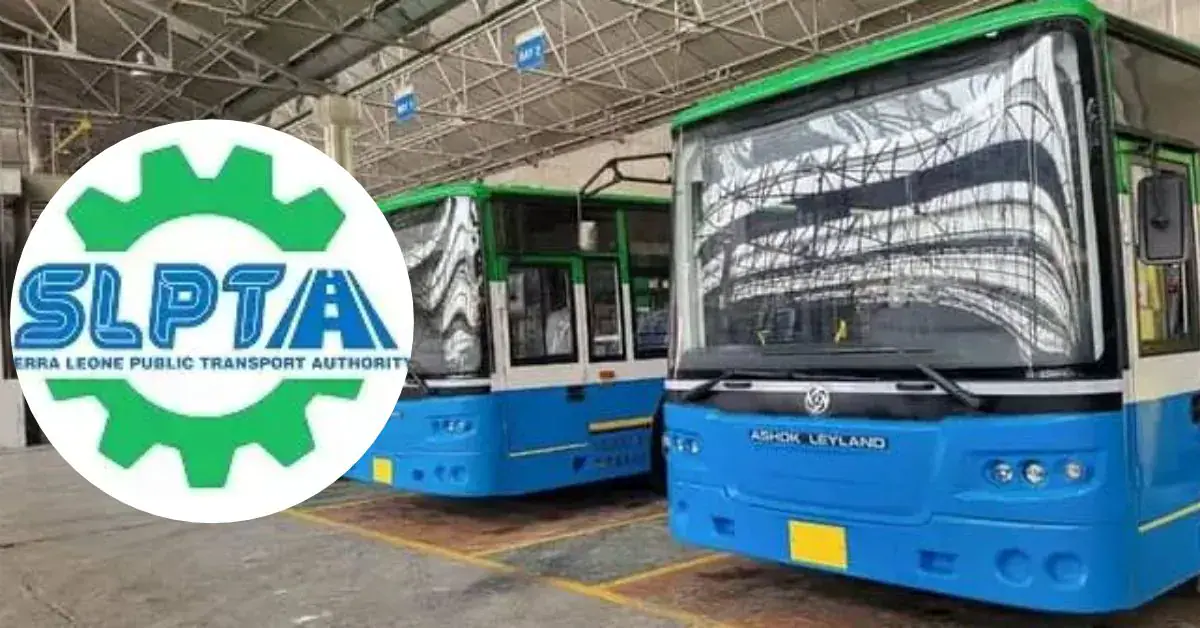
The Sierra Leone Public Transport Authority (SLPTA) has defended the procurement and operation of its Waka Fine bus service, responding to allegations of irregularities raised by civil society activist Edmond Abu. Deputy Director-General of the SLPTA, Christian N. Ngombu Esq., addressed the claims point by point, stating that the procurement process adhered to strict International Competitive Bidding (ICB) rules. The SLPTA's rebuttal comes after Abu, Executive Director of the Native Consortium and Research Centre (NCRC), raised concerns over the deal.
According to Ngombu, the ICB allowed authorised agents and suppliers to participate, provided they met technical and financial requirements. The procurement was advertised in August 2021, resulting in nine bids. The evaluation was completed in January 2022, and the contract was officially signed in July 2022. Ngombu explained that the bidding process was not restricted solely to vehicle manufacturers, allowing for a broader range of participants.
To counter claims that the buses were not brand new, Ngombu outlined a rigorous inspection process. A pre-manufacturing inspection of the prototype was conducted at the Alwar factory in India in March 2023. A second inspection followed in September 2023, involving representatives from the Ministry of Transport, the Public Financial Management Unit, and the Sierra Leone Road Safety Authority. This ensured that the buses met the required standards.
The SLPTA also addressed the controversy regarding a “2016” marking seen on the buses’ windshields. Ngombu clarified that the number represents the international glass safety and quality standard, not the year of manufacture. The buses arrived in Sierra Leone in November 2023, were formally accepted in December 2023, and operations began in February 2024. This timeline contradicts allegations of irregularities in the procurement process.
The SLPTA refuted allegations that 11 buses are currently grounded. Ngombu confirmed that 42 buses are available, with 36 deployed for daily operations and six on standby for emergencies and driver training. However, he acknowledged that the service faces significant hurdles, including traffic congestion caused by the return of commercial motorbikes and street trading.
Ngombu explained that the original fare collection contract, which operated on a cost-recovery basis, was terminated as it was deemed unsustainable. The current ticketing provider initially received a 15 percent commission, which has since been reduced to 10 percent and could drop to as low as three percent depending on revenue generation. The SLPTA plans to integrate the ticketing platform with mobile money services to increase efficiency.
The Ministry of Transport has requested an operational audit of the Metro Transport Company (MTC), the company contracted to operate the buses. The Audit Service has responded to this request. Ngombu welcomed civil society monitoring but urged activists to conduct thorough fact-finding with relevant institutions before making public assertions. The Waka Fine initiative is still in its early stages, and the SLPTA is working to address the challenges it faces.
Key points
- The SLPTA's procurement process for the Waka Fine bus service adhered to International Competitive Bidding rules.
- The buses were inspected at the manufacturer's factory in India and upon arrival in Sierra Leone.
- The SLPTA faces challenges including traffic congestion and rising fuel prices, which account for over 50 percent of operating costs.
Reporting sources
- SLPTA Defends Waka Fine Bus Deal, Rejects Corruption Allegations · sierraloaded.sl