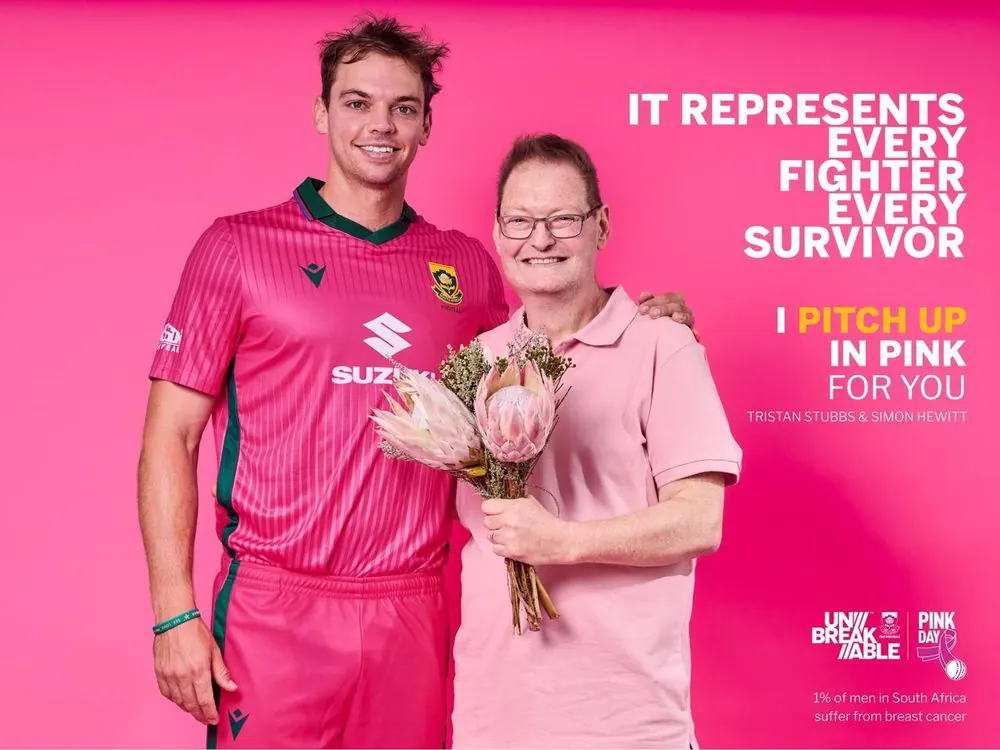
Simon Hewitt, a breast cancer survivor who refers to himself as "the pink unicorn," delivered a powerful message at the Pink ODI between South Africa and Australia, emphasizing that men are also susceptible to breast cancer. Hewitt, who has been an advocate for breast cancer awareness, took to the field to urge men to listen to their bodies and catch the disease early. The Pink ODI, held at the Wanderers Stadium in Johannesburg, aimed to raise vital awareness and funds for breast cancer.
Hewitt's personal story is a testament to the importance of early detection. Diagnosed in May 2024 with Her2-positive, oestrogen-positive breast cancer, one of the most aggressive forms of the disease, Hewitt was already at stage 4. After undergoing six intensive rounds of chemotherapy and 10 targeted sessions of radiation, he received the all-clear in April 2025. However, in January, his medication began to lose efficacy, forcing him to seek alternative treatment.
Hewitt's message to the public is clear: if something feels off, pay attention to it. He emphasizes that the body is an incredible communicator and that men need to be aware of what their bodies are telling them. Hewitt's earliest symptom was persistent fatigue, and he urges men not to ignore subtle warning signs. The "golf ball" lump near his clavicle was a major sign that he initially overlooked.
The Pink ODI saw each Proteas player wear the name of a cancer survivor on their shirt, with Tristan Stubbs donning Simon's name. The event aimed to raise awareness for breast cancer, a disease that affects approximately one percent of men in South Africa. Hewitt believes that events like the Pink ODI help raise awareness and encourage men to listen to their bodies.
Hewitt's advice to everyone is simple: if something feels off, pay attention to it and don't ignore it. He urges men to go to the doctor and have a conversation about their symptoms. Hewitt's experience has taught him that early detection can save lives, and he hopes that his story will inspire others to take action.
The Pink ODI was a huge success, with Cricket South Africa raising vital funds and awareness for breast cancer. The event was marked by impressive centuries from Temba Bavuma and David Miller, who scored a career-best 142 in an emotional performance honouring his mother's battle with breast cancer.
Hewitt's story serves as a reminder that breast cancer does not discriminate, and men need to be just as aware of their bodies as women. His message is clear: if something feels off, pay attention to it, and don't be afraid to seek medical attention. By sharing his story, Hewitt hopes to inspire others to take action and prioritize their health.
Key points
- Men are susceptible to breast cancer and need to be aware of their bodies.
- Early detection can save lives.
- Breast cancer does not discriminate and can affect anyone.