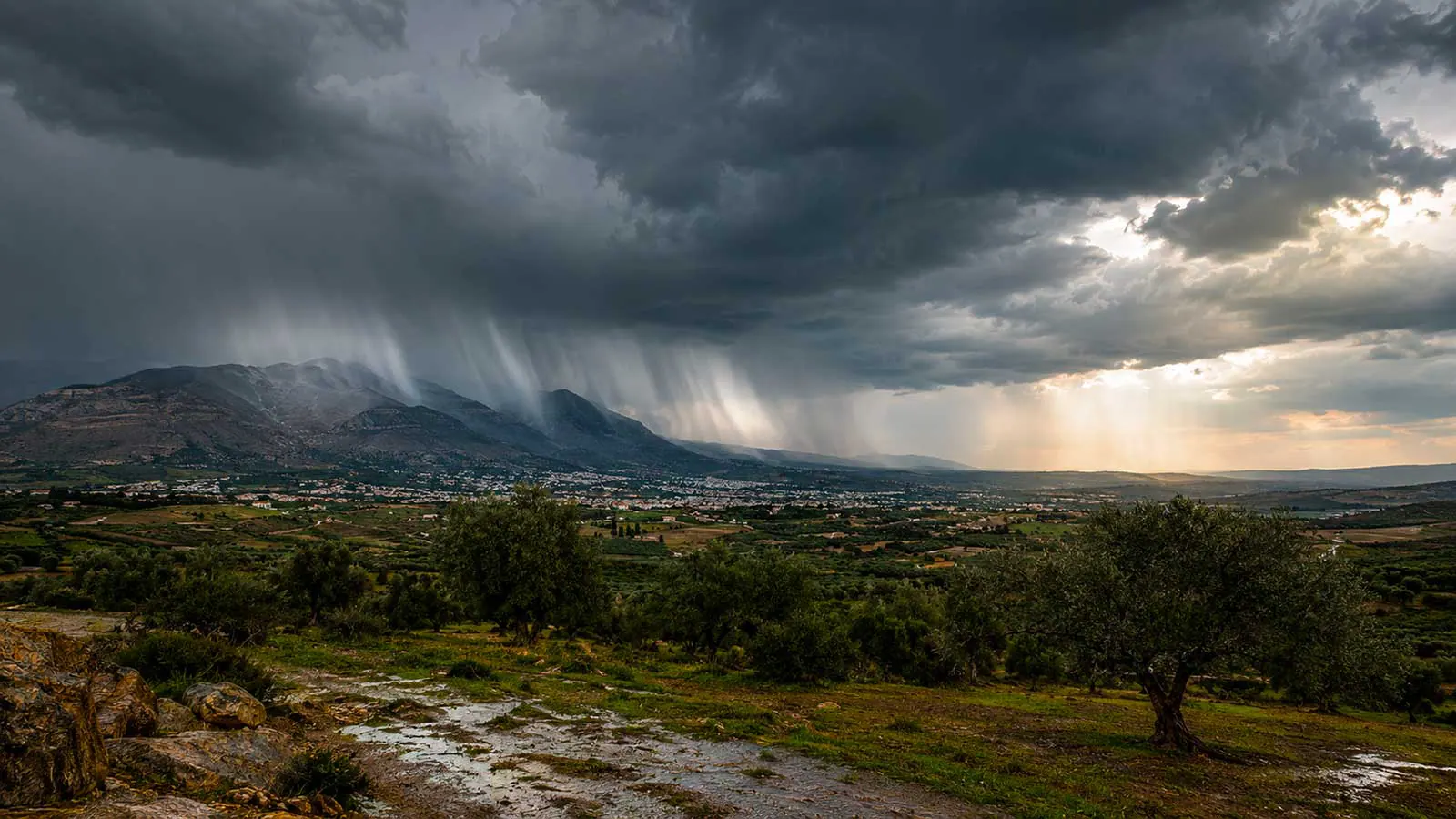
Over the past 24 hours, from Saturday at 7:00 AM to Sunday at 7:00 AM, various regions of Tunisia received substantial rainfall. According to data from the National Institute of Meteorology (INM), Sejnane in the Bizerte governorate recorded the highest amount of rainfall, with a total of 21 millimeters. Other areas in Bizerte also experienced significant precipitation, including Joumine with 16 mm, Ghazala with 11 mm, and Mateur with 5 mm.
The rainfall was not limited to the Bizerte governorate, as other parts of the country also received considerable amounts of rain. In Jendouba, Tabarka recorded 16 mm, while Aïn Draham received 12 mm. Béni M'Tir and the Bou Heurtma dam each recorded 4 mm and 3 mm respectively. Additionally, El Feija, Fernana, and the Barbara dam each received 2 mm or 1 mm of rainfall. These widespread precipitations indicate a significant weather event across northern Tunisia.
The Béja governorate also experienced notable rainfall, with Nefza recording 14 mm, Amdoun 4 mm, and the Kasseb dam 3 mm. Téboursouk and the Béja station received 2 mm and 1 mm respectively. In the Manouba governorate, Jedeida recorded 9 mm, Tébourba 6 mm, and Borj El Amri, La Manouba, Mornaguia, and El Battan each received between 3 mm to 4 mm of rain. This data suggests that the rainfall was widespread and affected multiple regions.
In the Tunis governorate, Charguia and La Goulette each recorded 4 mm of rainfall, while Tunis-Carthage, Tunis-Manouba, and Sidi Bou Saïd received 1 mm. The Ben Arous governorate saw Boumhel with 10 mm, Radès with 6 mm, and El Khalidia with 5 mm. Mégrine, Ben Arous, Hammam Lif, and Mhamdia each received between 3 mm to 4 mm. Fouchana and Mornag recorded 2 mm each, indicating that the southern suburbs of Tunis also experienced considerable rainfall.
Further south, the Ariana governorate recorded 2 mm in Chorfesh and 1 mm in Ariana. In Nabeul, Azmour received 6 mm, Dar Allouch 3 mm, and Kélibia 1 mm. The Kasserine governorate saw 2 mm of rainfall in Sbiba. These amounts, although varying, contribute to a broader picture of significant rainfall across much of northern and central Tunisia.
The distribution of rainfall across various governorates highlights the extensive nature of this weather event. From the northern regions of Bizerte and Jendouba to the central areas around Tunis and Ben Arous, and extending into the southern parts of Nabeul and Kasserine, the impact of this rainfall is widespread.
The rainfall amounts recorded over the 24-hour period indicate a considerable weather event that warrants attention, especially for regions that are prone to flooding or where agricultural activities are prevalent.
Key points
- Sejnane in Bizerte governorate recorded the highest rainfall at 21 mm.
- Multiple regions across Tunisia received significant rainfall, indicating a widespread weather event.
- The rainfall affected various sectors, potentially impacting agriculture and urban areas.