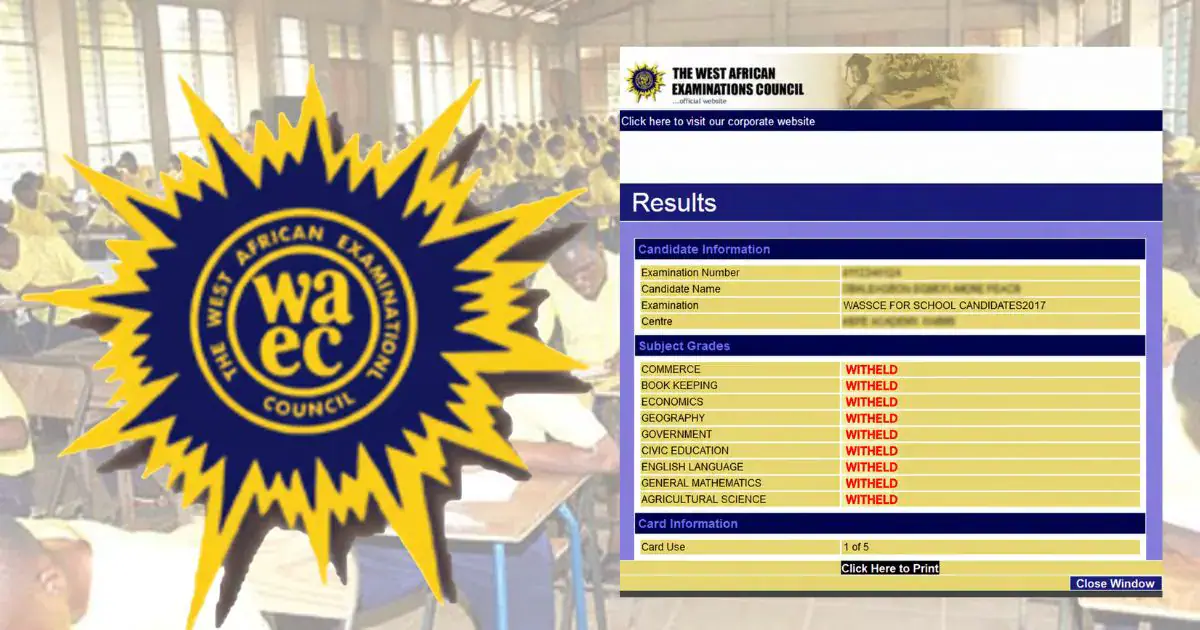
The persistent poor performance of Sierra Leonean candidates in English Language in the West African Examinations Council (WAEC) examinations has sparked a national conversation. Many attribute the issue to the examination body, but experts argue that the problem lies deeper. Samuel Alpha Conteh, an experienced English Language teacher, has spent 18 years teaching in various educational institutions. He believes that the root of the problem lies in the teaching and learning of English Language in schools.
Conteh's teaching career began in Kaduna State, Nigeria, where he taught in several private schools after graduating from Gidan Waya College of Education. He continued his teaching career in Sierra Leone in 2010, working at the Technical Secondary School, Congo Cross, Freetown, and later at Loma Secondary School in Kabala. He also taught at the College of Management and Administration (COMA) as a lecturer in Communication Skills. Conteh's extensive experience has given him insight into the challenges associated with teaching and learning English Language in Sierra Leone.
According to Conteh, one of the major problems in the education system is the failure to establish a solid foundation in English Language at the early grade level. Many schools do not provide sufficient attention to teaching young learners the English alphabet, letter recognition, phonics, and correct sounds of letters. As a result, children progress through grades without mastering basic reading, writing, and pronunciation skills. This struggle continues into upper primary and secondary school, making it difficult for students to perform well in English Language examinations.
Another contributing factor is the shortage of qualified and properly trained English Language teachers, particularly in public schools. The government needs to focus on recruiting, training, and developing English Language teachers. Some schools operate with insufficient numbers of trained English teachers, while others rely on teachers without the necessary professional preparation. English Language requires specialized teaching, and without adequately trained teachers, the quality of instruction suffers.
The inadequate teaching of Oral English in many secondary schools is also a significant concern. Students often approach Oral English examinations with little preparation, having not received sufficient training in pronunciation, stress, intonation, and other aspects of spoken English. This places them at a disadvantage when encountering Oral English questions in examinations. Oral English should be an integral part of everyday English Language teaching, not an optional aspect.
Additionally, some students lack interest in studying English Language, believing that it is widely spoken in schools and everyday communication, and therefore, does not require serious study. This misconception can lead to poor performance in English Language examinations. English Language requires consistent effort and attention, and students who neglect it often struggle with its complexities.
To address the issue, experts recommend that the government and educators focus on improving teacher training, developing effective teaching methods, and promoting a culture of interest in English Language among students. By addressing these challenges, Sierra Leonean students can improve their performance in English Language and achieve better results in WASSCE examinations.
Key points
- Weak foundation in early grade literacy, shortage of qualified English Language teachers, and inadequate teaching of Oral English are major factors contributing to poor performance.