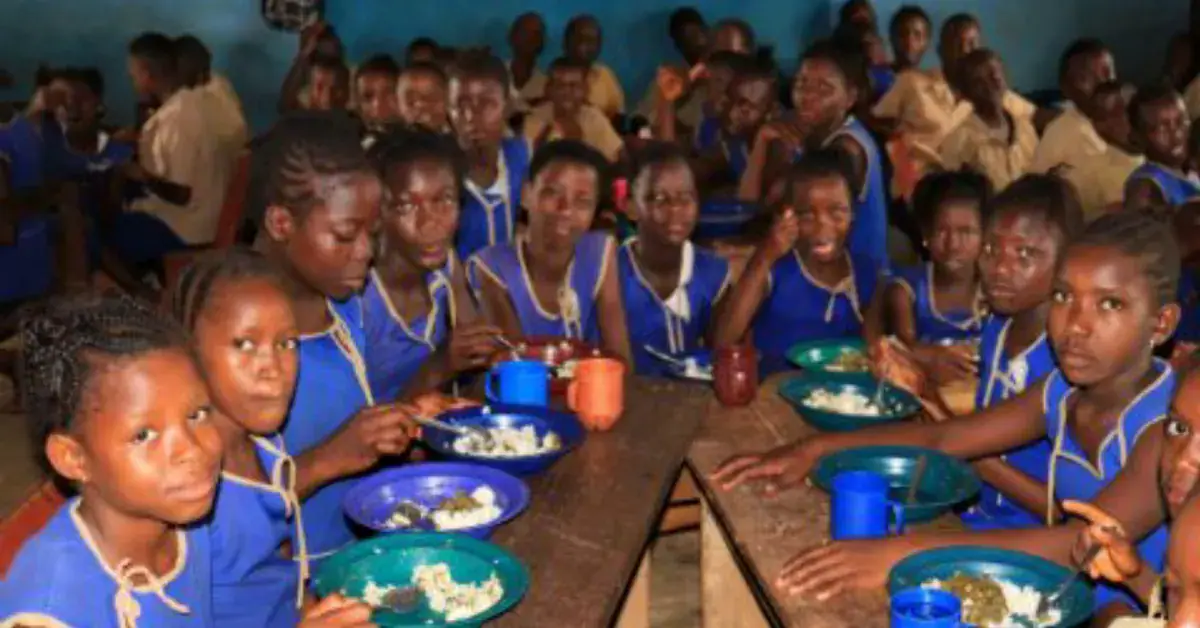
The Government of Sierra Leone is launching a two-year initiative to strengthen digital monitoring of its National School Feeding Programme, which provides services to over one million children. The programme, backed by a €2 million European Union grant, aims to improve monitoring, accountability, and service delivery. The initiative was launched on November 9, 2026, at the New Brookfields Hotel in Freetown, bringing together government officials, development partners, and education stakeholders.
The Ministry of Basic and Senior Secondary Education (MBSSE) says existing monitoring arrangements rely heavily on manual reporting and fragmented data collection, limiting access to timely information about school activities. The United Nations World Food Programme (WFP) will provide technical support to enhance the Government's ability to collect, analyse, and apply reliable information when managing school feeding operations. This partnership seeks to address weaknesses in current monitoring arrangements.
The initiative will introduce digital tools, including Open Data Kit and School Connect, to support real-time data collection, improve reporting, and strengthen the accuracy of information used in programme decisions. Education Minister Conrad Sackey stated that the initiative would help the National School Feeding Secretariat move beyond simply recording activities to using evidence to assess performance and identify areas requiring improvement.
European Union representative Abdul Deen Sesay said the bloc's €2 million contribution would support improvements in monitoring tools, institutional capacity, operational processes, and information management. WFP Representative and Country Director Andrew Odero noted that the initiative would establish common monitoring standards, strengthen field-level capacity, and introduce mechanisms for community feedback.
The inception meeting provided an opportunity for participating institutions to review the proposed monitoring and evaluation framework, establish their respective responsibilities, and identify immediate implementation priorities. Beyond introducing digital systems, the initiative aims to strengthen the capacity of government institutions to interpret programme data and use it to guide decisions.
With the National School Feeding Programme reaching over one million children, the partnership is intended to improve how authorities track implementation, identify shortcomings, and assess whether resources are reaching their intended beneficiaries. The programme's success will depend on effective collaboration between government institutions, development partners, and education stakeholders.
The initiative is expected to have a positive impact on the National School Feeding Programme, enhancing accountability, transparency, and service delivery. Key stakeholders will continue to work together to ensure the successful implementation of the initiative, which is expected to improve the lives of children in Sierra Leone.
Key points
- The European Union has pledged €2 million to support the digitisation of Sierra Leone's National School Feeding Programme monitoring.
- The initiative aims to improve monitoring, accountability, and service delivery for over one million children.
- Digital tools, including Open Data Kit and School Connect, will be introduced to support real-time data collection and improve reporting.