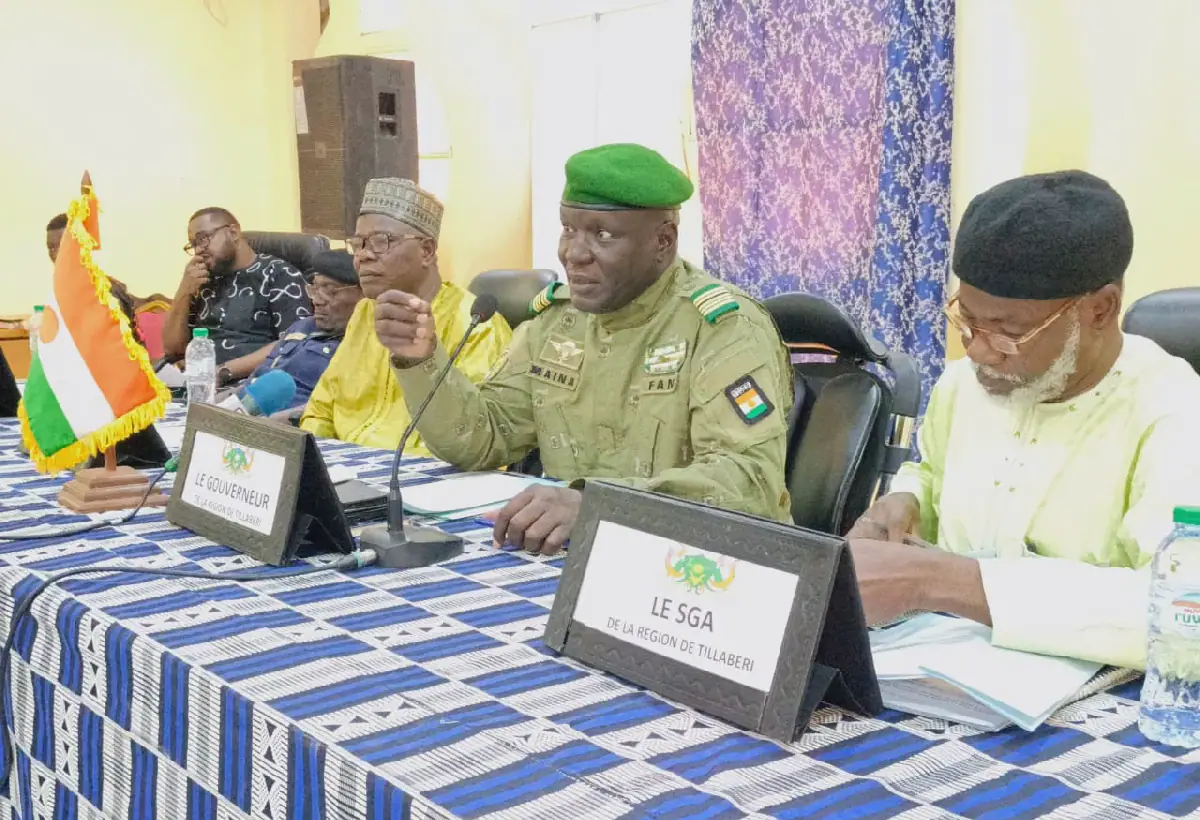
The governor of Niger's Tillabéri region, Colonel Maina Boukar, chaired a meeting on November 9, 2026, to discuss and set a deadline for the liberation of fields in the region. The meeting brought together administrative, customary, and religious authorities, as well as defense and security forces. The goal was to prevent conflicts between farmers and herders and promote peaceful coexistence among different communities. The region's agricultural and pastoral activities are crucial to the livelihoods of many families and contribute significantly to local food security and economy.
Colonel Maina Boukar emphasized that the period of field liberation is a sensitive stage in the agro-pastoral calendar, marking an important phase in organizing livestock mobility and access to agricultural residues. He highlighted the region's strong complementarity between agricultural and pastoral activities, which are the main sources of subsistence for many families. The governor stressed that setting a consensual deadline aims to protect farmers' crops and interests, facilitate herders' access to pastures and agricultural residues, and prevent field damage and community conflicts.
The meeting took place in the context of Niger's ongoing refoundation efforts, led by President Abdourahamane Tiani and Prime Minister Ali Mahamane Lamine Zeine. The governor recalled that promoting peace, solidarity, citizenship, and social cohesion should be a permanent concern for all. He urged traditional leaders to play a full role in mediation and conflict prevention and called on communal authorities, technical services, farmers, and herders to be responsible and respect the decisions made during the meeting.
The governor also emphasized the need to widely publicize the set deadline among the population, so that no one can claim ignorance to justify non-compliance with the agreed-upon arrangements. He called for strengthening surveillance mechanisms, early warning systems, and dispute resolution to prevent situations that could compromise community peace and security. The participants ultimately agreed on December 15, 2026, as the deadline for field liberation in the Tillabéri region.
This measure aims to prevent agro-pastoral conflicts, which are often a source of violence and instability in the region. By setting a clear deadline, the authorities hope to avoid clashes between farmers and herders, who may have competing interests in the use of land and resources. The governor's initiative is part of a broader effort to promote peaceful coexistence and sustainable development in the region.
The Tillabéri region is known for its rich agricultural and pastoral resources, which are essential to the country's food security and economy. However, the region has also experienced conflicts between farmers and herders in the past, often triggered by disputes over land and resources. The setting of a deadline for field liberation is seen as a key step in preventing such conflicts and promoting a more harmonious relationship between different communities.
The authorities have urged all stakeholders to respect the agreed-upon deadline and to work together to prevent conflicts and promote peaceful coexistence. The success of this initiative will depend on the commitment and cooperation of all parties involved, including farmers, herders, traditional leaders, and local authorities. By working together, the people of the Tillabéri region can build a more stable and prosperous future.
Key points
- The deadline for field liberation in Niger's Tillabéri region has been set at December 15, 2026.
- The measure aims to prevent conflicts between farmers and herders and promote peaceful coexistence.
- The region's agricultural and pastoral activities are crucial to the livelihoods of many families and contribute significantly to local food security and economy.
Reporting sources
- Tillabéri : La date limite pour la libération des champs fixée au 15 décembre 2026 · Agence Nigérienne de Presse