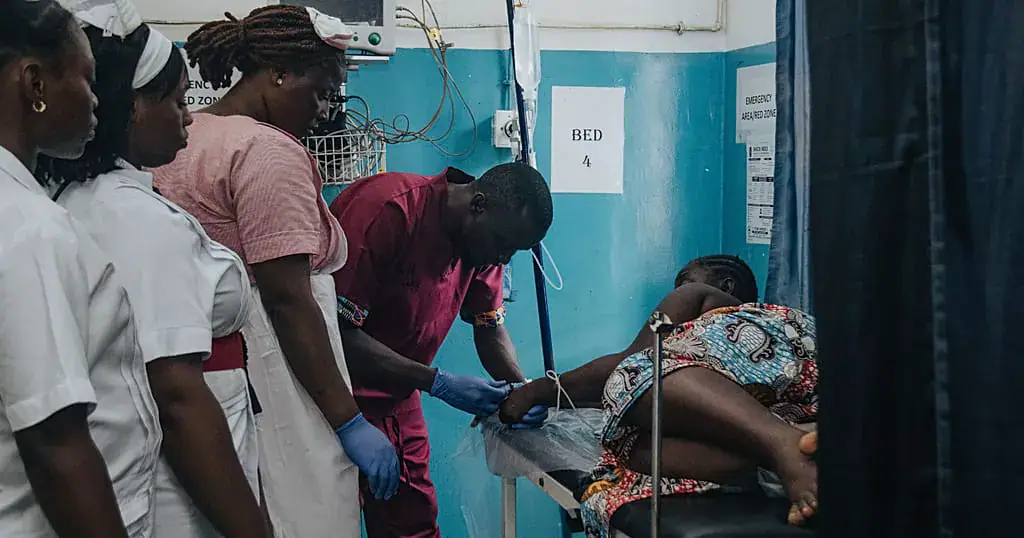
Sierra Leone, once ranked as the most dangerous place in the world to give birth, has made significant strides in reducing maternal mortality rates. According to UN estimates, the country's maternal mortality rates have fallen by nearly 80%, from more than 1,600 deaths per 100,000 live births in 2000 to 354 in 2023. This decline is attributed to expanded health services, the maternal healthcare initiative, and the training of more skilled birth attendants.
The country's free healthcare initiative for pregnant women, launched in 2010, has also contributed to the decline in maternal mortality rates. Fatmata Kamara, a 28-year-old trader, is benefiting from this initiative. During her routine checkup at Freetown's Princess Christian Maternity Hospital, she expressed her gratitude for the improved care. "This is my third pregnancy. They are giving us more care now than the previous ones, because the medicines they're giving us are not the same as before," she said.
The World Health Organization attributes the country's declining maternal mortality rate to the training of more skilled birth attendants and the availability of more medication to treat common health problems during and after pregnancy. Midwife Umu Fye, who works at the hospital where Kamara is receiving care, said that midwives are now trained on sonography, enabling them to identify fetal heart rates, position, and estimate fetal weight.
Despite the progress made, gaps in care remain. Some pregnant women report being charged for services that should be free in public hospitals. Poor roads also hinder women's access to emergency care. Francis Moses, the Health Ministry's director of reproductive and child health, acknowledged these challenges. "Not too long ago, we lost a pregnant woman on the way to hospital in an ambulance. We had to send two to pick her up. The first one went, got stuck in mud, one of the tyres came off," he said.
The Health Ministry has reported a 31.3% decline in maternal deaths and a 12.7% decline in child deaths compared to the same period in 2025, citing data from hospitals. To sustain this progress, the ministry is training more specialists at home. "We have now shifted from having our specialists being trained in other countries to having homegrown post-graduate training here," Moses said.
Sierra Leone's efforts to reduce maternal mortality rates are part of a broader regional challenge. It is estimated that 180,000 women die across Africa each year from pregnancy- and childbirth-related causes. The country's 300-day campaign launched this year aims to make childbirth safer. The initiative focuses on improving access to healthcare services, particularly in rural areas.
While significant progress has been made, sustaining and improving maternal healthcare services remains a priority for the government and healthcare providers. The training of more skilled birth attendants, availability of medication, and improved access to healthcare services will be crucial in achieving this goal.
Key points
- Maternal mortality rates in Sierra Leone have declined by nearly 80% since 2000.
- The country's free healthcare initiative for pregnant women has contributed to the decline in maternal mortality rates.
- Gaps in care, including poor roads and charging for free services, remain a challenge in Sierra Leone's healthcare system.