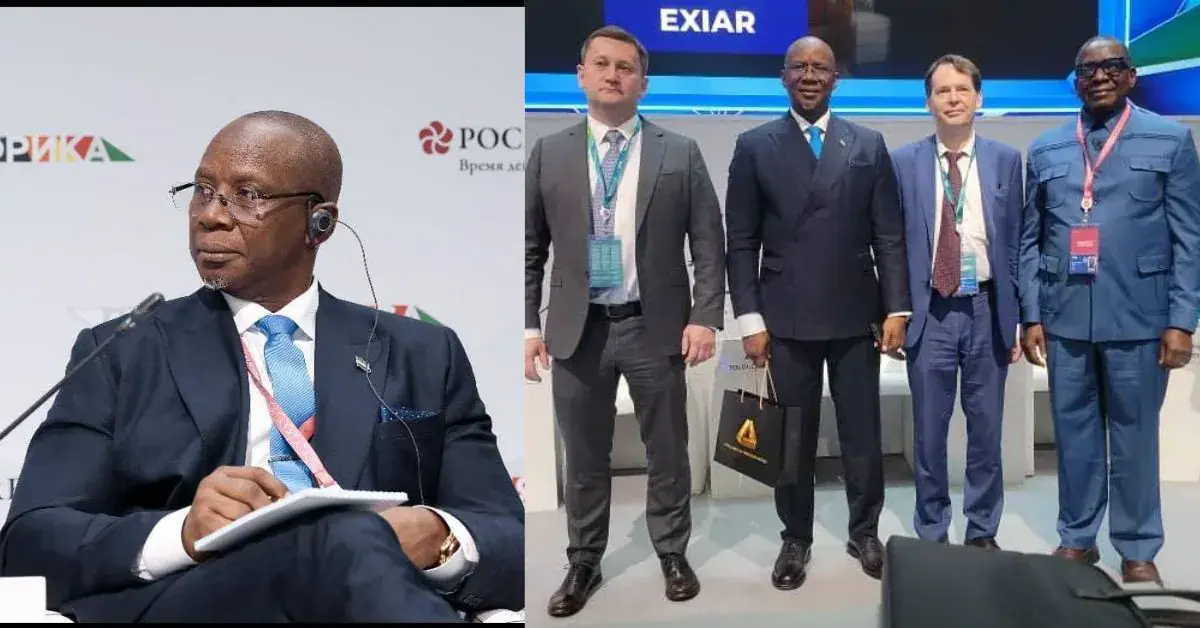
Sierra Leone is seeking to deepen its technical and investment cooperation with Russia to strengthen mineral exploration, develop local processing capacity, and maximize the economic benefits of its natural resources. The country's Minister of Mines, Julius Daniel Mattai, made the call at the Russia-Africa Summit in Moscow on October 28, 2026. Mattai emphasized the need for international partnerships that go beyond extracting and exporting raw minerals.
Sierra Leone's mineral wealth includes iron ore, diamonds, and emerging prospects for critical minerals such as lithium, cobalt, nickel, and coltan. Mattai noted that mineral abundance alone does not guarantee national prosperity, stressing that investment in geological research, modern technology, good governance, and skilled human resources is essential to unlocking the sector's full potential. He identified improved geological exploration as a major priority, requiring a clearer understanding of the country's mineral deposits through systematic geological surveys, drilling, and modern geophysical investigations.
A memorandum of understanding was signed in June 2024 on the inventory of Sierra Leone's mineral resources, which Mattai described as critical to attracting investment and guiding the sustainable development of the mining sector. Beyond exploration, Mattai called for a shift towards local mineral processing, beneficiation, smelting, refining, and manufacturing, arguing that this approach would create employment, strengthen technical capacity, and enable the country to retain more value from its mineral resources.
Achieving this ambition would require significant investment in infrastructure, particularly electricity, roads, and port facilities, alongside a transparent and predictable legal and fiscal framework capable of attracting long-term investors while safeguarding national interests. Mattai disclosed the importance of strengthening geological investigations through modern radiometric and magnetic surveys, which could help identify mineral-rich areas and reduce the risks associated with exploration.
Mattai expressed interest in expanding partnerships with Russian universities and technical institutions in geology, geophysics, chemistry, mining engineering, and mineral processing. Potential areas of collaboration include scholarships for Sierra Leonean students, academic exchanges, laboratory development, technical training, and the application of artificial intelligence in geological modeling and mineral exploration. Energy development was also highlighted as an important area for cooperation, particularly in finding solutions to support industrial activities and mineral processing.
Reflecting on the growing global demand for critical minerals, Mattai said Africa must position itself to benefit from emerging opportunities by negotiating partnerships that support technology transfer, local expertise, and industrial development rather than remaining a supplier of unprocessed raw materials. Africa's population is projected to increase from approximately 1.5 billion to 2.5 billion by 2050, creating opportunities for industrial expansion, employment, and a larger market for goods and services.
Mattai maintained that Sierra Leone remains open to partnerships with countries willing to provide the investment, expertise, and technology needed to develop its mineral sector, while respecting the country's sovereignty and national interests. The Minister stressed that the ultimate success of Sierra Leone's mining sector should be measured not only by the volume of minerals discovered or exported but by the jobs created, skills developed, and lasting economic benefits delivered to its people.
Key points
- Sierra Leone seeks Russian expertise to boost mineral exploration and processing.
- The country aims to maximize economic benefits from its natural resources.
- Partnerships with Russian institutions could support technology transfer and local expertise in the mining sector.