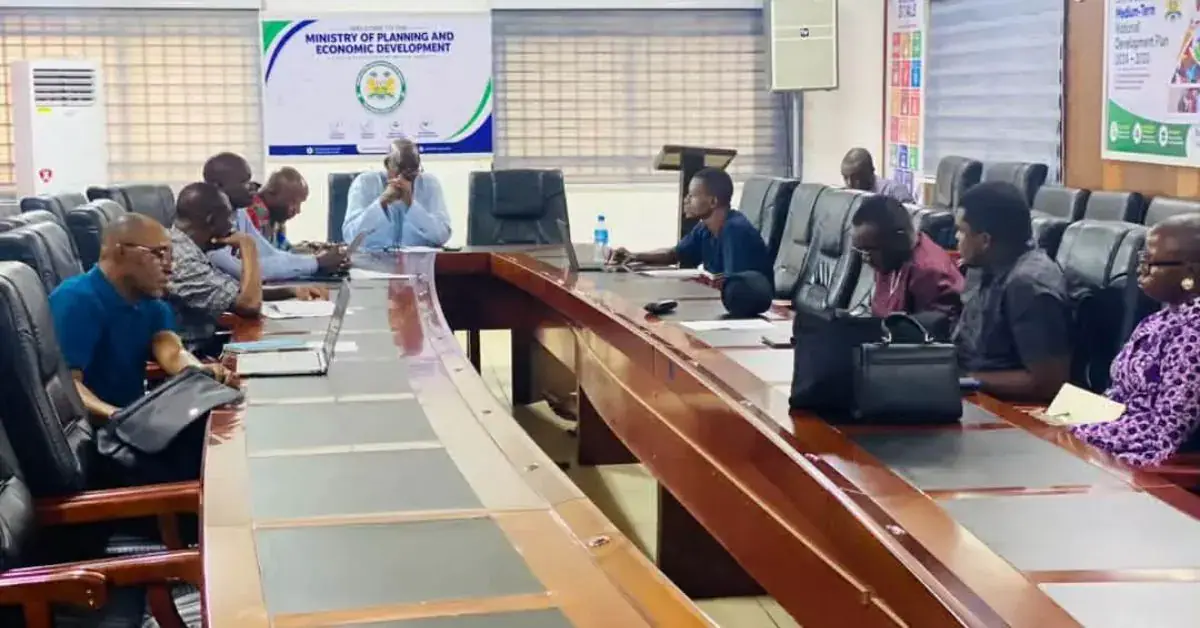
The Ministry of Planning and Economic Development (MoPED) in Sierra Leone is pushing for stronger coordination among government institutions to improve the country's national data systems. This move comes as a result of concerns over fragmented platforms, limited information sharing, and inadequate investment in data management. The issue was discussed during the inaugural Steering Committee meeting of the Power of Data (PoD) Initiative, which took place on November 13, 2026, at the MoPED Conference Hall in Freetown.
A national review presented at the meeting revealed that there are over 70 data initiatives, approximately 160 stakeholders, and more than 20 policy and legal frameworks operating within Sierra Leone's data landscape. Despite these existing investments, only about 30% of national data systems effectively exchange information. This highlights the need for better connections between government institutions and their respective platforms. The review also found that less than 1% of the national budget was allocated to data and statistics.
Deputy Development Secretary I, Usman Cherry Conteh, emphasized the need for greater institutional responsibility and cooperation to address these challenges. He stressed that government agencies must work together to prevent duplication and ensure that the initiative produces practical results. Conteh, presenting the opening statement on behalf of the Minister of Planning and Economic Development, noted that reliable data is essential for national planning, effective policymaking, and sustainable development.
The Minister's statement highlighted the connection between the Power of Data Initiative and the Medium-Term National Development Plan (2024–2030), particularly the Government's Big Five Game Changers. It also called for existing data platforms to be connected rather than replaced with new systems. The Minister recommended an implementation plan with clear responsibilities, timelines, budget allocations, and monitoring arrangements. A proposed virtual technical laboratory was also suggested as a means of improving collaboration among institutions.
UNFPA Deputy Representative, Sibeso Mululuma, reaffirmed the United Nations system's support for the Government's efforts to strengthen national data governance. She emphasized the need to protect personal information while improving access to reliable data from the 2026 Population and Housing Census and other national surveys. Mululuma also encouraged the Government to increase domestic financing to ensure that the initiative remains sustainable and does not depend heavily on development partners.
The proposed Country Implementation Framework for 2026–2030 includes five priority areas: leadership and coordination, infrastructure and interoperability, data collection and quality, data access and innovation, and capacity development. The framework also proposes a National Data Steering Committee, a technical committee, a joint secretariat, and designated data focal points across Ministries, Departments, and Agencies (MDAs). An indicative budget of US$18.2 million was presented, although further costing and validation are required.
Participants at the meeting raised concerns about overlapping responsibilities, inadequate technical expertise, and the burden of repeated requests for information from government institutions. They also suggested improvements in statistical capacity and making better use of existing web-based platforms. The meeting, coordinated by MoPED's Population Unit, forms part of broader efforts to strengthen the use of population data in national development planning and policymaking.
Key points
- The Ministry of Planning and Economic Development seeks to improve coordination among government institutions to enhance national data systems.
- Existing data systems in Sierra Leone are fragmented, with only 30% effectively exchanging information.
- The proposed initiative includes a US$18.2 million budget and aims to increase interoperability among priority data systems from 30% to 60%.