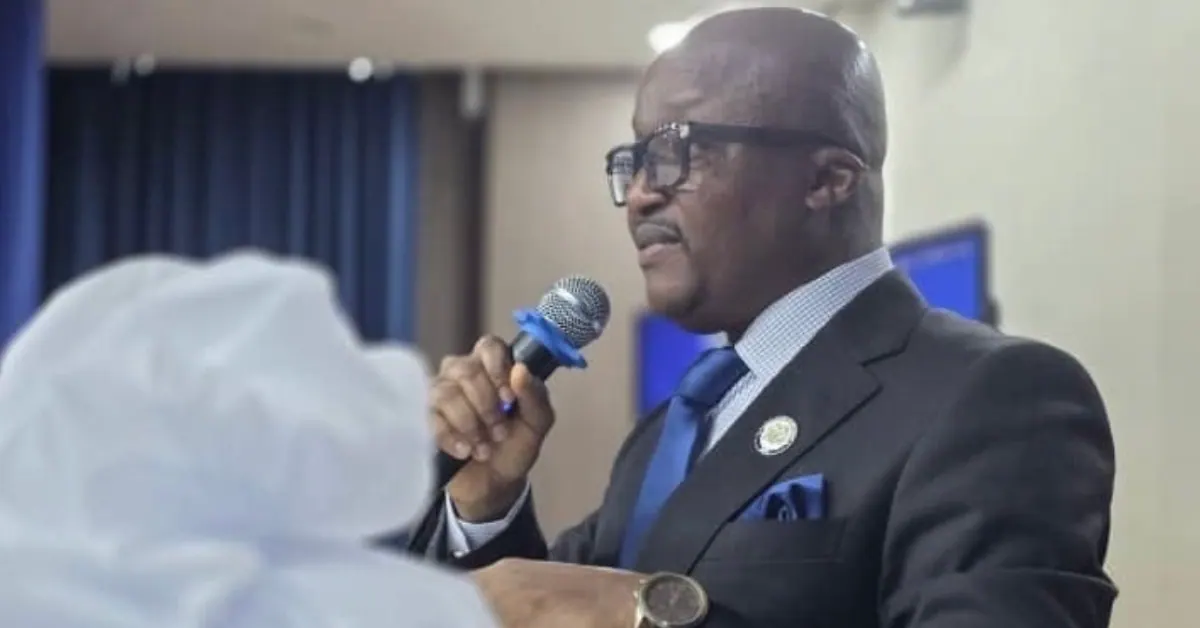
Sierra Leone's Chief Justice, Justice Komba Kamanda, has expressed the judiciary's willingness to adopt Artificial Intelligence (AI) and emerging technologies to improve access to justice, legal information, and judicial services. This statement was made during a keynote address at the NaTCA Tower in Freetown, commemorating the International Day for Universal Access to Information. The theme of the event was "AI, Justice and the Rule of Law," highlighting the growing role of technology in governance and public services.
Justice Kamanda noted that AI presents opportunities for justice institutions to improve access to judgments and legal materials, support legal research, and make judicial services more accessible to the public. He emphasized that the adoption of technology must be guided by constitutional and institutional responsibilities. The Chief Justice envisioned a justice system that is technologically enabled while remaining open, accessible, transparent, and human-centered, with the rule of law at its core.
The event also featured remarks from other officials, including Chief Director and Professional Head of the Ministry of Communication, Technology and Innovation, Mohamed Moumini Jalloh. He stated that AI is rapidly transforming government operations, information management, and access to public services. Jalloh emphasized the need for Sierra Leone to prepare to harness AI responsibly and inclusively to provide tangible benefits to citizens.
Deputy Minister of Justice, Madam Saptieu E. Saccoh, reaffirmed the Ministry's commitment to collaborating with relevant institutions to promote the responsible adoption and use of AI. This commitment aligns with the judiciary's efforts to leverage technology for improved justice delivery. The Ministry's collaboration aims to ensure that AI adoption in the justice sector is responsible and beneficial to the public.
Guilherme Canela, UNESCO Director for Inclusion, Policies and Digital Transformation, highlighted UNESCO's role in supporting the justice sector in the use of AI tools. He mentioned that UNESCO is working to train and support justice sector professionals in using AI tools in courts and tribunals. Canela also discussed UNESCO's guidelines for the use of AI in courts and tribunals, which provide a globally oriented ethical and operational framework.
The event brought together stakeholders to examine the opportunities, responsibilities, and safeguards surrounding the use of AI and technology within the justice sector. This gathering reflects the growing recognition of the need for a coordinated approach to AI adoption in Sierra Leone's justice system. The discussions aimed to foster a better understanding of how AI can be harnessed to improve justice delivery.
The judiciary's move to embrace AI and technology is part of a broader effort to enhance access to justice and improve judicial services in Sierra Leone. With the support of various stakeholders, including the Ministry of Communication, Technology and Innovation, and UNESCO, the judiciary is poised to leverage technology to create a more efficient and accessible justice system. This development has the potential to positively impact the lives of citizens and promote the rule of law.
Key points
- The judiciary in Sierra Leone is set to adopt AI and technology to improve access to justice and judicial services.
- The adoption of AI is expected to enhance access to judgments and legal materials, support legal research, and make judicial services more accessible.
- UNESCO is providing support and guidelines for the responsible use of AI in courts and tribunals in Sierra Leone.