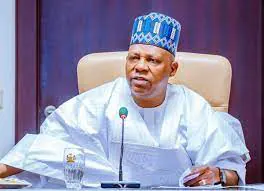
Nigeria's Vice President Kashim Shettima has urged policymakers, investors, and experts to collaborate on attracting domestic and foreign investment into the country's green infrastructure. He made the call at the second edition of the Decarbonising Infrastructure in Nigeria (DIN) Summit in Abuja, where stakeholders examined ways to close the huge financing gap confronting Nigeria's green transition. The summit was organised by the Office of the Vice President with support from the National Council on Climate Change and the United Nations Industrial Development Organisation (UNIDO).
According to the Vice President, Nigeria requires about $410 billion in additional investment by 2060 to achieve its net-zero pathway. He noted that this scale of funding presented not only a challenge but also a significant investment opportunity for domestic and international investors. Shettima stressed that while the government would remain an important player in financing the transition, it could not provide all the capital required to achieve Nigeria's long-term energy and infrastructure objectives.
The Vice President identified the need for urgent policy reforms, stronger public-private partnerships, and innovative risk-sharing mechanisms to attract investment into Nigeria's green infrastructure. He said the central issue was no longer simply the availability of ideas, policies, or climate ambitions, but the ability to convert them into projects that investors could assess, finance, and implement. Shettima also highlighted the questions investors would ordinarily ask before committing capital, including the clarity of the policy environment and the credibility of the revenue model.
Shettima acknowledged that investment in green infrastructure in Nigeria faced policy, financial, technical, and institutional challenges. However, he said these obstacles could be addressed through collaboration among stakeholders. The Vice President noted that Nigeria's NDC 3.0 had recognised the need to develop a stronger pipeline of projects with viable financing propositions and increase private sector participation.
The DIN Summit 2.0, held at the United Nations House in Abuja, brought together policymakers, development finance institutions, private investors, members of the diplomatic corps, and climate experts. The summit's theme was "De-risking Green Infrastructure Investment in Nigeria: Enabling Policy, Project Readiness and Risk-Sharing Solutions." Shettima's Deputy Chief of Staff, Senator Ibrahim Hadejia, represented him at the event.
The Vice President said that to attract investment, Nigeria needed projects that were properly prepared and capable of attracting capital. He emphasised the need for a clear policy environment, credible revenue models, and adequate technical solutions. Shettima also stressed the importance of risk allocation among parties involved in green infrastructure projects.
The summit aimed to make a useful contribution to addressing the challenges facing Nigeria's green transition by facilitating discussions on policy, project readiness, and risk-sharing solutions. The event provided a platform for stakeholders to examine ways of closing the financing gap and attracting investment into Nigeria's green infrastructure.
Key points
- Nigeria requires $410 billion in additional investment by 2060 to achieve its net-zero pathway.
- The country needs urgent policy reforms, stronger public-private partnerships, and innovative risk-sharing mechanisms to attract investment into green infrastructure.
- The DIN Summit 2.0 aimed to facilitate discussions on policy, project readiness, and risk-sharing solutions to address the challenges facing Nigeria's green transition.