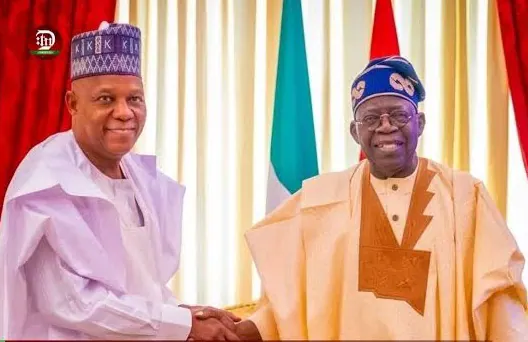
Vice President Kashim Shettima has commended President Bola Tinubu for implementing economic reforms that saved Nigeria from an imminent economic collapse. According to Shettima, when the Tinubu administration assumed office in 2023, Nigeria's foreign reserves stood at less than $3.9 billion, which was insufficient to finance even one month of fuel imports. This situation, he said, left Nigeria dangerously close to an economic crisis similar to that experienced by countries like Venezuela.
Shettima made these remarks after a meeting with President Tinubu at his residence in Ikoyi, Lagos, where he defended some of the administration's most contentious economic decisions. The Vice President credited President Tinubu with having the "courage and conviction" to implement far-reaching measures, particularly the removal of fuel subsidy and the reform of the multiple exchange-rate system. These decisions, he said, prevented the economy from collapsing.
The Vice President further stated that Nigeria was on the brink of a severe economic crisis, likening its potential fate to that of Caracas, the capital of Venezuela. He emphasized that President Tinubu's actions saved the economy and prevented the nation from "falling into pieces." Shettima acknowledged the economic hardship currently confronting Nigerians but expressed optimism that the situation would improve.
The administration is aware of the pains caused by its reforms, but "tough times do not last forever; tough people do," Shettima said. He disclosed that the Federal Government would soon roll out additional programs targeted at easing the burden on citizens, including e-logistics services in the North-West and electric transportation projects in the North-East. These initiatives aim to reduce transportation difficulties and alleviate the effects of economic hardship.
As part of these efforts, the government plans to launch 10,600 electric tricycles in the North-East, alongside 300 buses and e-taxis. Shettima said these initiatives demonstrate President Tinubu's concern for ordinary Nigerians and the administration's commitment to improving living conditions. The meeting between President Tinubu and Vice President Shettima was their first public interaction since the President returned from his European vacation and the Vice President's return from the 81st United Nations General Assembly in New York.
President Tinubu had, in his Independence Day broadcast, maintained that Nigeria was on the path to prosperity. However, opposition figures have rejected the administration's assessment of the economy. Former Vice President Atiku Abubakar accused the Tinubu administration of worsening poverty since assuming office, while former Anambra State Governor, Peter Obi, argued that Nigerians were experiencing increased hunger and insecurity under the present government.
The divergent views on the administration's economic policies and their implications for Nigeria's development highlight the ongoing debate about the country's economic trajectory. Despite these challenges, Shettima expressed confidence in the administration's ability to steer the country towards a more prosperous future. The government's commitment to implementing policies that promote economic growth and improve living standards remains a key priority.
Key points
- President Tinubu's economic reforms prevented Nigeria's economic collapse.
- Nigeria's foreign reserves were less than $3.9 billion when the Tinubu administration took office.
- The government plans to launch 10,600 electric tricycles and 300 buses to ease transportation difficulties.