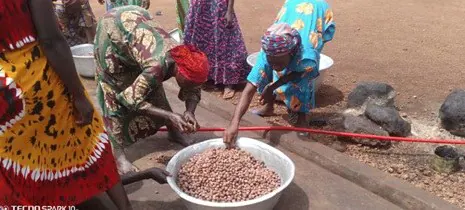
In Sorugu, a farming community in Ghana's Northern Region, women who process shea nuts into butter are struggling due to a lack of proper machinery. The women, many of whom work at the Tiyumtaba Shea Processing Factory, say the available equipment is insufficient to meet their work demands. As a result, they rely heavily on manual labor to crack, roast, grind, and knead shea nuts into butter, a process that is both physically demanding and time-consuming.
Shea processing is a major income source for women in Sorugu, with proceeds from shea butter sales covering school fees and other household needs for many families. The trade has long served as a reliable source of cash income for women in the area, who use the earnings to support their households and keep their children in school. The women's output is sold under the Tiyumtaba Shea Butter brand, giving the community's shea processing a commercial identity.
The limited machinery available to the women restricts their production and sales, capping their earnings despite growing demand for shea products. This situation reflects a broader challenge across Ghana's northern shea belt, where women dominate the labor-intensive processing stage but often lack the capital to acquire modern equipment. Shea butter is used locally as a cooking fat and skincare product and is exported for use in cosmetics and food manufacturing internationally.
For households in Sorugu, the shea trade functions as an informal safety net, filling gaps left by seasonal farming income. When processing slows due to poor equipment, the effects ripple through to school fees, food security, and other household needs that families depend on the shea income to meet. The women of Sorugu are calling for better equipment to boost their productivity and earnings.
The situation in Sorugu highlights the need for intervention to support the women and their shea processing activities. The lack of machinery is not only affecting the women's income but also the well-being of their families. The community is relying on external support to address the issue and ensure the sustainability of the shea processing trade.
According to reports, it is unclear who will respond to the women's appeal for better equipment or what the timeline for any intervention might be. The women of Sorugu are hoping that their plight will attract the attention of government agencies, non-governmental organizations, or private investors who can provide them with the necessary machinery to improve their productivity and earnings.
The shea processing trade has the potential to make a significant impact on the lives of women in Sorugu and other communities in Ghana's northern shea belt. With the right support and equipment, the women can increase their productivity, earnings, and contribution to their households and the local economy. The Tiyumtaba Shea Butter brand has already given the community's shea processing a commercial identity, and with further support, it can continue to grow and thrive.
Key points
- The women of Sorugu are calling for better equipment to boost their shea processing productivity and earnings.
- Shea processing is a major income source for women in Sorugu, covering school fees and other household needs.
- The lack of machinery is affecting not only the women's income but also the well-being of their families.