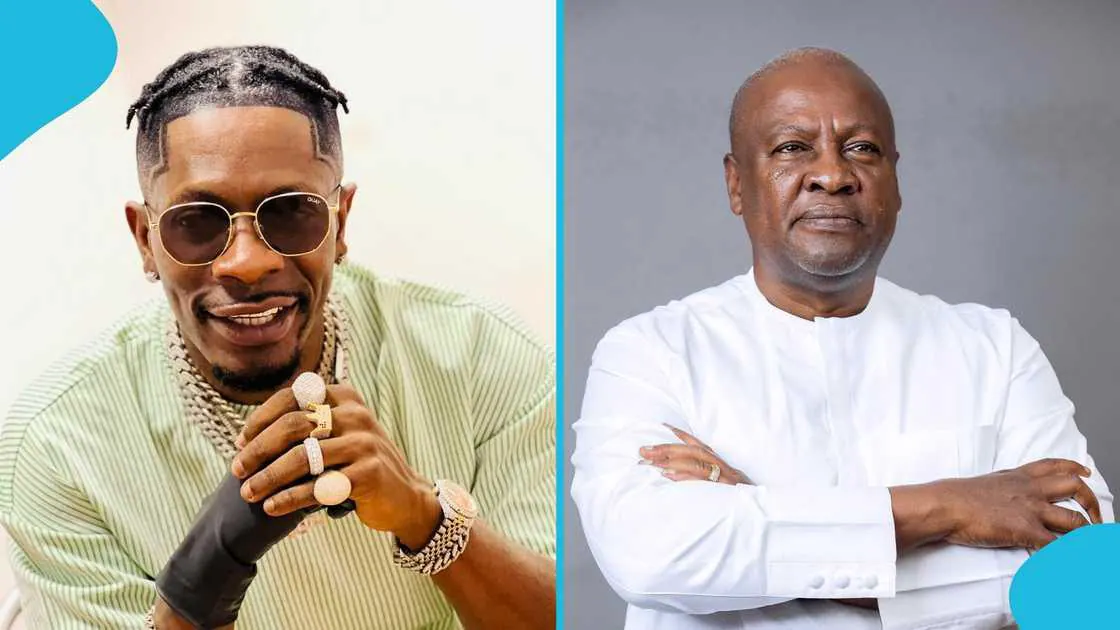
Ghanaian dancehall artiste Shatta Wale has called on President John Dramani Mahama and other stakeholders to establish a clearly defined legal framework for addressing defamation, harassment, and other forms of abuse on social media. In an open letter dated September 28, 2026, Shatta Wale argued that Ghana's response to harmful online activity should be founded on clearly articulated laws, procedural safeguards, and independent judicial supervision. This would prevent measures that could unnecessarily restrict legitimate public expression.
Shatta Wale's intervention follows President Mahama's recent call for a national stakeholder discussion on the regulation of TikTok and other emerging digital platforms. During a town hall meeting with members of the Ghanaian community in New York on September 25, 2026, President Mahama raised concerns about misinformation, insults, information integrity, and the wider challenges created by the rapid expansion of new media. He asked the Ghana Journalists Association and the Media Foundation for West Africa to facilitate discussions involving relevant stakeholders.
Shatta Wale's position was influenced by his own experiences as a prominent public figure who has endured unverified allegations, public ridicule, and damaging commentary. He maintained that the phenomenon of abusive public commentary did not originate with social media but existed within sections of entertainment commentary before spreading into online discussion forums and becoming amplified by digital platforms. The consequences of such conduct now extend beyond the entertainment industry, affecting traditional authorities, entrepreneurs, journalists, public officials, and ordinary citizens.
Shatta Wale emphasized that any attempt to address these challenges must preserve the constitutional protections afforded to freedom of expression and media freedom in Ghana. He argued that those freedoms should remain firmly protected, while stressing that they should not be interpreted as permission to issue threats, engage in harassment, or knowingly circulate damaging falsehoods. Shatta Wale called for Parliament, the Judiciary, security institutions, media organisations, and civil society groups to work collectively towards developing clearly defined rules governing serious and proven cases of online misconduct.
As part of his proposed approach, Shatta Wale suggested that social media companies operating within Ghana could strengthen their account verification procedures by building upon existing identification systems, including the Ghana Card and SIM registration framework. He proposed that platforms should respond to lawful, court-authorised requests seeking the identification of accounts connected to proven cases of unlawful conduct. However, he cautioned against making the disclosure of a person's identity a universal condition for participating in public debate.
On possible sanctions, Shatta Wale proposed that where Parliament determines that particular forms of online conduct should constitute criminal offences, any penalties should be proportionate to the conduct concerned. He suggested that, for specified offences, Parliament could consider short custodial sentences of not more than one month, with the stated objective being deterrence and correction rather than punishment. He urged caution to ensure that any new legislation dealing with harmful online content does not effectively recreate Ghana's former criminal libel regime, which was repealed in 2001.
Beyond the introduction of new legal measures, Shatta Wale called for extensive public education on responsible digital behaviour. He argued that legal reform should be accompanied by efforts to educate citizens about the responsibilities that accompany participation in the online public sphere. His proposals come as the government considers how Ghana should respond to the growing influence of TikTok and other digital platforms, with President Mahama describing the question as part of a broader debate about information integrity.
Key points
- Shatta Wale urges the establishment of clear legal rules to address social media abuse while preserving freedom of expression.
- The musician proposes a framework that incorporates due process and independent judicial oversight to ensure legitimate expression is not inadvertently transformed into a criminal offence.
- Shatta Wale also calls for extensive public education on responsible digital behaviour to accompany legal reform.