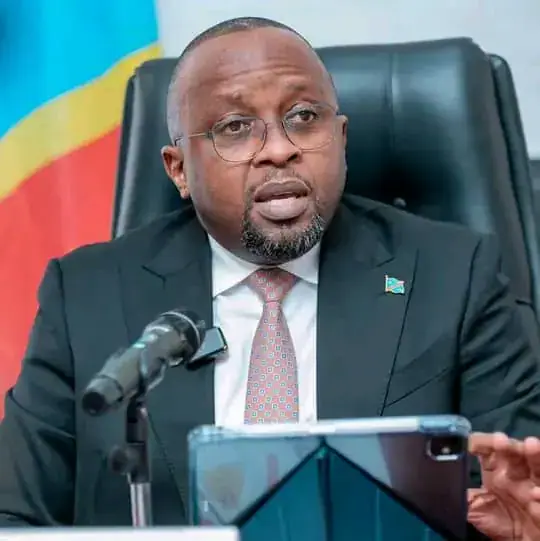
On November 4, 2026, the Minister of Interior and Security of the Democratic Republic of the Congo, Jacquemin Shabani Lukoo, responded to the opposition coalition C64 through a tweet on his official X account. In his statement, Shabani emphasized that no political actor can meet with the aggressor in occupied territories outside of the framework established by the State. This response comes as the C64 coalition seeks to engage with the aggressor to promote an "inclusive dialogue."
The DRC has been facing aggression from the Rwandan army and its affiliates for over three years, resulting in the occupation of parts of North Kivu and South Kivu and causing immense suffering for the local population. The government has made it a priority to restore peace in the East. Shabani's statement highlights that any efforts to achieve peace must be conducted within the bounds of the law and in respect for the country's institutions.
Shabani referenced Article 192 of the Congolese Penal Code, which stipulates penalties for individuals who engage in unauthorized correspondence or relations with enemy subjects or agents during wartime. He also cited Articles 6, 29, and 31 of the law on the organization and functioning of political parties. These laws form the basis of his argument that meeting with the aggressor in occupied territories would be in violation of Congolese law.
The opposition's move to engage with the aggressor comes at a time when the Republic has invited all stakeholders to participate in a dialogue on the refoundation of the State. This dialogue aims to address key issues affecting the country, but Shabani's response suggests that the government will not tolerate any attempts to bypass established channels and protocols.
The C64 coalition's efforts to engage with the aggressor have been met with skepticism by the government, which views such actions as potentially undermining national sovereignty and territorial integrity. Shabani's statement serves as a clear warning to political actors that any engagement with the aggressor must be conducted within the framework established by the State.
The situation in the DRC remains complex, with ongoing aggression and occupation in the East. The government's response, as articulated by Shabani, underscores its commitment to upholding national laws and institutions. The international community is closely watching developments in the region, and the DRC's approach to addressing the crisis will likely have significant implications for regional stability.
The response from Shabani and the government's stance on the matter have sparked a renewed debate on the best approach to addressing the crisis in the DRC. As the situation continues to unfold, all eyes are on the government's next steps and how the opposition will respond to Shabani's statement.
Key points
- The DRC government, through Shabani, has made it clear that no political actor can meet with the aggressor in occupied territories outside of the framework established by the State.