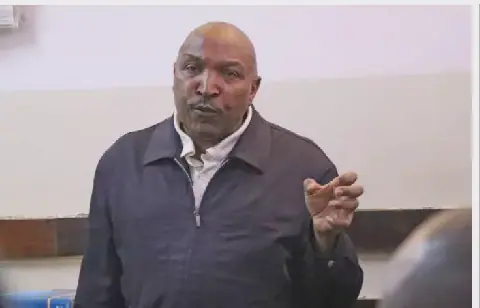
Nigeria's Secretary to the Government of the Federation, Senator George Akume, has stated that the country will not revert to the destructive petroleum subsidy regime that was sustained by successive administrations until its removal in 2023 by President Bola Tinubu. This statement was made during a lecture in Abuja to mark Nigeria's 66th Independence Anniversary. The theme of the lecture was "Unity and Faith, Peace and Progress".
According to Akume, the removal of the petrol subsidy, unification of the foreign-exchange market, tax, and other fiscal reforms were some of the difficult but necessary decisions made by the administration to rebuild stability and save the nation from imminent collapse. These decisions were made when the administration assumed office three years ago. The goal was to correct entrenched structural weaknesses in the country.
The administration's efforts seem to be yielding results, as Nigeria's real GDP grew by 4.2 per cent in the first half of 2026, up from 3.9 per cent a year earlier. This growth is attributed to business activity expansion, as reported by the World Bank. Akume emphasized that the task now is to ensure that this growth translates into jobs and higher incomes for all Nigerians.
Instead of restoring fuel subsidy, the government plans to harness Nigeria's abundant natural gas by accelerating the use of Compressed Natural Gas (CNG). CNG is a cleaner and cheaper alternative that has led to a significant reduction in fuel costs for motorists and commuters. Over 120,000 vehicles have been converted to CNG, with more than 400 conversion centres and 90 fueling stations nationwide.
The use of CNG has resulted in substantial savings for Nigerians, as CNG buses now carry millions of passengers at fares far below those of petrol buses. Akume also stressed the importance of reliable electricity and affordable transport in the daily lives of Nigerians. The administration has tackled power sector problems by clearing legacy debts, increasing investment, and improving transmission and billing.
The government is also investing in infrastructure development, including major highways such as Abuja to Kano and the East–West Road. These projects aim to connect cities and rural communities, improve trade routes, and enhance the movement of people and goods. Additionally, the government is expanding and repairing roads to facilitate access to markets, businesses, and safe travel.
Other areas of focus for the government include modernizing rail and ports, expanding mortgage finance for homeownership, and boosting agricultural production. The government is supporting mechanization, irrigation, and quality seeds to improve food security. Legacy projects, such as the Lagos–Calabar Coastal Highway, are also underway to dramatically improve trade routes and connectivity across the country.
Key points
- The Nigerian government will not return to the petroleum subsidy regime.
- The country has made significant progress in economic growth and infrastructure development.
- The government is promoting the use of Compressed Natural Gas (CNG) as a cleaner and cheaper alternative to petrol.