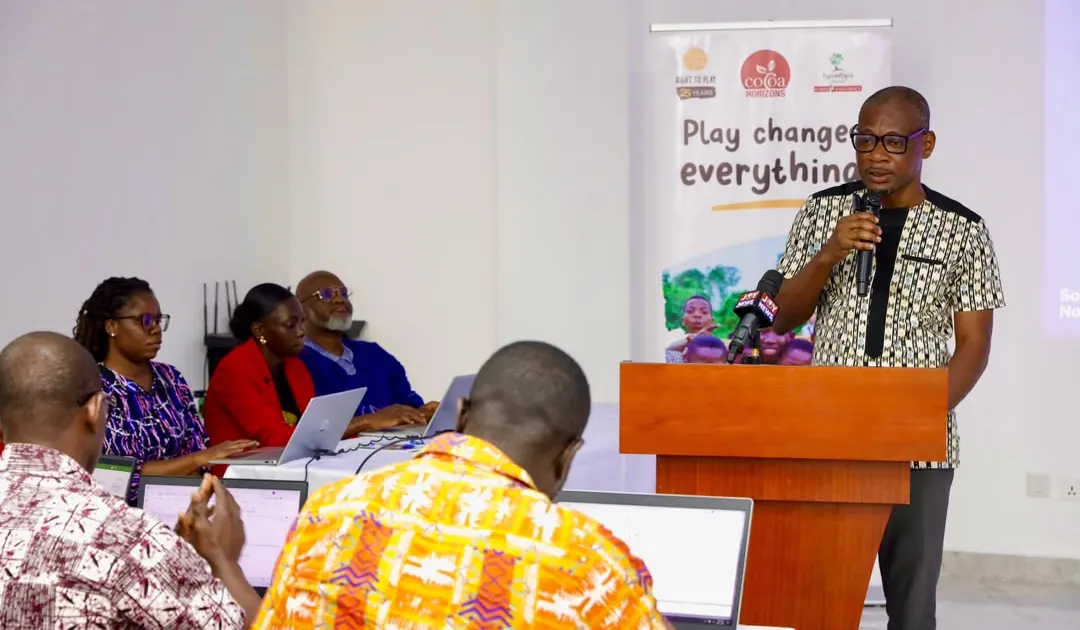
Right To Play Ghana has raised concerns about severe teacher shortages in remote communities, affecting efforts to keep children in school and protect them from child labour. The organisation's recent monitoring under its My Life, My Rights and My Rights, My Future projects revealed that some basic schools have as few as two or three teachers, despite requiring nearly three times that number. This situation is impacting education quality and making it harder to protect vulnerable children.
Project Manager of the My Life, My Rights project, Julius Kwami Tsatsu, stated that some schools are operating with significantly fewer teachers than required, forcing them to combine classes. He described the situation as "appalling," with some schools needing nine teachers, including the head, but having only two or three. This shortage is particularly severe in underserved areas, where schools struggle to meet staffing levels.
The organisation also identified distance as a major barrier to education, particularly for children in satellite communities several kilometres from main settlements where schools are located. Head of Office at Right To Play Ghana, Harrison Akubor, noted that children rescued from child labour often live far from schools, making it difficult for them to attend regularly. This distance affects their attendance and continued participation in education.
Right To Play is working with education authorities to address these challenges, including deploying teachers to remote communities. The organisation believes that addressing these barriers is crucial for children who have been rescued from child labour and need sustained access to education and protection. By improving access to quality education, children can better understand their rights and become advocates for themselves.
Despite the challenges, Right To Play's interventions have empowered children to advocate for their rights. Project Manager of the My Rights, My Future project, Josephine Baffoe, reported that about 90 per cent of children reached by the project are now advocating for their own rights. The project helps children understand their rights and responsibilities, equipping them with confidence and knowledge to speak up when those rights are violated.
Right To Play emphasises that strengthening community child protection structures, improving access to quality education, and empowering children and their families are critical to sustaining efforts to prevent child labour. The organisation calls for stronger collaboration among communities, education authorities, and child protection institutions to address the gaps identified through its monitoring activities.
Improving teacher availability in underserved communities, reducing barriers to school attendance, and strengthening local child protection systems are essential to ensuring that vulnerable children remain in school and are protected from child labour. Right To Play's efforts aim to support children in Ghana, particularly those in remote and underserved areas, to access quality education and protection from exploitation.
Key points
- Some basic schools in Ghana have only 2-3 teachers despite needing 9.
- Distance is a major barrier to education for children in satellite communities.
- Right To Play's interventions have empowered 90% of children to advocate for their rights.