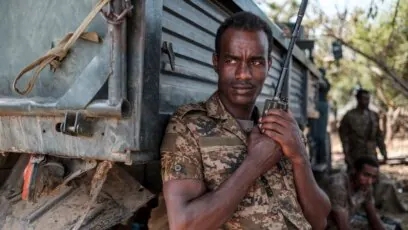
Seven armed groups in Ethiopia have formed an alliance to challenge the federal government. The alliance, called the "Alliance of Ethiopian Peoples' Forces for Survival," was announced on Sunday by Zemene Kassie, leader of the Amhara Fano militia. The groups aim to "overthrow" the government, but analysts doubt the alliance's military impact and viability. The alliance brings together groups from various regions, including the Tigré People's Liberation Front (TPLF), the Oromo Liberation Army (OLA), and the Amhara Fano militia.
The TPLF, OLA, and Amhara Fano militia are the main groups involved in the alliance. The TPLF, which ruled Ethiopia for three decades, has been at odds with the federal government since 2020. The OLA, classified as a terrorist organization by Addis Abeba, has been fighting the government since 2018. The Amhara Fano militia, a popular self-defense force, has been battling the government since 2023. Other groups, including those from the Afar, Ogaden, and Benishangul-Gumuz regions, have also joined the alliance.
Analysts believe the timing of the alliance's announcement is significant. Kjetil Tronvoll, a specialist from Oslo New University College, says the TPLF likely pushed for the announcement due to the critical humanitarian situation in Tigré. The region has been experiencing severe drought and food shortages. Edward Bach, from Verisk Maplecroft, notes that the alliance may take advantage of improved climate conditions and recent drone strikes in Tigré.
The impact of the alliance on the ground is uncertain. The groups have agreed to coordinate their efforts, sharing intelligence and launching joint operations. Jalale Getachew Birru, an analyst from Acled, believes the alliance could pose a challenge to the government. However, Edward Bach notes that the groups may not share resources, such as weapons, due to mistrust.
The viability of the alliance is also uncertain. Analysts doubt that the groups can maintain a long-term partnership due to their differing interests and ideologies. The groups have historically clashed, with the Amhara Fano militia fighting against the TPLF during the Tigré conflict. Amanuel Assefa, deputy head of the TPLF, says discussions on the Tigré western region will take place later.
Previous alliances between armed groups in Ethiopia have failed to have a lasting impact. An alliance of nine groups, including the OLA and TPLF, formed in 2021, but it did not lead to significant military gains. Jalale Getachew Birru notes that such alliances are often short-lived, held together by a shared enemy.
The Ethiopian government faces a significant challenge from the new alliance. With approximately 500,000 soldiers and advanced drone technology, the government's military capabilities are substantial. However, the alliance's ability to coordinate efforts and exploit local support could pose a threat. The situation remains uncertain, with analysts watching for developments.
Key points
- The alliance's success will depend on its ability to coordinate efforts and maintain a united front against the government.
- The groups involved have historically clashed, which may undermine the alliance's viability.
- The humanitarian situation in Tigré and other regions may drive support for the alliance.