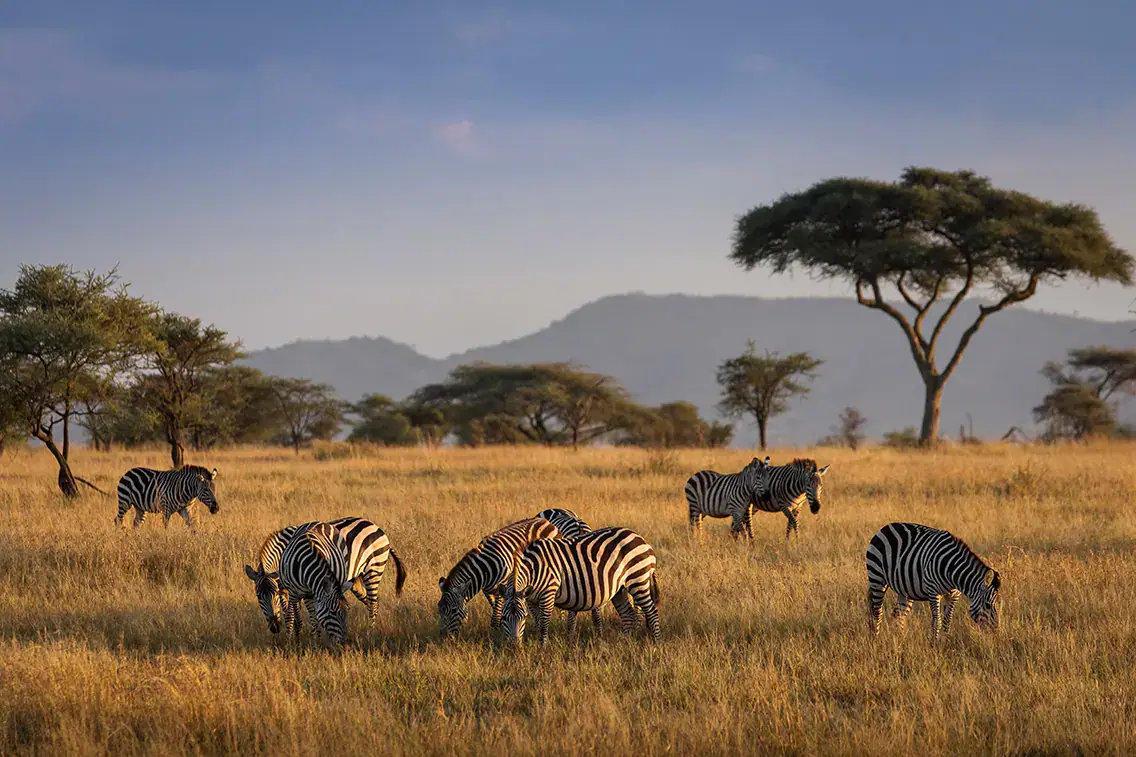
Serengeti National Park in northern Tanzania has marked 75 years since its designation in 1951 under British administration. The park's conservation success is attributed to efforts led by Bernhard and Michael Grzimek, whose wildlife surveys and 1959 film "Serengeti Shall Not Die" drew international attention to the area's unique migration patterns. Today, the park remains a thriving ecosystem, with stable or increasing populations of many wildlife species, including wildebeest and zebras that migrate over long distances.
However, the park's growing tourism industry poses significant challenges to its conservation. In July 2025, a herd of wildebeest was blocked from reaching the Mara River by a wall of 156 four-wheel-drive vehicles, highlighting the strain on the park's resources. Safari guide Nick Kleer estimated that the difficult spot could accommodate only about 10 vehicles, but was instead overwhelmed by tourists seeking the best views. This incident illustrates the delicate balance between tourism and conservation in the park.
The tourism industry generates significant revenue for conservation efforts and provides jobs and income for local communities. In 2024, Tanzania's Tourism Ministry recorded over half a million visitors to the Serengeti, with around two-thirds from abroad. However, the increasing demand for land and resources around the park's boundaries fragments habitats and affects wildlife movement. Agricultural abstraction and vegetation loss also impact the Mara River's catchment, which is crucial for the park's wildlife during the dry season.
Researchers have identified several key pressures on the park's ecosystem, including the concentration of visitors at popular locations and the impact of tourism on wildlife movement. Grant Hopcraft, a migration ecologist at the University of Glasgow, has tracked wildebeest with transmitters since 1999 and found a decline in their ability to cross the Mara River. He warns that altered movement patterns are an early warning sign of a potential population decline.
The effects of tourism on wildlife extend beyond crowded riverbanks and popular locations. Research published in June 2026 found that buildings and human activity can influence wildebeest movement patterns, with effects extending several kilometers beyond the structures themselves. Biologist Eivin Røskaft's study on impalas found that those near large lodges had higher stress levels than those near smaller campsites, even when the lodges had no guests.
To mitigate these impacts, experts recommend measures suited to individual locations and seasons, backed by enforcement of existing rules. Virginia Messina, group chief executive of the African Travel and Tourism Association, emphasizes that tourism and conservation should not be viewed as opposing objectives. Instead, the industry should adopt sustainable practices that prioritize wildlife welfare and conservation.
As the Serengeti National Park looks to the future, its management will need to balance the demands of tourism with the need to protect its unique ecosystem. With careful planning and enforcement, it is possible to conserve this incredible natural resource for future generations. Key to this effort will be addressing the pressures of tourism, human activity, and climate change on the park's wildlife and habitats.
Key points
- The Serengeti National Park faces growing pressures from tourism and human activity, which threaten its conservation status.
- Sustainable tourism practices and enforcement of existing rules are crucial to mitigating the impacts of tourism on the park's ecosystem.
- The park's management must balance the demands of tourism with the need to protect its unique ecosystem and wildlife populations.