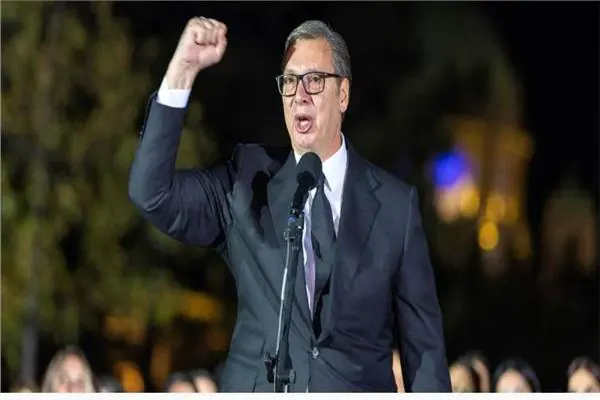
Serbian President Aleksandar Vucic announced his resignation on Sunday, ending his second and final five-year term. This move sets the stage for an early presidential election. Vucic's decision comes seven months before the end of his term. His resignation was met with cheers from hundreds of supporters gathered outside the presidential building in Belgrade.
Vucic addressed the crowd, expressing pride in his achievements and dedication to serving Serbia. He previously hosted a farewell party for presidential staff, showcasing a more relaxed atmosphere. The event featured Vucic singing and dancing with staff, a departure from his usual formal demeanor. This ceremony was a prelude to his official resignation.
According to the Serbian constitution, President of Parliament Anna Brnabic will assume interim presidential duties until a new president is elected. The constitution mandates that a presidential election be held within 90 days, with a campaign period ranging from 30 to 60 days. Vucic stated that the first round of the presidential election will likely take place by the end of December.
Serbia is also preparing for early parliamentary elections scheduled for October 25. The elections will see a contest between the ruling Progressive Party and opposition groups, including the anti-corruption movement "Students Triumph" and the pro-Western coalition "European Serbia." These groups have yet to announce their presidential candidates.
Vucic's resignation and the upcoming elections have significant implications for Serbia's political landscape. His Progressive Party may potentially form a new government, with Vucic possibly taking on the role of prime minister. The opposition is seeking to capitalize on the situation, presenting an opportunity for change in the country's leadership.
The early presidential election will be a crucial event in Serbia's recent history. The country has been navigating complex relationships with neighboring countries and the international community. The election outcome may influence Serbia's future trajectory, including its relations with Russia and the European Union.
As the campaign period approaches, various political groups are expected to intensify their efforts to secure votes. The "Students Triumph" movement and "European Serbia" coalition are likely to play significant roles in shaping the election's outcome. Ultimately, the Serbian people will decide the country's future direction through their participation in the upcoming elections.
Key points
- Serbian President Aleksandar Vucic has resigned, leading to an early presidential election.
- The election is expected to take place by the end of December, as per the country's constitution.
- The parliamentary elections on October 25 may also impact the presidential election and future government formation.