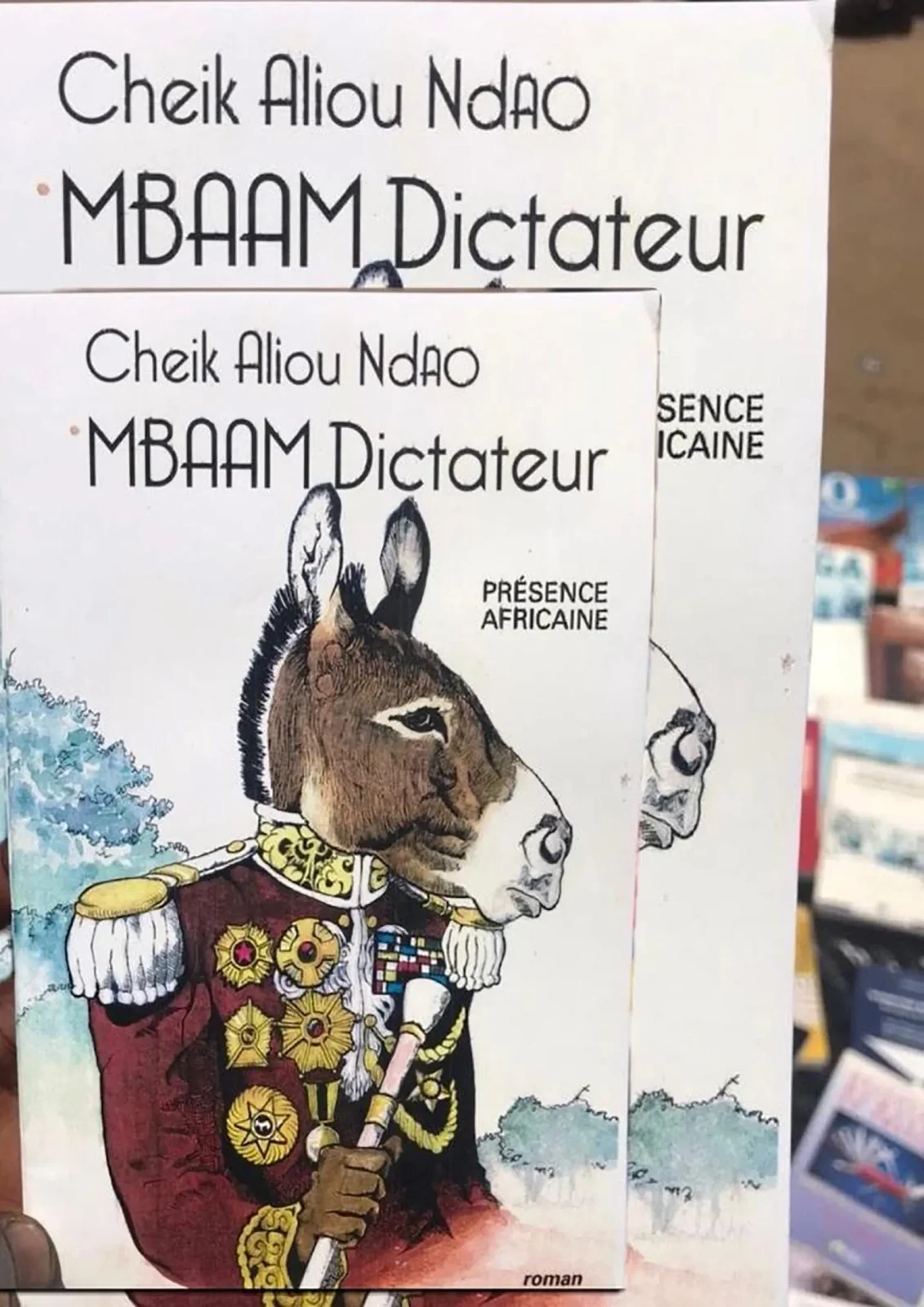
Senegalese author Cheik Aliou Ndao has written a thought-provoking satirical novel titled "Mbaam Dictateur," which was published in 1997 by Éditions Présence Africaine. The novel tells the story of a dictator who undergoes a transformation into a donkey, allowing Ndao to explore the mechanisms of tyranny, the servitude of elites, and the fragility of human grandeur. Through this narrative, Ndao critiques the abuse of power and the corrupting influence it has on individuals.
In "Mbaam Dictateur," the dictator, now a donkey, retains memories of his past life, including the palaces, sycophants, and speeches where his name was revered. However, he has lost his throne, entourage, and ability to terrorize his people. This transformation serves as a commentary on the nature of power and how it can be both intoxicating and corrupting. The novel uses satire to address serious issues, making it a unique and impactful work in African literature.
The title of the novel, "Mbaam Dictateur," is significant, as "Mbaam" is the Wolof word for donkey. By combining this with the word "dictateur," Ndao draws a stark contrast between the grandeur associated with dictatorship and the humble, animalistic nature of the donkey. This contrast highlights the inherent contradictions in the exercise of tyrannical power and the ways in which it can be both revered and reviled.
African literature has a long history of grappling with the theme of tyranny, particularly in the post-independence era. Authors such as Mongo Beti, Ahmadou Kourouma, Henri Lopes, and Sony Labou Tansi have all explored the corrupting influence of power and the erosion of liberties in their works. Ndao's approach, however, is distinct in its use of satire and the transformation of the dictator into a donkey, making the critique more subtle yet powerful.
The use of animals in literature as a means of commenting on human nature and society is a long-standing tradition. Ndao draws on this tradition, using the donkey as a symbol of the dictator's reduced state. By doing so, he underscores the idea that true power resides not in titles or trappings, but in the ability to inspire fear, respect, and devotion. The donkey, once a dictator, serves as a potent reminder of the transience of power and the dangers of its abuse.
Ndao's writing style in "Mbaam Dictateur" is notable for its blend of Wolof and French influences. The novel is a translation of the Wolof text "Mbaam aakimoo," and this linguistic duality is a deliberate choice that reflects the author's cultural heritage. The use of Wolof proverbs, imagery, and rhythms adds depth and nuance to the narrative, making the novel a rich and immersive reading experience.
The exploration of language and its relationship to culture is a significant aspect of "Mbaam Dictateur." Ndao's use of French, inflected with Wolof influences, challenges the notion that language can be a neutral or transparent medium. Instead, he demonstrates how language is shaped by culture and history, and how it can be used to subvert dominant narratives and challenge social norms.
Key points
- The novel "Mbaam Dictateur" is a satirical exploration of tyranny, power, and vanity in African society.
- The transformation of the dictator into a donkey serves as a commentary on the nature of power and its corrupting influence.
- The novel's use of Wolof and French influences adds depth and nuance to the narrative, reflecting the author's cultural heritage.