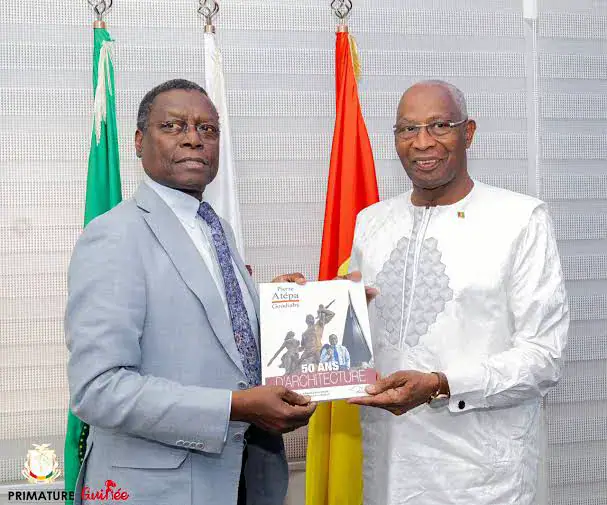
Senegalese architect Pierre Goudiaby Atepa has presented plans for a new administrative capital in Guinea, dubbed "Nimba". The project, part of the "Simandou 2040" vision of President Mamadi Doumbouya, aims to alleviate congestion in Conakry, the current economic capital. Atepa's team was received by Guinean Prime Minister Amadou Oury Bah on November 20, 2026, to discuss the initial studies. The proposed city will cover 30,000 hectares, located 50-60 kilometers from Conakry.
The Nimba project envisions a city structured around seven major hubs, including an administrative area with ministries and a presidential palace. Residential zones, an agropole, and a 5,000-hectare industrial zone adjacent to the Moribaya port are also planned. The industrial zone will support economic growth and job creation. Atepa's plan aims to balance urban development with environmental considerations. The project will also feature an international airport with a 4,000-hectare site and a 4,000-meter runway.
The estimated cost of the megaproject is between 20 and 30 billion euros, to be mobilized over a 20-year period. To avoid burdening the Guinean state's budget, the project's promoters are exploring an innovative financing structure coupled with land valorization. The expected increase in land value around the city will be used to fund infrastructure development. Partner banks have already been identified to support the project's implementation.
The Nimba project aims to drive economic growth and sustainable development in Guinea. By creating a new administrative capital, the government hopes to reduce congestion in Conakry, which faces significant demographic and urban growth challenges. The new city is expected to become a hub for economic activity, with a diverse range of sectors, including industry, agriculture, and services.
Atepa's proposal emphasizes the importance of balancing urban development with environmental considerations. The project includes plans for solar fields covering over 1,000 hectares, which will contribute to the city's energy needs. The project's environmental impact will be carefully assessed to ensure that it aligns with Guinea's sustainable development goals.
While the project's details are still being finalized, the Guinean government has expressed enthusiasm for the proposal. The site selection, construction timeline, and precise financing modalities are yet to be determined. However, with the support of partner banks and the government's commitment, the Nimba project is expected to move forward in the coming months.
The Nimba project's success will depend on effective collaboration between the Guinean government, Atepa's team, and partner banks. If implemented, the project will have a significant impact on Guinea's economic and urban development. The project's innovative financing structure and land valorization approach may also serve as a model for future development projects in the region.
Key points
- The Nimba project aims to alleviate congestion in Conakry and drive economic growth in Guinea.
Reporting sources
- WalFadjri · WalFadjri