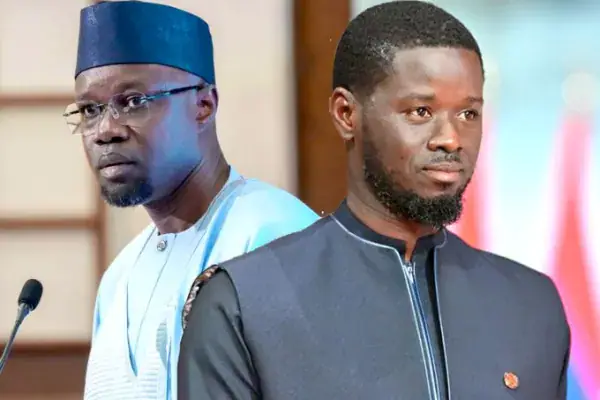
The Senegalese political landscape has been thrown into uncertainty following a rift between President Macky Sall and Ousmane Sonko, the newly elected head of the National Assembly. This development has raised concerns about the potential impact on the country's democratic institutions and its development trajectory. The two leaders were once closely aligned, but recent events have exposed deep divisions between them. Sonko's election to the Assembly was seen as a significant move, but it appears to have accelerated the deterioration of their relationship.
The tensions between Sall and Sonko have been building for some time, with the President announcing the creation of his own political party. This move has created a dilemma for many in the ruling party, who must now choose between their loyalty to the President and their support for Sonko. The situation is further complicated by the fact that Sonko's party, PASTEF, is the same party that brought Sall to power. As a result, many militants are struggling to reconcile their allegiance to the President with their support for Sonko.
The implications of this rift are far-reaching, with some observers warning that it could have a negative impact on Senegal's democratic gains. The country has long been seen as a beacon of stability and democracy in West Africa, with a history of peaceful transfers of power. However, the current situation has raised concerns about the potential for instability and the erosion of democratic norms. The international community is watching closely, with many calling for calm and restraint.
Senegal's democratic record is indeed impressive, with the country having never experienced a successful military coup since gaining independence. The country's leaders have consistently demonstrated a commitment to democratic principles, with several presidents peacefully transferring power after losing elections. This legacy is now at risk, with some warning that the current tensions could have a lasting impact on the country's democratic institutions.
The situation has drawn comparisons with other African countries, including Benin, where the president has taken steps to consolidate power. However, Senegal's situation is distinct, with the country's democratic institutions and history of peaceful power transfers setting it apart. The country's leaders must now navigate this complex situation, with many calling for dialogue and a return to stability.
The rift between Sall and Sonko has also sparked concerns about the potential for violence and instability. The country's history is not without precedent, with a notable example being the rivalry between Léopold Sédar Senghor and Mamadou Dia in the early years of independence. That rivalry ultimately ended in violence and the imprisonment of Dia, a scenario that many hope will not be repeated.
As the situation continues to unfold, many are watching closely to see how the country's leaders will navigate this complex and potentially fraught situation. The international community is urging calm and restraint, with many recognizing the importance of preserving Senegal's democratic gains. The country's future stability and prosperity depend on it, with many hoping that a peaceful resolution can be found.
Key points
- The rift between President Macky Sall and Ousmane Sonko has raised concerns about the stability of Senegal's democratic institutions and its development trajectory.
- The situation has drawn comparisons with other African countries, including Benin, but Senegal's distinct democratic history and institutions set it apart.
- The country's leaders must navigate this complex situation to prevent instability and preserve Senegal's democratic gains.