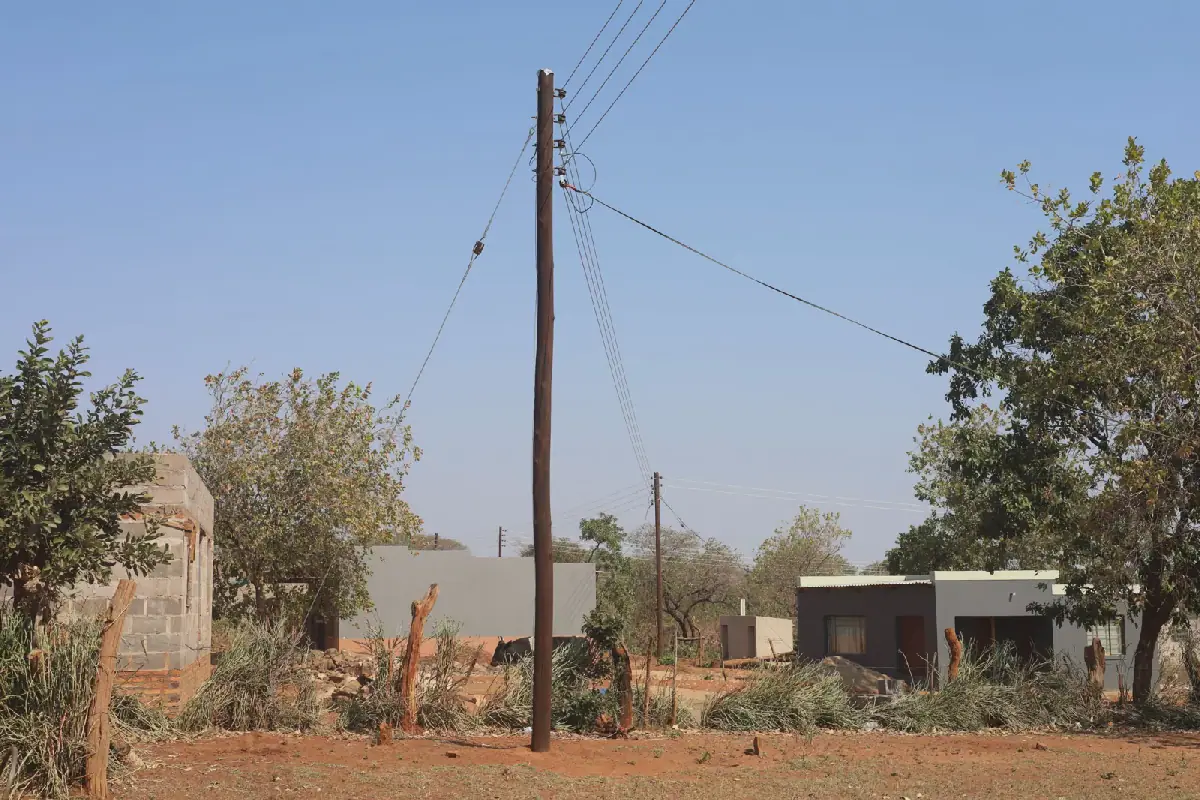
The United Nations climate summit, COP31, is pushing for a global target to increase electricity's share of final energy consumption to 35% by 2035. However, this target may not account for the different energy realities in Africa, where some countries still need to build electricity infrastructure and distribution networks. The African continent faces a huge electricity access gap, with about 600 million people lacking electricity access, and half of them living in Nigeria, Ethiopia, and the Democratic Republic of Congo.
According to the International Energy Agency, Sub-Saharan Africa accounts for roughly 85% of the global population lacking electricity. Dr. Chigozie Nweke-Eze, founder of Integrated Africa Power, notes that there is a fundamental distinction between the energy transition in industrialized economies and that in many African countries. In industrialized economies, electrification is largely about replacing fossil fuel systems, while in Africa, it means building entirely new energy systems to support the expanding population and development aspirations.
The 35% by 2035 target risks widening existing energy inequality, Nweke-Eze warns, as a global increase in electricity consumption does not necessarily mean improved energy access for populations that remain disconnected from the grid. He also notes that it does not automatically address the affordability and reliability of electricity for households and small businesses. Africa should be an integral part of the 35-by-35 ambition, with the target adapted to the continent's unique energy context, recognizing its diverse starting points and prioritizing pathways that expand energy access.
Another initiative launched at COP31 is the Global Rooftop Solar Declaration, which aims to double the number of solar-powered households globally to 300 million by 2030. The initiative offers a practical pathway to addressing Africa's energy access gap by accelerating the deployment of household solar, particularly in communities underserved by centralized electricity grids. This initiative focuses on overcoming barriers such as high upfront costs, complex permitting processes, and skills shortages that can slow the adoption of decentralized solar solutions.
Benjamin Boakye, Executive Director of the Africa Centre for Energy Policy, emphasizes that energy access and development must be at the center of the global agenda. He notes that beyond setting targets, it is crucial to focus on how investment is mobilized and who finances rapid deployment. Boakye also stresses the importance of linking electrification to clean cooking through affordable technologies, reliable electricity, and appropriate financing.
Africa's development needs should be the reason for accelerating electrification, not an obstacle to it, Boakye argues. Nearly a billion people in Sub-Saharan Africa lack access to modern and clean cooking solutions, and many across the continent cannot cook with electricity because the tariffs are expensive and beyond their reach. The Global Rooftop Solar Declaration and other initiatives aim to address these challenges and ensure that the global electrification agenda does not inadvertently reproduce existing inequalities in the global energy system.
The 35% by 2035 target must prioritize energy access and development, particularly in Africa, to ensure that the continent's unique energy challenges are addressed. This requires a broader understanding of how progress towards electrification is measured, taking into account the diverse starting points and needs of African countries. By adapting the target to Africa's unique energy context and prioritizing pathways that expand energy access, the continent can make significant strides in addressing its energy access gap and reducing energy poverty.
Key points
- The 35% electrification target by 2035 may overlook Africa's unique energy challenges, including the need to build new energy systems and expand energy access.
- Africa faces a significant energy access gap, with about 600 million people lacking electricity access, and half of them living in Nigeria, Ethiopia, and the Democratic Republic of Congo.
- The global electrification agenda must prioritize energy access and development in Africa to avoid reproducing existing inequalities in the global energy system.