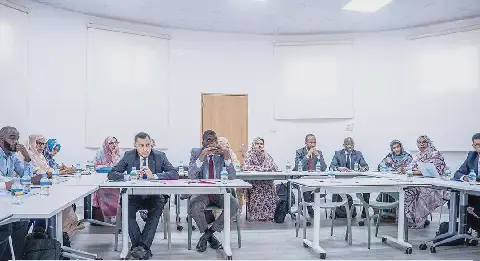
Professor Mamadou Dramé, a renowned Senegalese academic, has been appointed to the International Scientific Committee of UNESCO's program "The Routes of Enslaved People: Resistance, Freedom, and Heritage". This appointment is a significant recognition of his expertise in the field of language sciences and his research on contemporary cultural expressions in Senegal. As a professor of language sciences and assessor at the Faculty of Education and Training Sciences at the University of Cheikh Anta Diop in Dakar, Dramé has established himself as a leading figure in the study of language, culture, and social dynamics.
Professor Dramé's research focuses on the intersection of language, culture, and identity, particularly in the context of contemporary Senegalese culture. His work explores the ways in which artistic expressions, such as rap, hip-hop, and slam, reflect social realities, identities, and cultural transformations. As the coordinator of the Research Group on Contemporary Cultural Expressions, Dramé has been at the forefront of studying the role of language as a vehicle for expression, contestation, and transmission.
In addition to his work on contemporary cultural expressions, Professor Dramé has also explored the relationship between artistic creation, history, and memory. His research on the legacy of slavery in Senegalese rap music illustrates his approach to understanding cultural productions as spaces for transmitting and reappropriating the past. This work has contributed to a deeper understanding of the complex relationships between memory, identity, and cultural heritage.
Professor Dramé's appointment to the UNESCO committee is a testament to his expertise and contributions to the field of cultural studies. It also reflects the recognition of Senegalese academic excellence on the international stage. The University of Cheikh Anta Diop in Dakar, where Dramé is based, has a strong reputation for producing high-quality research, and this appointment further solidifies its presence in international scientific communities.
The UNESCO program "The Routes of Enslaved People: Resistance, Freedom, and Heritage" aims to promote a deeper understanding of the history of slavery and its ongoing impact on contemporary society. The program seeks to highlight the importance of preserving and promoting the cultural heritage of enslaved people and their descendants. Professor Dramé's expertise in the field of language and culture will be invaluable in this endeavor.
This appointment has been welcomed by the academic community in Senegal, with the rector of the University of Cheikh Anta Diop, Professor Alioune Badara Kandji, extending his congratulations to Professor Dramé. The recognition of Dramé's work is also seen as a reflection of the contribution of Senegalese research to the global understanding of historical memories, cultural identities, and the legacy of slavery.
Professor Dramé's new role at UNESCO is expected to further enhance his research and academic profile, both nationally and internationally. His work will contribute to a more nuanced understanding of the complex relationships between culture, history, and memory, and will help to shed light on the ongoing impact of slavery and colonialism on contemporary society.
Key points
- Professor Mamadou Dramé's appointment to UNESCO's International Scientific Committee on Slave Routes recognizes his expertise in language sciences and contemporary cultural expressions in Senegal.