The Senegalese political scene has been rocked by a significant rupture between Prime Minister Ousmane Sonko and President Bassirou Diomaye Faye, marking a new chapter in the country's complex political landscape. This development follows a series of events that began with Sonko's announcement of a political divorce from Faye, a move that has sent ripples throughout the nation. The divorce was made public during a gathering of Sonko's supporters, where he emphasized that the split was political, not personal, and centered on their differing visions for the country.
The PASTEF party, led by Sonko, has taken the step of excluding 32 members, including President Faye, from its ranks. These individuals had been involved in the formation of a new party, Kiiraay, which holds an ideology contrary to that of PASTEF. This move has been seen as a significant step by Sonko to consolidate power within his party and reaffirm his stance on the political direction of Senegal. The exclusion has sparked debate over loyalty, memory, and parliamentary sovereignty, raising questions about the future of these political figures and their impact on the country's governance.
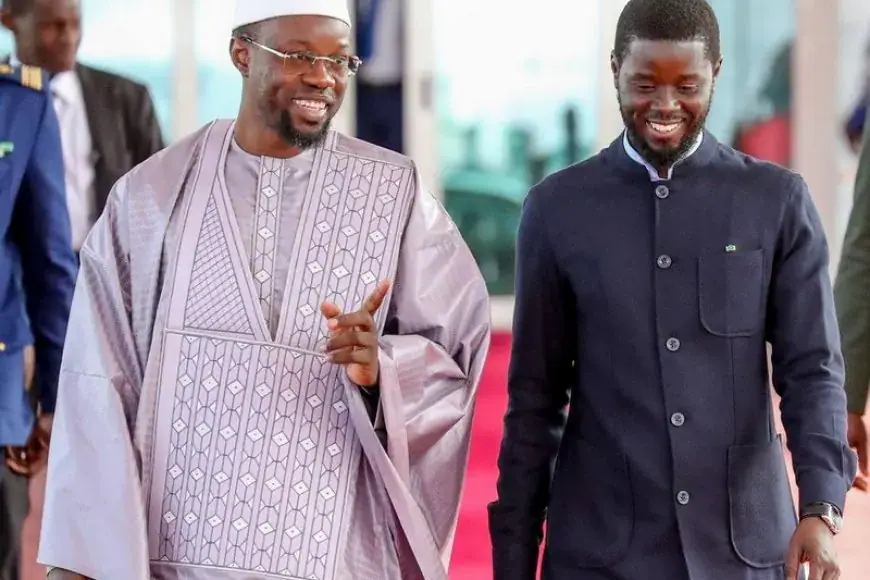
The relationship between Sonko and Faye has been further complicated by their recent public appearance together at the Camp Dial Diop on November 19, 2026. This event, marking the Day of the Armed Forces, presented a contrast to their current political tensions, as they were seen side by side, a scene that has become rare given their current political differences. Prior to the ceremony, Sonko expressed his sentiments on social media, highlighting the honor and patriotism of the armed forces, a message that was interpreted in the context of their strained political relationship.
A significant development in this political saga was the issuance of a decree by President Faye on November 19, 2026, enforcing the 2026 rectified finance law. This move has sparked discussions regarding parliamentary sovereignty, as it bypassed the traditional legislative process. The decision has been met with criticism from those who argue it undermines the role of the parliament and its ability to scrutinize and approve financial laws. This controversy highlights the ongoing tensions between the executive and legislative branches of the government.
The current political crisis in Senegal has historical underpinnings, with the country experiencing significant turmoil from 2021 to 2024. These periods were marked by attempts to eliminate political opponents through judicial and police interventions. The election of Ousmane Sonko as the head of the Assembly in May 2026, with a significant majority vote, reflects the public's desire for political change and the endorsement of his project of rupture. This context is crucial in understanding the current dynamics between Sonko and Faye and their implications for Senegal's political future.
The reactions to the political developments have not been limited to internal political discourse. Internationally, there has been interest in the implications of these changes for Senegal's stability and economic management. The country's debt, treasury tensions, and dependence on external aid are pressing issues that the current administration needs to address. Critics argue that the focus on political stability and economic management should not overshadow the need for transparency and accountability, especially in dealings with international financial institutions like the IMF.
As Senegal navigates this complex political landscape, the relationship between Sonko and Faye will be pivotal in shaping the country's future. Despite their political divorce, both figures are constitutionally bound to work together until the next elections. This unusual cohabitation presents both challenges and opportunities for Senegal, as it seeks to balance political stability with the demands for change and reform. The unfolding situation will be closely watched by both national and international observers, as it has significant implications for the country's democratic development and governance.
Key points
- The public split between Prime Minister Ousmane Sonko and President Bassirou Diomaye Faye marks a significant turn in Senegalese politics, with implications for the country's governance and future elections.
Reporting sources
- Sénégal : Séquence d’une rupture au... · Maliweb.net