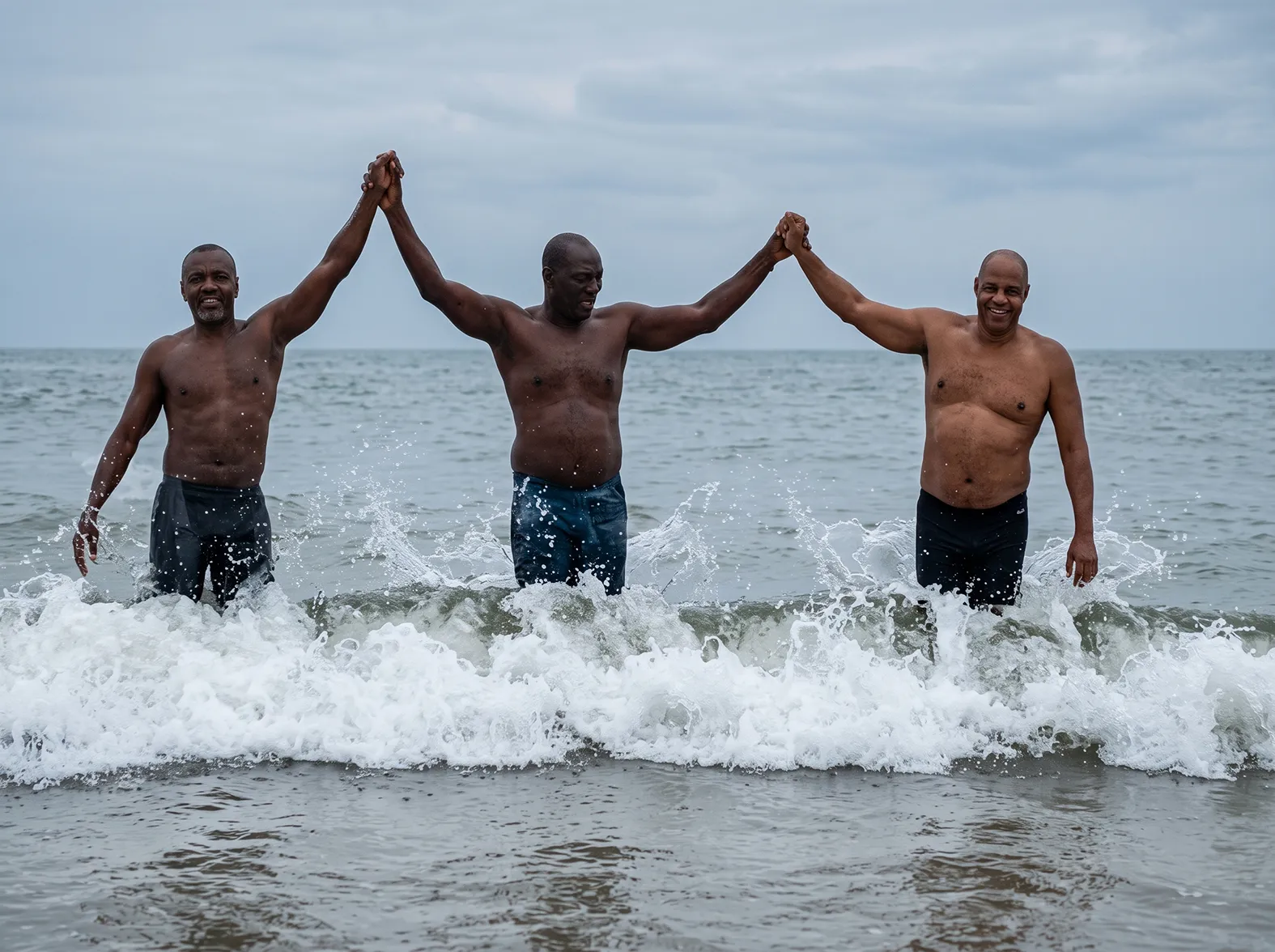
Forty years after their historic wins, Senegal's pioneering Dakar-Goree swimmers, Hachim Badji, Mouhamed Diop, and Samba Ndoye, reminisce about their experiences. The trio, who dominated the early editions of the event, recall their inspirations and the challenges they faced. For Hachim Badji and Mouhamed Diop, their role model was Malick Fall, a champion swimmer who motivated them to push beyond their limits. Malick Fall's influence extended beyond swimming, as he represented a moral example for the young athletes.
Samba Ndoye, who has participated in 35 editions of the Dakar-Goree swim, credits his early ambitions to his fellow swimmers, including Bayad Badiane, Tandakha Ndiaye, Ousseynou Sylla, and Mapathé Sylla. He was particularly fascinated by Jean Diop's unique swimming style, which featured distinctive "battements en huit" (figure-eight movements). These early inspirations fueled Ndoye's passion for swimming and motivated him to continue training. The Dakar-Goree swim has been a significant event in Senegal's swimming calendar since its inception.
Hachim Badji and Mouhamed Diop vividly recall their first encounters with the Dakar-Goree swim. Badji, now 60, remembers his initial experience, which included an unexpected encounter with a jellyfish that forced him to stop mid-swim. Despite this, he managed to complete the swim in butterfly style, feeling relatively fresh at the finish. The following year, Badji faced stiff competition from Mouhamed Diop, who ultimately emerged victorious by a narrow margin.
Mouhamed Diop's victory in 1986 remains a defining moment in his career. He recalls the intense pain and fatigue he experienced during and after the swim, which left him struggling to walk for nearly a week. Diop began swimming at the age of six and joined the national team at 15. He went on to participate in the African Games and African Championships, eventually becoming the president of the Senegalese Swimming Federation and, more recently, the Confederation of African Swimming.
Under Mouhamed Diop's leadership, the Dakar-Goree swim has undergone significant transformations. In 2001, the event expanded to include over 600 participants, transforming it into a popular gathering that welcomes both amateur and professional swimmers. Diop aims to take the event to the next level by integrating it into the Africa Aquatics or World Aquatics circuit and introducing an elite relay competition alongside the popular event.
Hachim Badji emphasizes the importance of preserving the fair-play spirit that characterized the early editions of the Dakar-Goree swim. He values the friendships forged during the competitions and encourages future generations to prioritize sportsmanship. Samba Ndoye, still an active swimmer, continues to train and has committed to participating in future editions of the event.
As the Dakar-Goree swim approaches its 40th anniversary, the pioneering swimmers' reflections serve as a testament to the event's enduring legacy. Their stories highlight the power of friendship, fair play, and the pursuit of excellence. The event has become an integral part of Senegal's swimming culture, and its continued growth and evolution will depend on the passion and dedication of athletes like Hachim Badji, Mouhamed Diop, and Samba Ndoye.
Key points
- The Dakar-Goree swim has grown significantly since its inception, with over 600 participants in recent editions.
- Malick Fall, a champion swimmer, was a significant inspiration for many of Senegal's pioneering swimmers.
- The event's future development may include integration into the Africa Aquatics or World Aquatics circuit and the introduction of an elite relay competition.