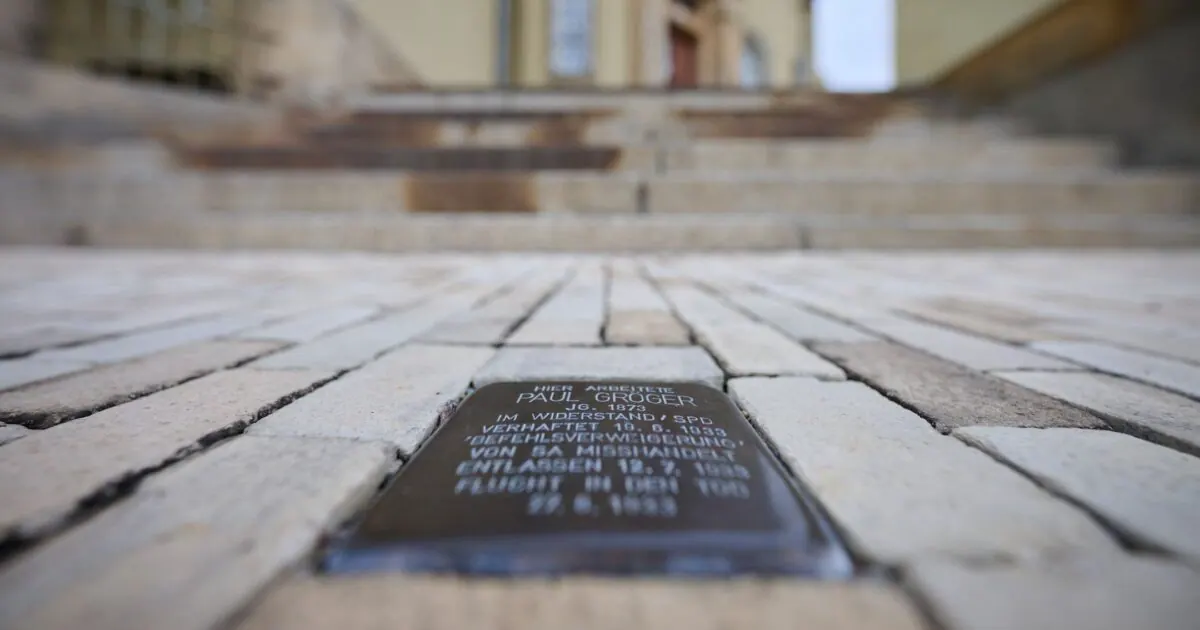
The German city of Heidenau has banned the installation of "stumbling stone" memorials to victims of the Nazis, sparking controversy and concern about the country's culture of Holocaust remembrance. The city council voted on September 25 to stop the installation of the small, engraved brass Stolpersteine in local sidewalks, citing disrespect for the victims. Instead, the council decided to use the town's North Cemetery for commemoration. The decision was jointly sponsored by the centre-right Christian Democratic Union and the far-right Alternative for Germany party.
The Stolpersteine project, initiated in 1992 by Cologne-based artist Gunter Demnig, aims to commemorate the victims of the Nazi dictatorship by placing engraved memorials in sidewalks in front of buildings where they once lived. There are currently over 116,000 such stones laid in 1,860 municipalities across Europe, mostly in Germany. The project has been met with both praise and criticism, with some opposing the memorials as disrespectful or detracting from national pride. The Alternative for Germany party has been known to challenge Germany's culture of Holocaust remembrance.
Critics of the Heidenau decision say it is a transparent attempt by extremists to suppress Germany's remembrance culture. Charlotte Knobloch, a 93-year-old Holocaust survivor and head of the Jewish community of Munich and Upper Bavaria, expressed her disappointment with the decision. She stated that removing places of remembrance from the cityscape is "absolutely the wrong approach." Knobloch also criticized the Christian Democratic Union for supporting the move, saying that the democratic centre should find a better solution.
The Heidenau decision is not the first town to act against the Stolpersteine project. The city of Munich voted in 2004 not to allow the installation of the stones in public spaces, siding with Knobloch. In the city of Pulheim, the project was blocked in 2011, but eventually allowed to proceed in 2022. Heidenau, with a population of 17,000, already has five Stolpersteine, and an application for 12 more had been submitted by the Alternative Culture and Educational Center.
The decision in Heidenau has sparked negative reactions from both proponents and detractors of the memorial concept. The New York-based March of the Living educational organisation called on the town to reverse its decision, stating that it raises a "deeply troubling question" about whether political interests are being allowed to push the memory of Nazi victims out of public life. Israel's ambassador to Germany, Ron Prosor, also expressed his shame over the decision, noting that members of his own family who were forced to flee the Nazis were commemorated by the stones in Berlin.
Some Jews, albeit a minority, object to the memorials because they say it's disrespectful to place them where they can be walked on and covered with leaves or trash. The stones have also been targets of vandalism. However, for many, the stumbling stones are a substitute for a grave, for ancestors whose place of death is unknown. Family members from around the world nominate sites and pay a nominal fee for materials.
The Alternative for Germany party's support for banning the project in Heidenau has sparked concern about potential moves to suppress official public commemoration of the Holocaust. The party's platform aims to promote "positive, identity-establishing aspects of German history," which critics say could mean reducing funding for educational trips to Holocaust sites and for the memorial sites themselves.
Key points
- Heidenau city council votes to block installation of Stolpersteine
- Decision sparks concerns about Holocaust remembrance
- Critics say move is attempt to suppress Germany's remembrance culture