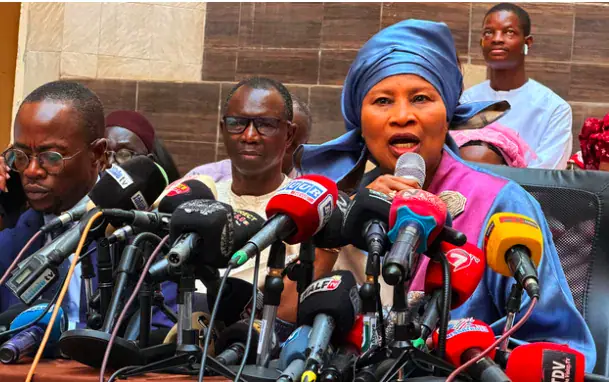
The Senegalese parliamentary group, Takku Wallu, has strongly criticized the ruling PASTEF party for rejecting the 2026 supplementary budget without debate. On November 3, the National Assembly examined the bill, but before any discussion, the majority party tabled a preliminary question, which was adopted by 109 votes to 20, with three abstentions. This move effectively blocked the bill from being debated, prompting Takku Wallu's president, Me Aïssata Tall Sall, to denounce the decision as a "forfaiture" and a "fleeing from debate".
According to Me Aïssata Tall Sall, the rejection of the supplementary budget without debate is a grave precedent. She noted that no group or deputy, except for a few who supported the preliminary question, was able to express their views on the bill. The Takku Wallu group had previously abstained from voting on the bill in the finance committee on October 23, citing concerns over the government's handling of the budget. Me Aïssata Tall Sall accused the majority party of using a "subterfuge" to block the debate.
The Takku Wallu group has expressed concerns over the significant changes made to the budget. The supplementary budget reduces the general budget by over 304 billion CFA francs and increases operating expenses by 535 billion CFA francs. Me Aïssata Tall Sall described these changes as prioritizing the government's "comfort" over investment in the country's development. The group also noted that the bill would drastically reduce investments by 555 billion CFA francs, which would impact the country's infrastructure development.
The Takku Wallu group has also criticized the government's handling of the budget deficit. According to Me Aïssata Tall Sall, the supplementary budget would increase the deficit to 7.6%, which is more than double the 3% threshold set by the West African Economic and Monetary Union (UEMOA). She accused the government of reneging on its commitment to development and prioritizing its own interests over those of the Senegalese people.
Me Aïssata Tall Sall described the crisis as "factitious" and attributed it to a personal rift between the President and the Prime Minister, Ousmane Sonko. She characterized the situation as a "dépit amoureux" (a French term for a lover's spat) that was holding the country hostage. The Takku Wallu group has rejected the idea of taking sides in the dispute and has called for the president to assume responsibility and dissolve the National Assembly.
The Takku Wallu group has proposed a way out of the crisis, calling for the dissolution of the National Assembly and the organization of early legislative elections. Me Aïssata Tall Sall argued that this would allow the Senegalese people to arbitrate the crisis and provide a democratic solution. She emphasized that the group was not afraid of going to the polls and facing the verdict of the electorate.
The crisis has significant implications for Senegal's development and stability. The Takku Wallu group's criticisms have highlighted the need for greater transparency and accountability in the management of the country's finances. As the situation continues to unfold, it remains to be seen how the government will respond to the group's proposals and whether a resolution can be found to the crisis.
Key points
- The Takku Wallu group has criticized the PASTEF party for rejecting the 2026 supplementary budget without debate.
- The group has proposed the dissolution of the National Assembly and early legislative elections as a way out of the crisis.
- The crisis has significant implications for Senegal's development and stability.