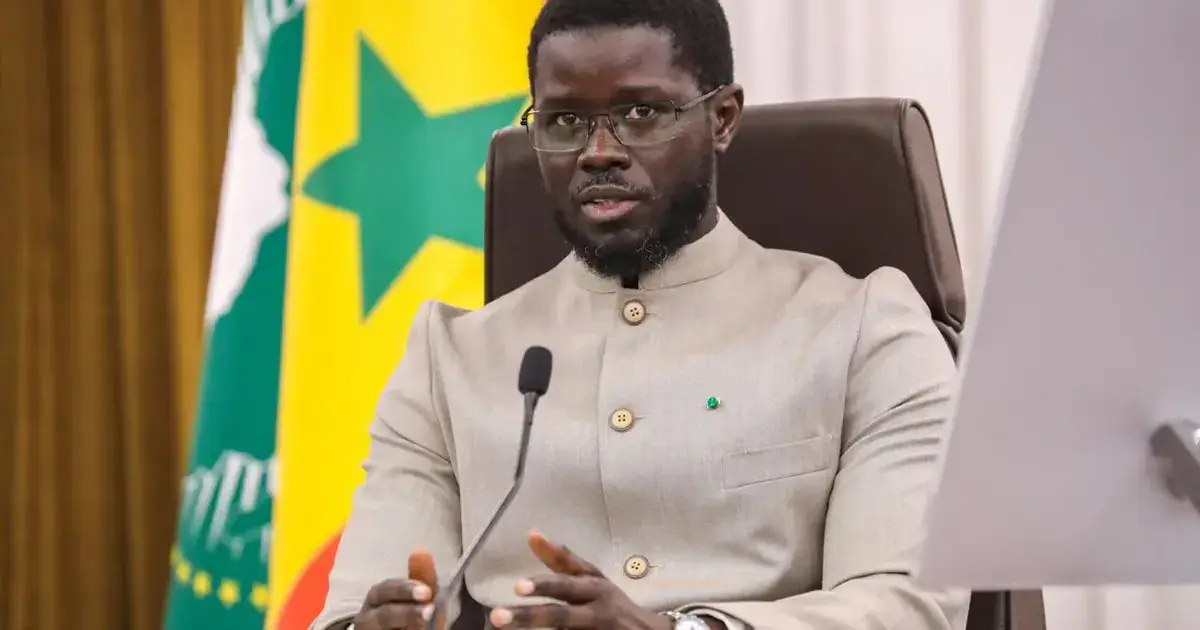
The Senegalese parliament has convened an emergency session to discuss a response to President Bassirou Diomaye Faye's decree implementing the 2026 rectified finance law. The decree, issued on November 19, 2026, was based on Article 68 of the Constitution and the expiration of the 60-day deadline after the bill's submission on September 18. The parliament's intercommission, comprising the Finance and Budget Control Committee and the Laws, Decentralization, Labor, and Human Rights Committee, will examine the decree's legality.
The parliament's move is in response to concerns raised by majority deputies who denounce the decree as an attempt to bypass parliamentary approval. The opposition parties, including the PASTEF, argue that the decree undermines the role of parliament and threatens the country's democratic institutions. According to Alioune Souaré, an expert in parliamentary law, the parliament can consider a resolution to censure the government or initiate a high treason proceeding against the President.
However, Souaré notes that a parliamentary resolution cannot annul or suspend an executive act, and the parliament's options for reversing the decree are limited. The only viable option, he argues, is for the parliament to pass a motion of no confidence in the government, which would target the Prime Minister and his team. This move would be a political sanction rather than a mechanism for annulling the presidential decree.
Other experts, including Théodore Monteil, agree that the parliament's margin of maneuver is limited. Monteil argues that the parliament cannot unilaterally suspend or annul a presidential decree, as this falls within the executive's sphere of authority. However, the parliament can use its power to pass a motion of no confidence in the government, which could potentially lead to a change in government.
According to Cheikh Omar Diallo, a political scientist, the PASTEF's strategy may be aimed at pushing the President to dissolve the parliament. Diallo notes that a high treason proceeding against the President would not necessarily lead to his removal from office, but it could create a constitutional crisis. The situation is complicated by the fact that the Senegalese Constitution does not clearly define high treason or provide a clear mechanism for prosecuting it.
The parliament's actions will have significant implications for the country's relations with the International Monetary Fund (IMF). The IMF has reportedly provided $3125 million in funding to Senegal, and the country's ability to meet its obligations to the IMF may be affected by the ongoing constitutional crisis. The parliament's decision will also have implications for the country's democratic institutions and the balance of power between the executive and legislative branches.
The situation remains uncertain, with many questions about the parliament's next steps and the potential consequences of its actions. One thing is clear, however: the parliament's decision will have far-reaching implications for Senegal's democracy, economy, and relations with international institutions.
Key points
- The Senegalese parliament is considering a response to President Bassirou Diomaye Faye's decree implementing the 2026 rectified finance law.
- The parliament's options are limited, and its decision will have significant implications for the country's democratic institutions and economy.
- The situation is complicated by the fact that the Senegalese Constitution does not clearly define high treason or provide a clear mechanism for prosecuting it.