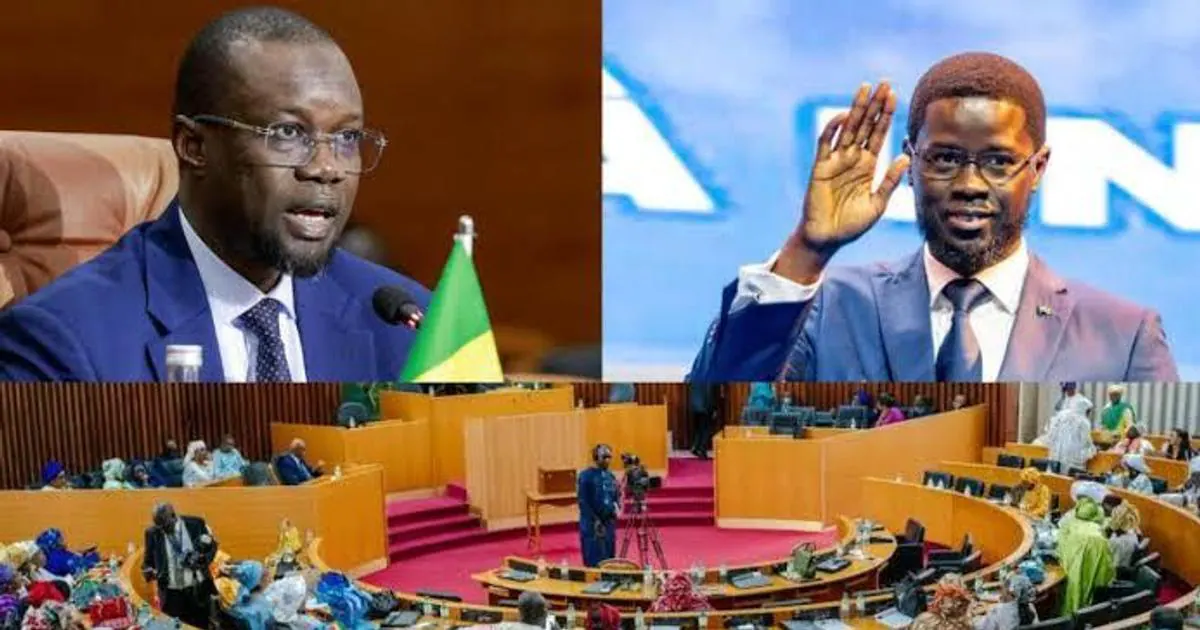
The Senegalese National Assembly has continued its standoff with the government over the framework for special funds. On October 1, 2026, the Assembly rejected amendments proposed by Justice Minister Me Moussa Sarr and the government's request for a blocked vote. The blocked vote would have allowed for a single vote on the entire text, considering only the executive's proposed or accepted amendments.
The government's proposed amendments were centered on several key issues, including Article 14 of the draft law. The government sought to revise certain formulations related to special credits or funds and their integration into the budgets of concerned institutions. Me Moussa Sarr argued that the text needed to conform to Directive No. 06/2009/CM/UEMOA and raised concerns about the designation of the ordonnateur responsible for executing these credits and the scope of parliamentary control.
The National Assembly's Commission on Finance and Budget had previously rejected the government's amendments. The Commission's draft law provides for the explicit inscription of special funds in budgetary allocations and a parliamentary control mechanism for their use. To address the sensitive nature of certain expenses, the draft law proposes a restricted control mechanism within the Finance Commission. Authorized parliamentarians would be able to control the use of these resources while preserving state secrets.
The debates were marked by heated exchanges between Minister Me Moussa Sarr and some deputies, including Amadou Ba from Pastef. Ba contested the government's strategy, suggesting it aimed to avoid a new referral to the Constitutional Council. He also advocated for a mechanism to verify the effective use of special funds, proposing a commission comprising magistrates from the Court of Auditors, the First President of the Supreme Court, and a deputy.
The National Assembly ultimately adopted the unique article of the draft organic law, rejecting the government's amendments. This vote maintains the text's focus on the framework and control of special credits or funds. The draft law aims to modify the organic law on finance laws to specify the applicable framework for special funds and their control mechanisms.
The adopted text provides for a specific inscription of special funds in budget allocations and a control mechanism for their use. The Finance Commission will be responsible for controlling the use of these resources, ensuring transparency while preserving state secrets. The Assembly's decision marks a significant step in the ongoing debate over special funds in Senegal.
The issue of special funds has sparked controversy in Senegal, with some arguing that they lack transparency and accountability. The National Assembly's adoption of the unique article is seen as a move towards greater transparency and control over the use of these funds. The government's rejection of the amendments has raised concerns about the potential for misuse of special funds.
Key points
- The Senegalese National Assembly has rejected the government's amendments on special funds, adopting a unique article that provides for greater transparency and control over the use of these funds.