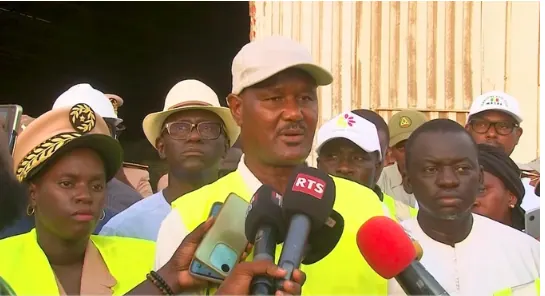
Senegal's Minister of Agriculture and Livestock, Dr. Cheikh Oumar Ba, has begun a crucial tour in the regions of Saint-Louis, Matam, and Louga to evaluate the progress of the 2026 agricultural campaign. The first stop was the Senegal River delta, a strategic area that ranked second nationally in terms of production during the previous campaign. The minister aims to assess the state of crops, listen to local stakeholders, and address obstacles hindering food sovereignty, a top priority for the head of state.
During his visit, Dr. Cheikh Oumar Ba acknowledged the enthusiasm around value chains and the dynamism of the private sector, particularly through initiatives by the Senegalese Food Authority (SFA). However, he highlighted significant challenges facing producers, including outdated infrastructure that requires urgent renewal and improved drainage. The high cost of production, with electricity alone accounting for 40% of operational costs, is another major concern. The government plans to address this through solarization and increased mechanization, leveraging expertise from Korean partners while avoiding competition with local investors.
The financial situation of actors in the agricultural sector is another major concern, with a total debt of 9 billion CFA francs. Consultations are currently underway to find sustainable solutions to this crisis. Dr. Cheikh Oumar Ba also noted that the commercialization rate remains insufficient, with only 11,000 to 12,000 tons sold compared to set objectives. To address this, he plans to work closely with his counterparts in Commerce and Finance, while strengthening the means of action for the Senegalese Agricultural Development Agency (SAED) to better support rural communities.
The minister's tour aims to identify and address the specific needs of each region, ensuring that the 2026 agricultural campaign meets its objectives. Dr. Cheikh Oumar Ba emphasized the importance of collaboration between stakeholders to overcome the challenges facing the sector. By working together, the government and local actors can develop effective solutions to improve production, processing, and commercialization.
The Senegalese government's commitment to food sovereignty is reflected in its efforts to support the agricultural sector. The 2026 agricultural campaign is a critical component of this strategy, with a focus on increasing production, improving infrastructure, and enhancing the livelihoods of rural communities. Dr. Cheikh Oumar Ba's tour is a key step in this process, providing valuable insights into the challenges and opportunities facing the sector.
The challenges facing Senegal's agricultural sector are multifaceted, requiring a comprehensive approach to address them. Dr. Cheikh Oumar Ba's initiative to engage with local stakeholders and identify solutions is a positive step towards improving the sector's performance. The government's plans to invest in infrastructure, mechanization, and solarization will help reduce costs and increase efficiency.
As the 2026 agricultural campaign progresses, the Senegalese government will continue to monitor its progress, making adjustments as needed to ensure its success. Dr. Cheikh Oumar Ba's tour is an essential part of this process, providing critical information to inform policy decisions and support the development of the agricultural sector.
Key points
- Dr. Cheikh Oumar Ba, Senegal's Minister of Agriculture and Livestock, has started a tour to assess the progress of the 2026 agricultural campaign.
- The minister aims to address obstacles hindering food sovereignty, a top priority for the head of state.
- The government plans to address challenges facing producers, including outdated infrastructure and high production costs, through solarization and increased mechanization.