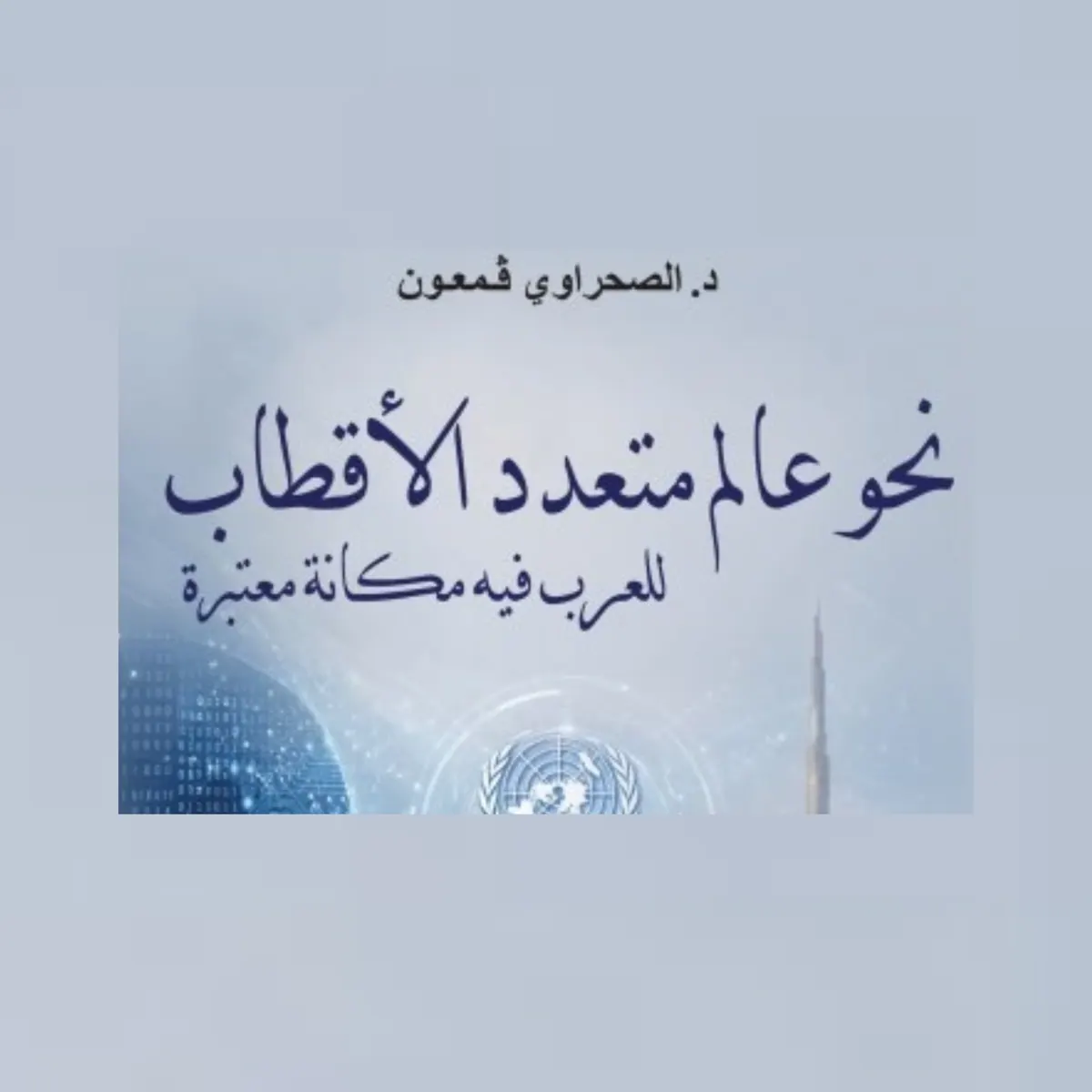
A new book by Sahrawi journalist and researcher Qamoum has been released, focusing on the future of international relations and ongoing strategic transformations. The book, titled "Towards a Multipolar World, Where Arabs Have a Considerable Place," was published by the Al-Atrash Publishing and Distribution Complex and consists of 285 pages. The author, in the book's introduction, cites Italian philosopher Antonio Gramsci, who said, "The old world is dying, and the new world is delayed in birth, and between them, monsters appear."
Qamoum argues that the world is currently undergoing significant transformations, shifting towards a multipolar world order that would put an end to the post-1990 unipolar era and the bipolar Cold War era following World War II. This new world order would allow for the participation of all civilizations without exclusion or excessive centralization, leading to a more just and humane world. The author devotes several chapters to examining China's rise as a model for other countries, particularly those in the Global South, including Arab nations.
The book aims to contribute to highlighting the strengths of the Arab world and overcoming the current crisis of ideas and culture of defeat and frustration. Qamoum, a specialist in international relations and former editor-in-chief of the International Relations and Diplomacy department at the Tunisian Africa News Agency, emphasizes the need for Arab countries to adopt a new, non-classical development model. This model would ensure integration into the ongoing transformations while relying on internal capabilities and regaining sovereignty over national resources.
Qamoum's work is a response to the failure of globalization theories, which have led to increased poverty and wealth disparities worldwide. The author believes that Arab countries must make efforts to catch up with emerging countries, particularly in the fields of artificial intelligence and sustainable development. The book provides an analysis of the current state of international relations and offers insights into the future of global politics.
The release of "Towards a Multipolar World" coincides with other cultural events in Tunisia, including a poetry writing competition organized by the French Institute in Tunis. The book's publication is also a significant contribution to the literary scene in Tunisia, where other authors have recently been recognized for their work, such as Mohamed Issa Al-Mu'adab, who won the Abdel Wahab Ben Ayad Literature Prize.
Qamoum's book is a valuable addition to the ongoing discussions about the future of international relations and the role of Arab countries in shaping the new world order. The author's expertise in international relations and diplomacy provides a unique perspective on the challenges and opportunities facing Arab nations in the current global landscape.
The book "Towards a Multipolar World" is a call to action for Arab countries to rethink their development models and strive for a more prominent place in the emerging multipolar world order. As the world continues to evolve, Qamoum's work provides a timely and thought-provoking analysis of the transformations underway and the potential for a more just and equitable world.
Key points
- The book "Towards a Multipolar World" by Sahrawi journalist Qamoum explores the future of international relations and strategic transformations.
- Qamoum argues that the world is shifting towards a multipolar order, allowing for the participation of all civilizations without exclusion.
- The author emphasizes the need for Arab countries to adopt a new development model and make efforts to catch up with emerging countries.