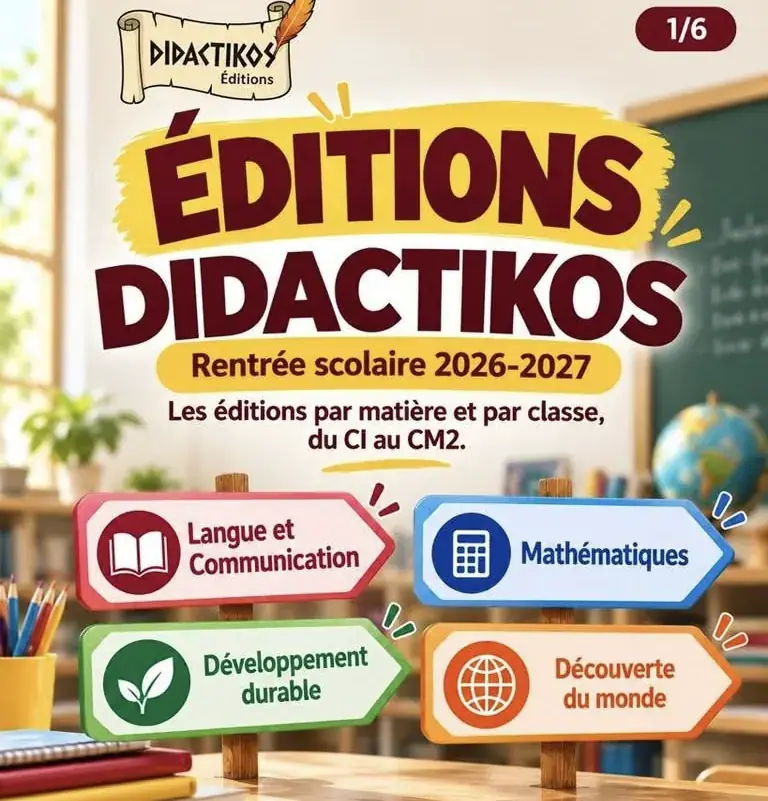
The rising cost of textbooks in Senegal has sparked concerns among parents, who say the expenses are burdening them as the new school year begins. The issue has prompted publishers to clarify how they set their prices. René SENE, commercial director of Didactikos, a major textbook publisher, explained that several factors contribute to the high costs. In an interview with PressAfrik, SENE highlighted the complexities of producing textbooks, including author remunerations, printing costs, and fluctuations in global paper prices.
According to SENE, each textbook involves at least seven to eight authors, with individually negotiated fees. This, combined with the costs of color printing and paper, significantly impacts the final price of the textbooks. For example, primary school textbooks can cost between 3,000 and 7,000 F CFA, with some sets reaching nearly 18,000 F CFA. Despite these challenges, SENE emphasized that Didactikos has made efforts to keep prices affordable, citing recent reductions in the prices of certain textbooks and activity books.
Didactikos has implemented significant price reductions in recent years to alleviate the financial burden on households. For instance, the publisher reduced the price of secondary school science textbooks from 8,600 F CFA to 3,900 F CFA. Similarly, activity books for primary school students are now capped at 2,050 F CFA, down from 3,500 F CFA previously. These moves aim to make textbooks more accessible to students and families.
However, SENE pointed out that intermediaries and informal speculators often drive up prices by taking advantage of the high demand during the back-to-school season. These middlemen apply surcharges that are beyond the control of publishers like Didactikos. As a result, SENE encouraged parents and schools to purchase textbooks directly from authorized distributors to benefit from recommended public prices.
The issue of high textbook costs has sparked a broader conversation about the education sector in Senegal. While publishers like Didactikos are working to maintain affordable prices, the influence of intermediaries and informal speculators remains a challenge. The Senegalese government and education stakeholders may need to address this issue to ensure that all students have access to the textbooks they need.
Liboire SAGNA, a representative of WalFadjri, noted that the concerns about textbook prices are part of a larger discussion about the cost of education in Senegal. As the government and education sector stakeholders work to address these concerns, publishers like Didactikos are likely to face continued pressure to keep prices affordable while maintaining the quality of their textbooks.
In conclusion, the high cost of textbooks in Senegal is a complex issue with multiple factors at play. While publishers like Didactikos are working to reduce prices and maintain affordability, the influence of intermediaries and informal speculators remains a significant challenge. By understanding the root causes of the problem, stakeholders can work together to find solutions that benefit students and families.
Key points
- Didactikos cites reductions in textbook prices, such as a drop from 8,600 to 3,900 F CFA for secondary school science textbooks.
Reporting sources
- WalFadjri · WalFadjri