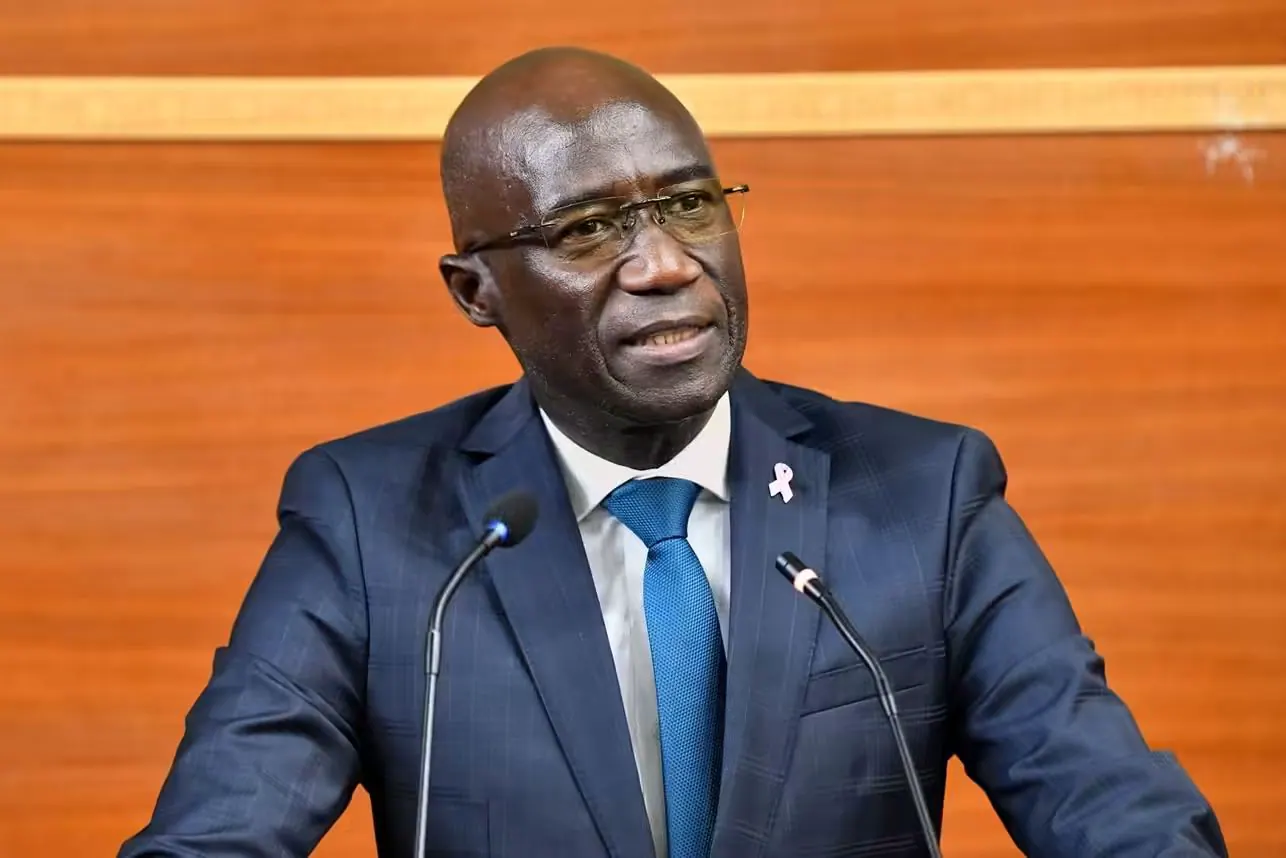
The Senegalese government has announced its intention to challenge a law recently voted on by the National Assembly. The law in question has sparked controversy, with the government expressing concerns over certain provisions. According to Minister of Justice Me Moussa Sarr, the government will submit the law to the Constitutional Council for review as soon as it is officially received.
The law was examined in the National Assembly, where the government had proposed three amendments. One of these was withdrawn after the Assembly incorporated observations from the Head of State. The remaining two amendments aimed to remove a specific mention of special credits in Article 14 and revise the parliamentary oversight mechanism. The government argued that these changes were necessary to avoid overlapping with the competencies of the Court of Auditors and ensure consistency with the Uemoa community directive.
Despite the government's efforts, the National Assembly rejected two of its amendments, prompting Minister Sarr to express disappointment. The government had requested a blocked vote on the text accompanied by its amendments, but this request was denied. The rejection of the amendments has led the government to seek review by the Constitutional Council, which will examine the law's constitutionality.
The controversy surrounding the law centers on the issue of special credits and parliamentary oversight. The government has emphasized the need for transparency and coherence with existing legal frameworks. By challenging the law in the Constitutional Council, the government aims to ensure that the legislation aligns with the country's constitutional provisions and international commitments.
The Constitutional Council's review will focus on the law's conformity with the Senegalese Constitution and international agreements. This process will provide an opportunity for the Council to examine the law's provisions and determine whether they are consistent with the country's legal framework. The Council's decision will have significant implications for the implementation of the law.
The government's decision to challenge the law reflects its commitment to upholding the rule of law and ensuring that legislation is consistent with constitutional principles. This move is seen as a positive step towards promoting transparency and accountability in the country's legislative process. The Constitutional Council's review will play a crucial role in resolving the controversy surrounding the law.
The outcome of the Constitutional Council's review will be closely watched by various stakeholders, including civil society organizations, opposition parties, and citizens. The Council's decision will have far-reaching implications for the country's governance and the implementation of laws. The government's challenge of the law demonstrates its dedication to ensuring that legislation is constitutional and in line with international standards.
Key points
- The Senegalese government will challenge a recently voted law in the Constitutional Council, citing concerns over specific provisions.