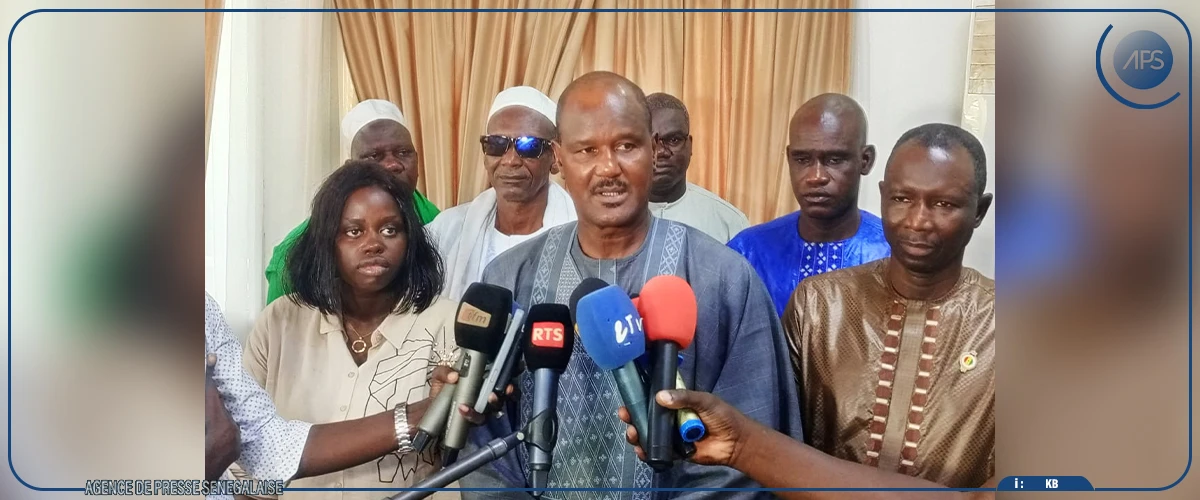
Senegal's Minister of Agriculture, Cheikhou Oumar Ba, has announced that the government is prioritizing crop diversification to help farmers maintain their income despite a deficit in rainfall. Speaking at a regional development committee meeting in Matam, northern Senegal, Ba emphasized the importance of adapting to climate challenges. The minister's comments come as part of a national tour to assess the 2026 agricultural campaign. Ba highlighted that crop diversification aims to ensure farmers have sufficient income to sustain their activities.
The government's strategy involves introducing various crops, including maize, cowpeas, watermelon, and cassava, in different regions. According to Ba, this approach has been implemented to mitigate the effects of deficit rainfall recorded in several areas of the country. The minister expressed confidence that with the right seeds, inputs, and technological packages, farmers will be able to improve their yields and income. He assured that the government is working closely with farmers' organizations to finalize the necessary support.
The meeting in Matam brought together producers and agricultural sector actors to discuss the challenges facing farmers. Key concerns included access to controlled water, outdated infrastructure, lack of agricultural equipment, and financing difficulties. Ba acknowledged these issues and pledged to address them, alongside measures to enhance marketing and support for producers. The minister's engagement with farmers reflects the government's commitment to finding solutions to the sector's problems.
Hybrid maize is a key component of the government's strategy to boost agricultural productivity. Ba announced that seeds, inputs, and technological packages will be made available to farmers once their needs are finalized with farmers' organizations. This support aims to help farmers adapt to the changing climate and improve their resilience. By diversifying crops and providing necessary resources, the government hopes to ensure a stable income for farmers.
The agricultural sector is crucial to Senegal's economy, and the government's efforts to support farmers are seen as essential to food security and economic growth. Ba's tour of the country aims to assess the progress of the 2026 agricultural campaign and identify areas for improvement. By engaging with farmers and stakeholders, the government can better understand the challenges facing the sector and develop targeted solutions.
The Senegalese government has been working to strengthen its agricultural sector, with a focus on improving productivity and supporting farmers. The country's agricultural strategy emphasizes the importance of adapting to climate change and promoting sustainable practices. By prioritizing crop diversification and providing necessary support to farmers, the government aims to ensure a stable and productive agricultural sector.
The government's efforts to support farmers have been welcomed by agricultural stakeholders. Farmers' organizations have expressed appreciation for the government's engagement and commitment to addressing the sector's challenges. As the 2026 agricultural campaign continues, the government's focus on crop diversification and support for farmers is expected to have a positive impact on agricultural productivity and income.
Key points
- The Senegalese government is prioritizing crop diversification to support farmers' income amid deficit rainfall.
- Hybrid maize is a key component of the government's strategy to boost agricultural productivity.
- The government is working closely with farmers' organizations to finalize the necessary support for farmers.