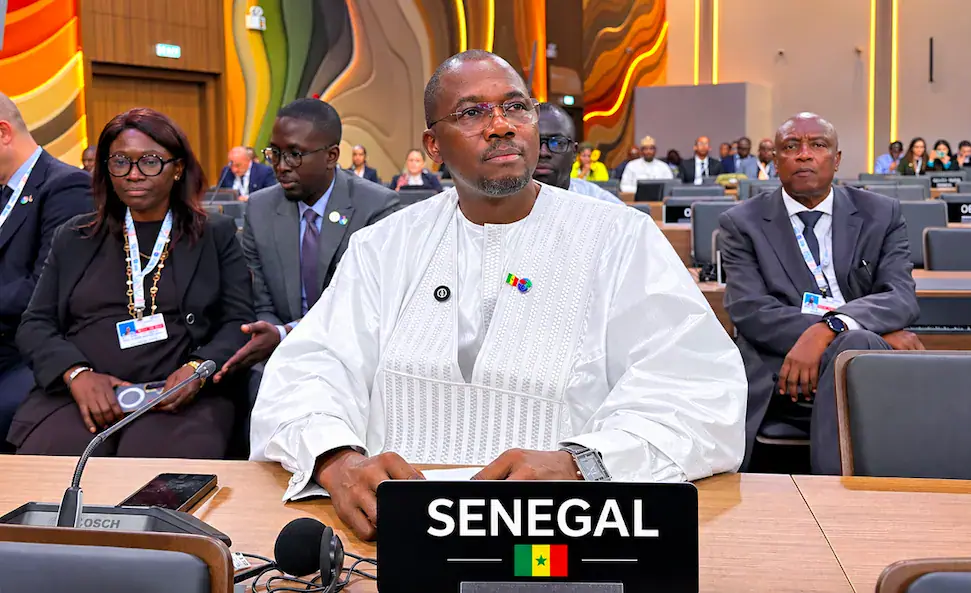
Senegal's Minister of Environment and Ecological Transition, Aliou Gori Diouf, recently attended a ministerial roundtable at COP31 in Antalya, Turkey, where he emphasized the importance of data and strategic intelligence for a transformative green transition in Southern countries. The minister highlighted that mastering data on natural resources is crucial for Senegal and other countries in the region. To address this, Senegal has joined the RAFA initiative, which focuses on data and strategic intelligence.
Minister Diouf outlined the priorities of his ministry, including the restoration of ecosystems, which he considers a top priority. The country's ecosystems are facing multiple threats, including coastal erosion, salinization of land, deforestation, desertification, and degradation of ecosystems. To address these challenges, the ministry plans to conduct research to generate data and information on the state of Senegal's natural resources, ecosystems, and biodiversity.
The ministry aims to establish a center for environmental intelligence, which will provide a platform for regularly updating information on the state of Senegal's natural resources and ecosystems. This initiative aligns with the RAFA project and will enable the country to make informed decisions about environmental conservation. Additionally, the ministry is committed to promoting clean and resilient cities, with a focus on urban planning, landscaping, and revegitation of urban spaces.
Coastal erosion is another major concern for Senegal, with the minister citing instructions from the head of state to accelerate efforts to assist coastal communities affected by erosion. The ministry is working to develop a comprehensive strategy to address this issue, which includes measures to protect coastal ecosystems and support affected populations. The minister emphasized that ecosystem restoration is critical to preserving the country's economy and way of life.
The ministry's priorities also include promoting sustainable agriculture, livestock, fishing, and forestry practices, as well as supporting climate-resilient infrastructure. Furthermore, Senegal aims to transition to a low-carbon economy, which the minister sees as an opportunity for job creation and wealth generation. The country is committed to reducing its carbon footprint and improving air quality, which will have positive impacts on public health.
Mobilizing resources is a significant challenge for Senegal, as the country faces difficulties accessing international climate finance. The minister acknowledged that the transition to a green economy requires substantial investment, but emphasized that it is a necessary step for sustainable development. Senegal is exploring strategies to mobilize domestic and international resources to support its environmental priorities.
The minister's priorities reflect the country's commitment to addressing environmental challenges and promoting sustainable development. By focusing on ecosystem restoration, climate resilience, and sustainable practices, Senegal aims to create a more environmentally conscious and sustainable future for its citizens. The country's progress in these areas will be closely watched by the international community, as it seeks to balance economic growth with environmental protection.
Key points
- Ecosystem restoration is a top priority for Senegal's Ministry of Environment and Ecological Transition.
- The country aims to establish a center for environmental intelligence to provide regular updates on the state of its natural resources and ecosystems.
- Senegal is committed to promoting sustainable practices and reducing its carbon footprint to improve air quality and public health.