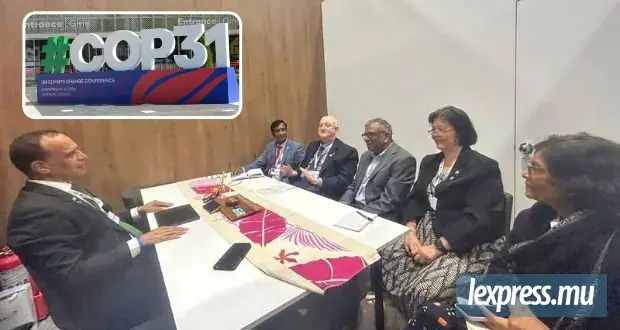
At the recently concluded COP31 in Antalya, Turkey, Mauritius intensified its diplomatic initiatives to defend the interests of small island developing states. The Mauritian delegation, led by Environment Minister Rajesh Bhagwan, pushed for concrete advancements on climate financing, adaptation, loss and damage, ocean protection, and recognition of climate responsibilities. These key issues are crucial for the survival and development of small island nations highly vulnerable to climate change impacts.
Minister Bhagwan engaged in multiple bilateral and international consultations to advance these critical issues. On November 19, he met with Vanuatu's Minister for Climate Change, Energy, Environment, and Disaster Management, Ralph Regenvanu. The meeting reaffirmed their shared priorities in addressing climate change consequences, including extreme weather events, sea-level rise, and limited access to international financing. Both countries emphasized the need for enhanced cooperation among island states to tackle these challenges.
During the meeting, Minister Bhagwan commended Vanuatu's initiative at the UN General Assembly and the International Court of Justice. He hailed the court's advisory opinion as a historic turning point, strengthening the legal and moral arguments of countries most exposed to climate change impacts. Bhagwan stressed the importance of joint efforts to exceed temperature limits and enhance adaptation, with financing being a crucial element.
The discussion also touched on the recognition of ecocide as a crime. Vanuatu's Minister Regenvanu congratulated Mauritius on criminalizing ecocide and expressed interest in learning from Mauritius' experience. Bhagwan offered to share Mauritius' expertise, and Vanuatu plans to introduce similar legislation. The two ministers also discussed the Chagos issue, with Vanuatu reiterating its support for Mauritius.
In addition to bilateral meetings, Minister Bhagwan participated in the Alliance of Small Island States' ministerial consultations. The group reviewed the central decision project presented by COP31's presidency, highlighting several significant gaps. These include the lack of a precise framework for financing adaptation and the persistent shortage of resources to compensate for climate-related losses and damages.
Mauritius also secured support from the Commonwealth Secretariat, with Minister Bhagwan meeting Dr. Suresh Yadav, Principal Director of the Climate Change and Oceans Directorate. As one of the first beneficiaries of the COP29 Presidency's Commonwealth Fund, Mauritius will receive grants of up to $200,000 per project to advance its climate initiatives. This funding will help transform national priorities into structured projects eligible for financing and technical assistance.
Housing and Lands Minister Shakeel Mohamed urged the international community to translate climate promises into tangible actions. With small island developing states facing significant financial constraints, accessing international funding and technical support is crucial for implementing effective climate adaptation and mitigation strategies. The Mauritian delegation's efforts at COP31 underscore the need for collective action and concrete commitments to address the pressing challenges of climate change.
Key points
- Mauritius calls for concrete climate action and financing at COP31
- Small island developing states face significant climate-related challenges
- International cooperation and funding crucial for effective climate strategies