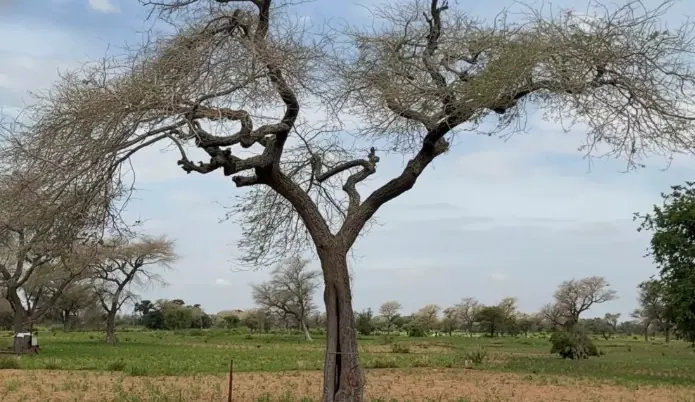
The 'Faidherbia albida' tree, commonly known as 'Kad' in Wolof, plays a crucial role in maintaining soil fertility in Senegal's peanut basin. Its leaves and residues enrich the soil with organic matter, while its root system helps preserve soil fertility. However, the tree is becoming increasingly scarce due to the degradation of the area's arboretum. According to a report by Radio France Internationale, the disappearance of the 'Faidherbia albida' could further compromise agricultural lands.
The 'Faidherbia albida' tree is easily recognizable in Senegal's peanut basin, with a height of 15 to 25 meters and a grayish-yellow bark. Its presence is not just a matter of landscape; it is a vital component of the local agricultural ecosystem. Paul Ndiaye, a farmer from Diohine, emphasizes the importance of the 'Kad' tree, stating that it is the most important tree in their fields. He notes that even with poor soil quality, having at least five 'Kad' trees in a field ensures a good harvest.
Experts from the Institute for Research and Development (IRD) have established a study site in the peanut basin to analyze the interactions between the 'Faidherbia albida' tree and crops. Cathy Clermont, an agronomist at IRD, is studying the effects of the tree on soil and crops. She notes that the tree has beneficial effects on annual crops grown nearby and that its impact can be felt up to 17 meters around the trunk.
The populations in the region are aware of the benefits of preserving the 'Faidherbia albida' tree and are making efforts to protect it. Aissatou Faye, representative of a women's movement in Diohine, suggests that pruning old 'Faidherbia' trees could help preserve them. However, she criticizes the restrictions imposed by the Water and Forestry agents, which make it difficult for the population to take action.
The disappearance of the 'Faidherbia albida' tree in the peanut basin highlights the need to protect this species and, by extension, the land and agricultural activities that depend on it. The tree's role in maintaining soil fertility is essential for agricultural productivity in the region. Efforts to preserve the tree and promote sustainable agricultural practices are necessary to ensure the long-term viability of agriculture in Senegal.
According to the Gabon Press Agency, the situation in Diohine and its surroundings is a pressing concern. The local population is working to preserve the remaining 'Faidherbia albida' trees, but more needs to be done to address the issue. The Senegalese government and international organizations must collaborate to develop effective strategies for protecting this vital species.
The preservation of the 'Faidherbia albida' tree requires a collaborative effort from local communities, governments, and international organizations. By working together, it is possible to protect this iconic species and ensure the long-term sustainability of agriculture in Senegal. The consequences of inaction could be severe, with potential impacts on food security and the livelihoods of local communities.
Key points
- The 'Faidherbia albida' tree plays a crucial role in maintaining soil fertility in Senegal's peanut basin.
- The tree is becoming increasingly scarce due to the degradation of the area's arboretum.
- Preserving the 'Faidherbia albida' tree is essential for ensuring the long-term viability of agriculture in Senegal.