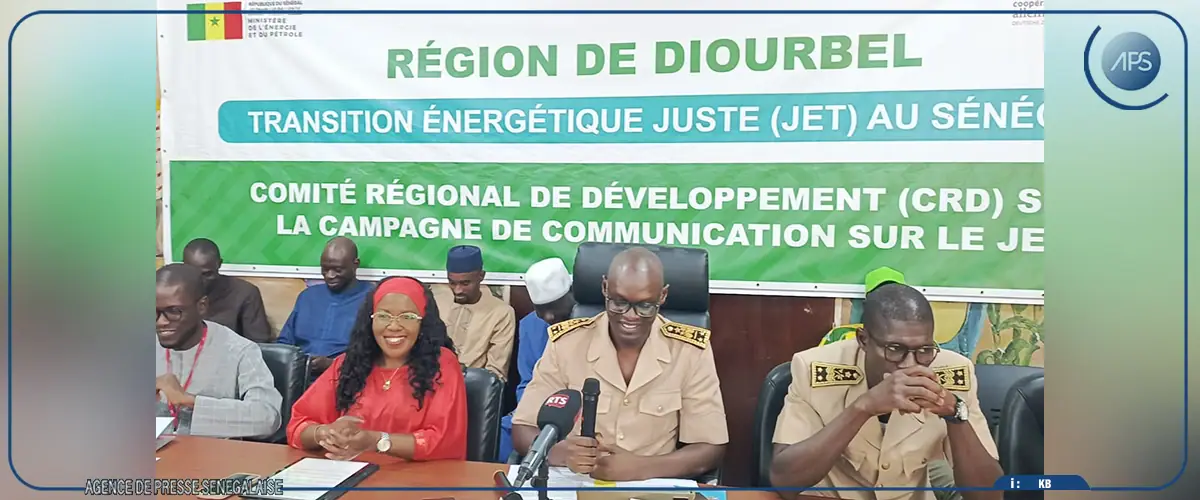
The president of Diourbel's departmental council, Khadim Guèye, has advocated for the development of biomass and solar energy to reduce the region's energy deficit and promote autonomy in public services. This call was made during a regional development committee meeting focused on the national communication campaign for a just energy transition. Guèye suggested generating electricity from peanut shells, dead wood, and other plant residues. He noted that previously, peanut processing factories in Senegal contributed to electricity production before this energy source was largely abandoned in favor of fossil fuels.
Guèye highlighted that the departmental council has invested approximately 300 million CFA francs over the past decade in solar equipment for daaras, market gardeners, and villages. The council plans to equip three health posts, three high schools, and three colleges with solar kits by December, as well as 30 additional daaras. This initiative aims to reduce the council's annual electricity bill, currently estimated at six million CFA francs, to less than one million CFA francs through the use of solar energy.
The departmental council's efforts focus on promoting renewable energy sources to address the region's energy needs. By leveraging solar and biomass energy, the council seeks to decrease reliance on fossil fuels and lower energy costs. Guèye emphasized the importance of state support in providing adequate financial resources to local authorities, enabling them to effectively address the energy needs of their populations.
Historically, Senegal's peanut processing factories played a significant role in electricity production. However, with the shift towards fossil fuels, this renewable energy source was largely neglected. The departmental council's current investments in solar and biomass aim to revive the use of local, sustainable energy sources. By doing so, the council hopes to contribute to a more environmentally friendly and cost-effective energy supply.
The council's investment in solar energy is part of a broader strategy to promote sustainable development in the region. By equipping public institutions with solar kits, the council aims to ensure a stable and reliable energy supply. This initiative is expected to have a positive impact on the region's economic and social development, particularly in rural areas where access to electricity is often limited.
Guèye's advocacy for renewable energy aligns with the Senegalese government's efforts to promote a just energy transition. The national communication campaign aims to raise awareness about the importance of transitioning to sustainable energy sources and reducing the country's reliance on fossil fuels. The departmental council's initiatives serve as a model for other regions in Senegal, demonstrating the potential for local authorities to drive sustainable development through innovative energy solutions.
The success of Diourbel's departmental council in reducing its energy costs and promoting renewable energy will depend on continued support from the state and other stakeholders. As the council moves forward with its plans, it is likely to face challenges related to funding, infrastructure, and public awareness. Nevertheless, the council's commitment to sustainable energy and its efforts to address the region's energy needs are expected to have a lasting impact on the local community.
Key points
- The Diourbel departmental council has invested 300 million CFA francs in solar equipment over the past decade.
- The council aims to reduce its annual electricity bill from six million CFA francs to less than one million CFA francs through the use of solar energy.
- The council plans to equip 30 additional daaras with solar kits by December as part of its renewable energy initiative.