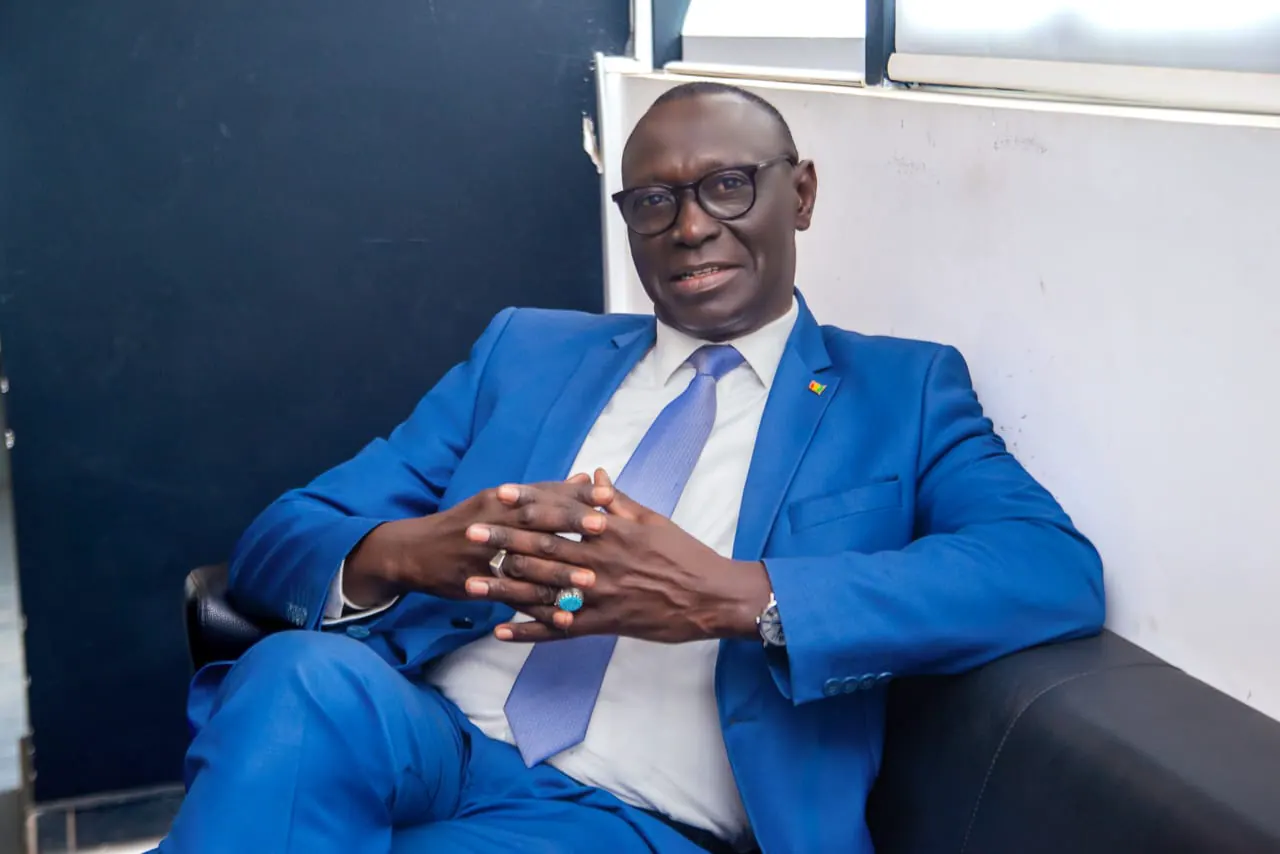
The recent meeting initiated by Prime Minister Ahmadou Al Aminou Lo with the national private sector marks a significant step towards a new era in public-private relations. As President of the Confédération Nationale des Employeurs du Sénégal (CNES), Abdel Kader Ndiaye welcomes this move, which focuses on six key areas: government-private sector dialogue, domestic debt, business environment, territorial attractiveness, implementation of the Agenda Vision Sénégal 2050, and private sector involvement in catalytic projects.
The CNES emphasizes the need for absolute frankness about the issues hindering Senegal's economic fabric. The organization's adherence to this dialogue is conditional on the immediate removal of obstacles blocking the development of Senegalese companies. According to Ndiaye, the economy can only thrive in a climate of peace, stability, and predictability, which is currently lacking due to tensions between the executive and legislative branches.
The CNES insists that an apaisement durable between the two branches is crucial for the private sector's growth. Any institutional blockage around crucial reforms would fragilize the entire private sector. Economic actors need a strong political cohesion to guarantee the smooth implementation of debt treatment plans, including the rapid materialization of the Loi de finances rectificative (LFR) and the consolidation of the technical agreement with the International Monetary Fund (IMF).
Apuring the domestic debt is a key aspect of Senegal's economic recovery. The CNES stresses that the state's accumulated unpaid debts weigh heavily on local companies' cash flow and paralyze investment. While welcoming the government's commitments, Ndiaye recalls that rapid settlement of this debt is essential for injecting liquidity and restoring market confidence.
The CNES also calls for urgent action to address the situation at the Port Autonome de Dakar, which is characterized by arbitrary facturations and unfair competition practices. The organization denounces these dérives, which severely penalize operators who respect the rules. The port, a vital financial and logistical hub, can no longer remain a zone of uncertainty and commercial injustice.
Furthermore, the CNES advocates for clarifying the concept of economic patriotism and securing national enterprises. The organization supports the government's plan to introduce a law on economic patriotism but stresses that it must define the legal status of national enterprises to promote endogenous development. This clarification should be accompanied by the full application of local content in strategic sectors.
Finally, the CNES emphasizes that two priorities are essential for the private sector's competitiveness: professional training and financing. The organization is ready to co-construct Senegal's future with the government, based on an equitable, transparent partnership focused on unlocking the country's productive potential. The CNES expects that the state will ensure a more effective role for the Autorité de Régulation de la Commande Publique (ARCP) to correct the imbalance in favor of external operators.
Key points
- The CNES calls for institutional calm to drive economic reforms in Senegal.
- The organization emphasizes the need to apure domestic debt to boost economic recovery.
- The CNES advocates for urgent action to address the situation at the Port Autonome de Dakar.