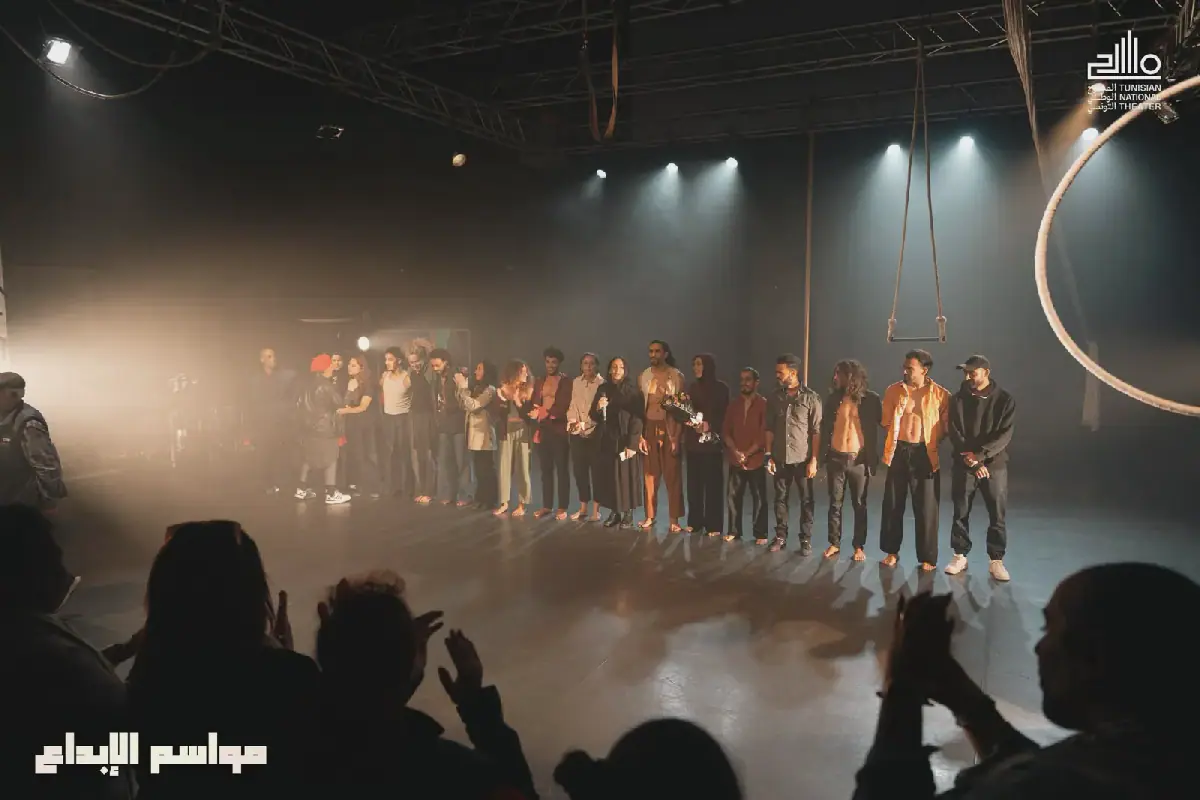
The Tunisian National Theater Festival "Moasam Al-Ibdaa" recently took place at the Al-Halfawine Palace, a venue steeped in history and cultural significance. As part of the festival's fourth edition, a performance titled "Kana Huna Mundhu Al-Bidaya" was presented, featuring 13 artists who used their bodies to explore the relationship between the artist and the place. The performance was a dynamic journey through the memories of the space, with the artists using movement and physicality to convey a sense of connection to the past.
The performance was designed and choreographed by Huda Al-Riyahi, with training and direction provided by Faten Al-Jbali, Abdelkader Al-Jandubi, Sarah Al-Arfawi, and Mohamed Dhia Al-Gharbi. The artists used their bodies to interact with the space, creating a sense of tension and balance that reflected their search for identity and connection to the place. Through their movements, the artists sought to express the relationship between memory and physical experience, and how a place can retain the imprint of those who have passed through it.
The performance was based on the idea of a new generation of artists returning to the Al-Halfawine Palace, 15 years after another generation had passed through the same space. The artists involved did not necessarily know the history of the walls they were moving among, but their bodies seemed to be retrieving the effects of previous presence and interacting with a memory that was not part of their personal experiences. This interaction between the inherited and the present raised questions about the relationship between memory and physical experience.
The festival "Moasam Al-Ibdaa" aims to promote Tunisian theater and provide a platform for artists to showcase their work. The event features a range of performances, including plays, dance, and music. The festival also includes workshops and training sessions, providing opportunities for artists to develop their skills and learn from others. This year's edition was particularly notable for its focus on exploring the relationship between the artist and the place.
The performance "Kana Huna Mundhu Al-Bidaya" was a highlight of the festival, showcasing the talents of a new generation of Tunisian artists. The use of physicality and movement created a unique and powerful language that conveyed the artists' search for identity and connection to their cultural heritage. The performance was well-received by audiences and critics alike, with many praising its innovative approach to storytelling and its thought-provoking themes.
The festival also paid tribute to the late Tunisian theater director, Tofigh Al-Jbali, who made significant contributions to the development of Tunisian theater. Al-Jbali's work had a lasting impact on the Tunisian theater scene, and his legacy continues to inspire new generations of artists. The festival's organizers hope that events like "Moasam Al-Ibdaa" will continue to promote Tunisian theater and provide a platform for artists to showcase their talents.
The festival concluded with the presentation of awards to participating artists and the premiere of a new play, "Chayka," directed by Moez Merabt. The event was attended by a range of cultural and artistic figures, who praised the festival's efforts to promote Tunisian theater and provide opportunities for artists to develop their skills. The festival's success reflects the ongoing vitality of Tunisian theater and the creativity of its artists.
Key points
- The performance "Kana Huna Mundhu Al-Bidaya" explored the relationship between the artist and the place, using physicality and movement to convey a sense of connection to the past.
- The festival "Moasam Al-Ibdaa" provided a platform for Tunisian artists to showcase their work and develop their skills.
- The event paid tribute to the late Tunisian theater director, Tofigh Al-Jbali, who made significant contributions to the development of Tunisian theater.