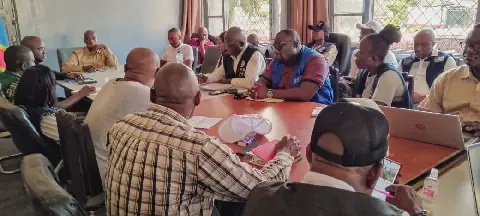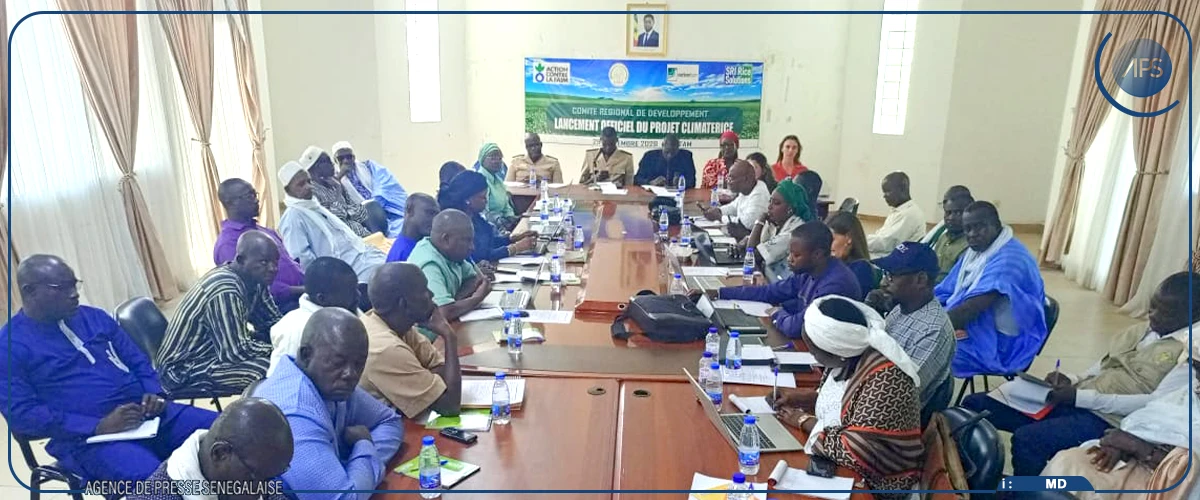
The Climate Rise project, implemented by Action Against Hunger (ACF) in collaboration with private sector partners, has targeted 20 rice producer organizations in Senegal's Matam region. These organizations cultivate over 500 hectares of agricultural land and will benefit from the project's experimental practices aimed at improving yields, reducing chemical use, and limiting methane emissions. The project promotes sustainable agriculture and supports producers in adopting "agroecological and agro-responsible" practices.
The project addresses pressing issues related to chemical fertilizer use and water management in the Senegal River valley's rice-growing areas. According to Fall Ndiaye, representative of ACF Senegal, the initiative provides support to producers through input supplies, soil preparation training, and water management sessions. The pilot phase covers 20 producer organizations and over 500 hectares, aiming to test and evaluate the proposed practices' effects on crops and production conditions.
Ndiaye reports that producers have shown significant interest in the initiative, with initial observations indicating differences in vegetative development between conventional and project-introduced practices. However, she emphasizes that these observations must be monitored over time to allow for a comprehensive evaluation of the results. The project's unique aspect lies in its connection to the carbon market, which could value reduced methane emissions from certain rice-growing practices.
The project's collaboration with the carbon market provides an additional dimension to the support offered to producers. Ndiaye explains that the goal is to balance agricultural production objectives with reducing the environmental impact of rice cultivation. Mame Mbaye Diagne, regional director of the Senegal River Delta Land Development and Exploitation Company (SAED) in Matam, highlights the company's role in providing advisory services to project stakeholders.
Diagne's company supports the identification of concerned agricultural perimeters, producer capacity building, and necessary work identification for project implementation. The producer selection process was conducted in collaboration with partners and SAED's operational setup. The selection of 20 producer organizations covered over 500 hectares, and Diagne notes that other producers, not part of the pilot phase, have expressed interest in joining future project stages.
The interest shown by non-pilot producers could be considered if the initiative is extended to other Senegal River valley perimeters. The Climate Rise project demonstrates potential for replication and scaling up, given the enthusiasm from producers and the benefits of sustainable agricultural practices. As the project progresses, its impact on rice production, environmental sustainability, and the livelihoods of Matam region farmers will be closely monitored.
The project's outcomes will likely inform future agricultural development initiatives in Senegal and the wider region. With its focus on sustainable agriculture and carbon market integration, Climate Rise has the potential to contribute significantly to Senegal's agricultural sector development and environmental sustainability goals. Key stakeholders will continue to engage with the project, assessing its effectiveness and exploring opportunities for expansion.
Key points
- The Climate Rise project aims to improve rice yields while reducing chemical use and methane emissions.
- The project supports producers in adopting sustainable agricultural practices, with a focus on agroecology and agro-responsibility.
- The initiative's connection to the carbon market provides an additional dimension to the support offered to producers.