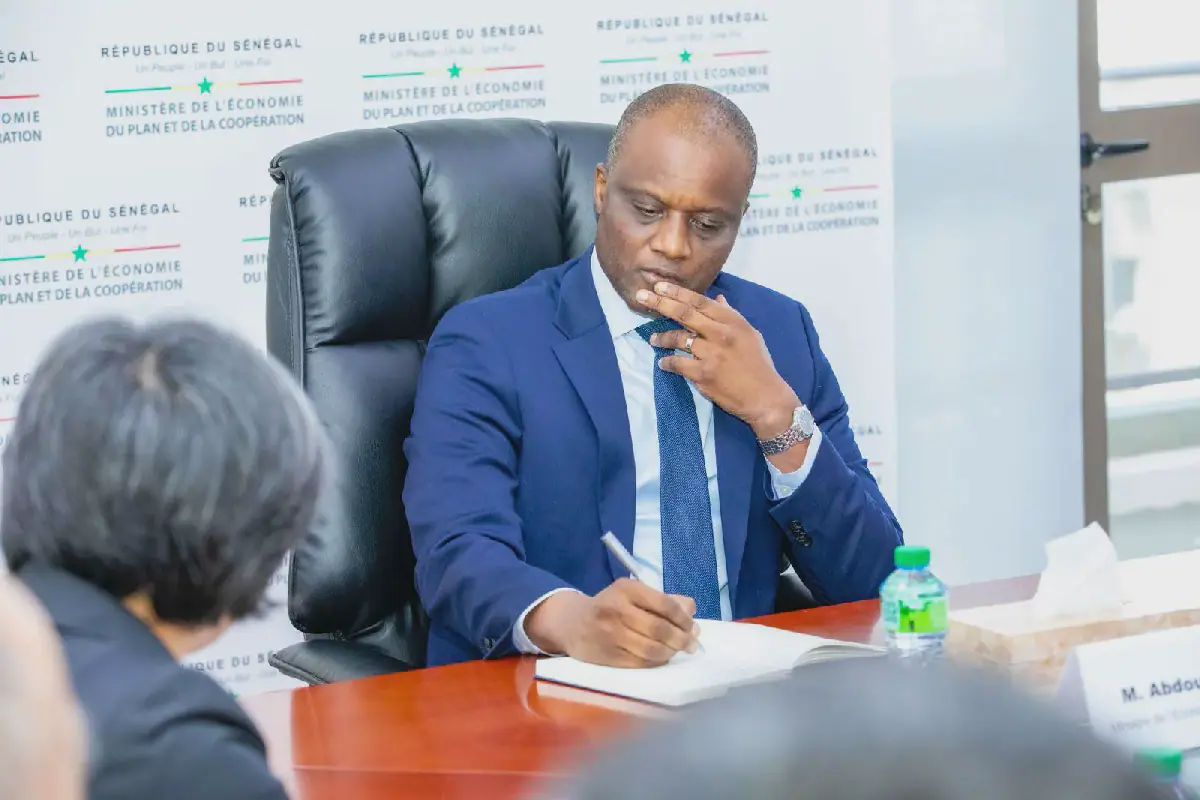
The budgetary battle between Senegal's Executive and Legislative branches has intensified, with the former minister Abdourahmane SARR weighing in on the issue. In a recent statement, SARR addressed the position of the International Monetary Fund (IMF) and potential solutions to the current political impasse. He emphasized that the IMF is not an obstacle, having previously approved the 2026 Rectified Finance Law (LFR) and the 2027 Finance Law (LFI).
According to SARR, the objectives of the LFR 2026 and LFI 2027 align with Senegal's priorities, focusing on budgetary sustainability, protecting vulnerable populations, and preserving priority spending. He noted that a favorable outcome is possible without adhering to initial forecasts, citing the potential for a lower budget deficit in 2026 and a manageable deficit in 2027.
SARR believes that a compromise between the government and parliament can be achieved, leading to a better consolidation of public finances. However, he stressed that this compromise must be accompanied by a strong political will, involving a joint commitment from the Executive and parliamentary majority to ensure the IMF program is approved.
In the face of institutional deadlock, SARR suggested a radical solution, invoking the sovereignty of the people. He proposed dissolving the National Assembly on December 2, allowing the people to decide on the impasse and enabling Senegal to secure an IMF program. SARR emphasized that Senegal should not be governed through juridical means when the sovereign people can make their own decisions.
SARR expressed confidence in Senegal's financial situation, stating that the country's debt is viable and can be refinanced without restructuring. He highlighted the positive impact of the Petroleum Revenue Stabilization Fund (PRES), which has contributed 300 billion to the 955 billion in budgetary revenues collected between 2025 and 2026.
The former minister concluded that 2027 should be the year of implementation for Senegal's National Development Strategy (SND), with public finances in order. He expressed optimism, stating that Senegal is already on a positive trajectory. SARR's comments come as the country navigates a critical period in its economic development.
The situation remains uncertain, with the National Assembly's response to SARR's proposals yet to be seen. The government's reaction to his suggestions, particularly the possibility of dissolving the Assembly, will be closely watched. As Senegal seeks to secure an IMF program, the country's economic future hangs in the balance.
Key points
- Abdourahmane SARR urges compromise between Senegal's Executive and Legislative branches to resolve the budget impasse.
- SARR suggests dissolving the National Assembly if a resolution is not reached, invoking the sovereignty of the people.
- The former minister expresses confidence in Senegal's financial situation, citing a viable debt and a positive impact from the Petroleum Revenue Stabilization Fund.