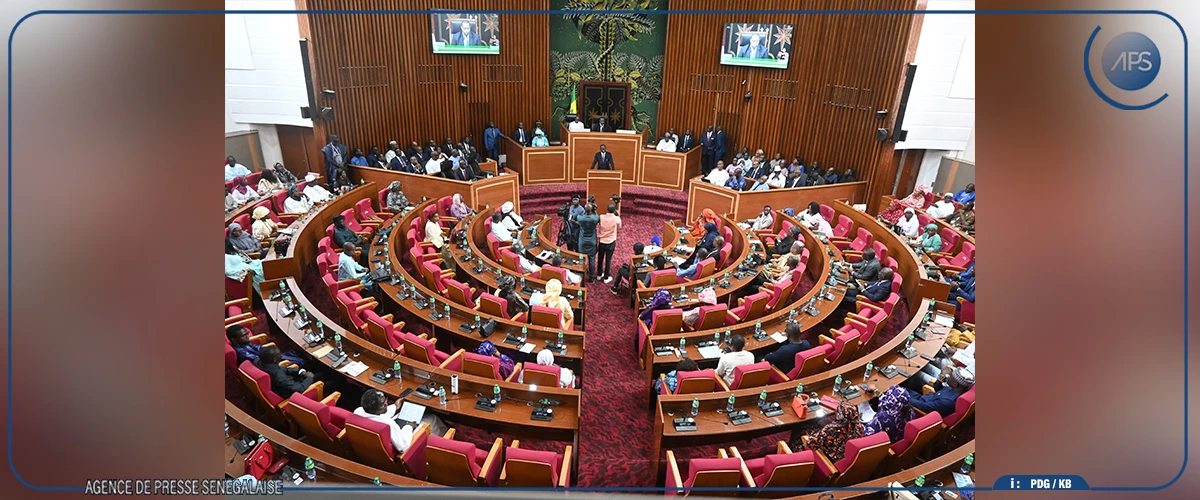
The Senegalese parliament has sent back a bill to extend the validity of biometric ID cards to committee, citing concerns over the implications of the move. The bill, which aimed to modify the article 3 of the law n° 2016-09 of March 14, 2016, was set to be debated in the plenary session on Tuesday. However, the president of the commission of laws, decentralization, labor, and human rights, Abdoulaye Tall, requested that the bill be sent back to committee for further examination.
According to Abdoulaye Tall, the arguments presented by the Minister of Interior, Mouhamadou Makhtar Cissé, were not sufficient to justify the extension of the validity of the biometric ID cards. Tall expressed concerns that the move could have implications for the electoral process, citing the clause on force majeure and the potential for delays. He also raised questions about the cost and financing of the new cards, as well as the impact on the diaspora.
The biometric ID card, which is valid for 10 years, was set to expire, and the government had proposed an extension of its validity. However, the opposition and some lawmakers have expressed concerns that the move could be used to manipulate the electoral process. The commission of laws, decentralization, labor, and human rights will now review the bill and address the concerns raised by Tall and others.
The decision to send the bill back to committee was supported by the vice-president of the National Assembly, Ismaïla Diallo. Diallo acceded to Tall's request, stating that the examination of the bill would be postponed until further notice. The move is seen as a significant development in the country's preparations for upcoming elections.
The biometric ID card is a crucial document for Senegalese citizens, and its validity has significant implications for various aspects of life, including voting. The government has argued that the extension of the validity of the cards is necessary to ensure that citizens can continue to access essential services. However, opponents argue that the move could be used to disenfranchise certain groups.
The Senegalese government has been working to improve the country's electoral process and ensure that citizens have access to essential documents. The biometric ID card is part of a broader effort to modernize the country's identification system and enhance security. However, the controversy surrounding the bill has raised concerns about the government's intentions.
The committee will now review the bill and address the concerns raised by lawmakers. The government will need to provide more convincing arguments to justify the extension of the validity of the biometric ID cards. The decision to send the bill back to committee is a significant development in the country's preparations for upcoming elections.
Key points
- The Senegalese parliament has sent back a bill to extend the validity of biometric ID cards to committee amid concerns over election timing and cost.