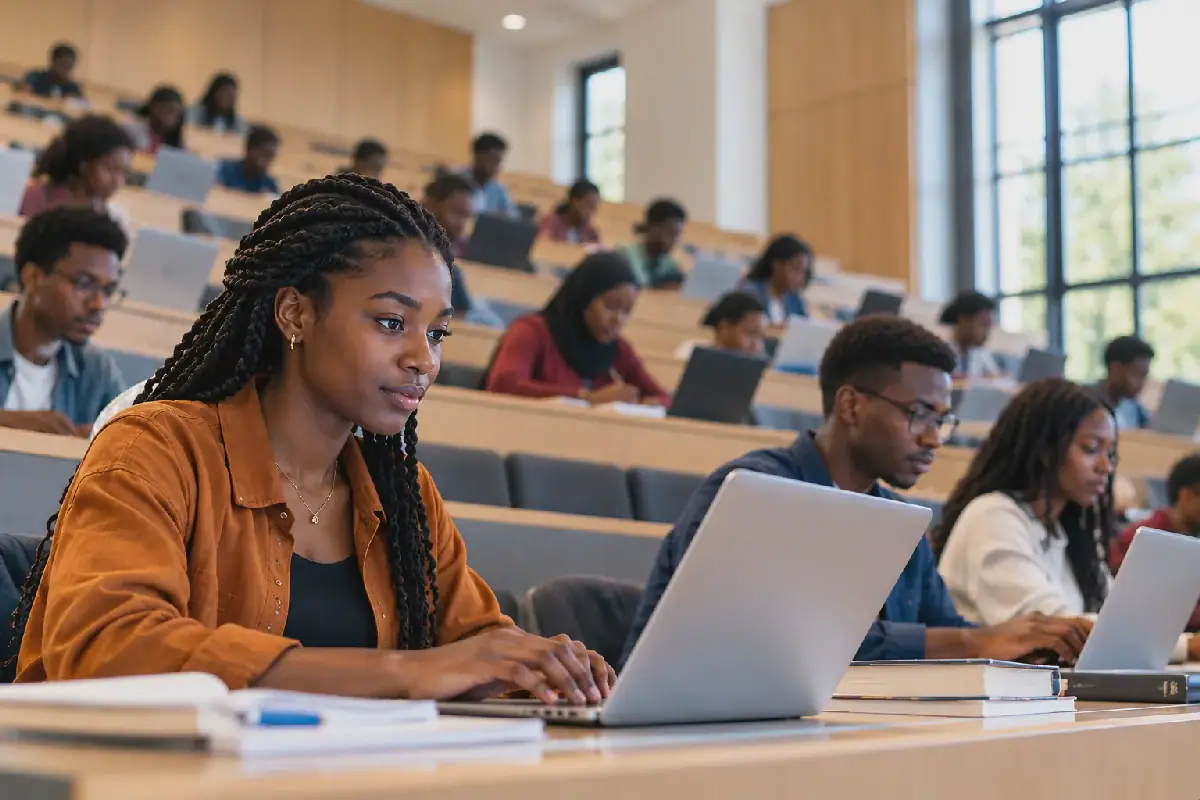
The National Academy of Sciences and Technology of Senegal (ANSTS) recently convened a two-day workshop in Dakar to discuss the use of generative artificial intelligence in higher education and research. The meeting brought together academics, researchers, experts, and players from the digital ecosystem to produce proposals for a harmonized national framework. According to Professor Elhadj Babacar Ly, director of innovation, valorisation, intellectual property, and technology transfer, generative AI tools have become part of university practice without common rules, leading to concerns about costs, digital sovereignty, and promotion of national languages.
The current state of generative AI adoption in Senegalese universities reveals substantial use without a framework. Professor Ly highlighted four shortcomings: no explicit policies within institutions, a lack of certified skills, scattered initiatives, and dependence on foreign platforms. He called for three essential tools: a national guide on the use of generative AI, a skills framework, and a train-the-trainers programme. These proposals aim to regulate and train, rather than suffer or forbid the use of generative AI. The ministry has pledged to support the implementation of the workshop's conclusions.
A national guide and training for trainers are being considered to address the shortcomings. Professor Ly emphasized that the responsibility is clear: to regulate and train. The proposals have yet to be adopted, and no timetable or budget has been announced. The ANSTS workshop aims to move beyond individual initiatives toward a coherent national approach, ensuring that harmonizing practices does not mean making them uniform.
Early findings from a survey of university stakeholders conducted by UN-CHK show substantial use of AI to prepare courses, design assessments, and write reports. Professor Moussa Lo, a full member of the National Academy of Sciences and Technology, presented these findings, stressing the need for a harmonized approach. The adoption of generative AI in Senegalese universities was already under discussion in October, when Professor Abdallah Cissé called for a rethink of teaching methods.
The National Academy of Sciences and Technology of Senegal is also working to set up a national artificial intelligence centre in Diamniadio as part of its cooperation with Korea. This centre aims to promote AI development and research in Senegal. However, no timetable or budget has been announced for this project.
The workshop's recommendations, expected at the end of the two days, had not been made public at the time of writing. The ANSTS's efforts to establish a national framework for generative AI in higher education reflect the growing importance of AI in Senegalese universities. As the use of generative AI continues to spread, the need for a coherent national approach becomes increasingly pressing.
The initiative to develop a national framework for generative AI in higher education is part of a broader effort to promote science and innovation in Senegal. President Diomaye Faye has called for a pact national founded on science and innovation, highlighting the importance of these sectors for the country's development. The ANSTS's work on generative AI is a step toward achieving this goal.
Key points
- The National Academy of Sciences and Technology of Senegal is working on a national framework for generative AI in higher education to address concerns about costs, digital sovereignty, and promotion of national languages.