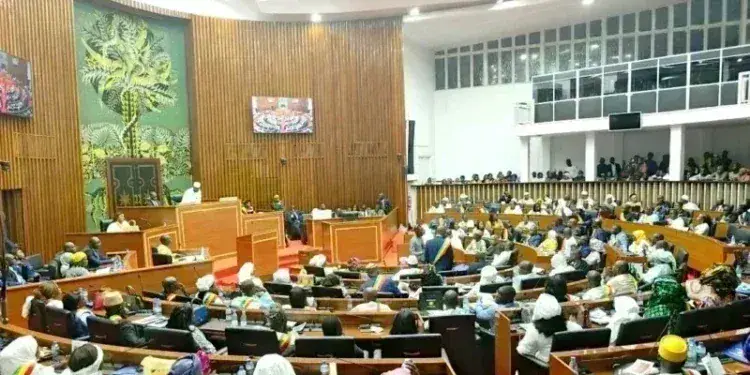
In a significant development, Senegal's Finance and Budget Control Commission has rejected the government's proposed 2027 budget, citing major inconsistencies and a lack of transparency. The commission, led by Honorable Alphonse Mané Sambou, met with Finance Minister Cheikh Diba and his delegation to discuss the budget. The rejection includes the budgets for the Presidency, Prime Minister's office, Parliament, and high courts.
The proposed budget for the Presidency was set at 223.86 billion FCFA, up from 204.54 billion FCFA in 2026. The Assembly's budget was set at 21.11 billion FCFA, down from 22.30 billion FCFA the previous year. The Commission also rejected the budgets for the Constitutional Council, Supreme Court, and Court of Accounts. The overall budget rejection includes the sections on state revenue and public debt management.
According to the Commission, the rejection was due to a lack of sincerity and inconsistencies in the financial projections presented by the government. The parliamentarians demanded additional documents, including the 2025 Settlement Law, which has not been submitted. The Commission insisted that the credibility of the debate depended on the transmission of these essential annexes.
The Finance Commission's decision is a significant setback for the government, which had presented the budget as a key part of its economic strategy. The rejection highlights the challenges the government faces in securing support for its financial plans. The Commission's concerns about transparency and consistency reflect broader issues with budget management in Senegal.
The government will need to revisit its budget proposals and address the concerns raised by the Finance Commission. This may involve revising the budget to better align with the Commission's expectations and providing additional documentation to support the financial projections. The situation underscores the importance of effective communication and collaboration between the government and parliament in managing the country's finances.
The rejection of the budget has implications for Senegal's economic planning and may impact the government's ability to implement its development agenda. The Finance Commission's decision highlights the need for greater transparency and accountability in budget management. The government must work to address these concerns and find a solution that aligns with the needs of the country.
The incident reflects the complex dynamics between the government and parliament in Senegal, particularly regarding budget management. The Finance Commission's rejection of the budget underscores the challenges of balancing competing interests and priorities in the country's economic planning. The outcome will depend on the government's ability to address the Commission's concerns and find a compromise that works for all parties involved.
Key points
- The Finance Commission rejected the 2027 budget due to inconsistencies and lack of transparency.