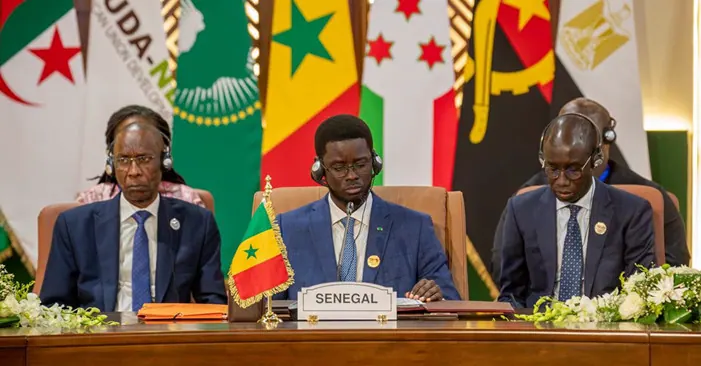
Senegal's President Bassirou Diomaye Faye recently attended the 8th Meeting of Coordination of the African Union and Regional Economic Communities in El-Alamein, Egypt. There, he represented the Economic Community of West African States (ECOWAS) and highlighted key priorities for accelerating African integration. The meeting brought together representatives from various regional economic communities to discuss issues such as the African Continental Free Trade Area (AfCFTA), infrastructure development, free movement, security, and the proposed launch of a single currency, the ECO, in 2027.
President Faye emphasized the need to accelerate the implementation of the AfCFTA, citing progress made so far, particularly in strengthening its legal framework. However, he stressed that outstanding agreements need to be finalized, and strategies should focus more on the intra-African market. Faye believes that economic integration can only be effective with local transformation of resources and increased industrialization on the continent. This approach aims to enhance the capacity of African economies to create value, develop industries, and increase trade among countries.
The development of infrastructure was also highlighted as crucial for facilitating trade and economic integration. President Faye recalled initiatives launched at previous summits on financing African infrastructure, held in Dakar in 2014 and 2023, and in Luanda in 2025. He advocated for a corridor approach to better connect territories and facilitate trade between countries. This infrastructure development should help reduce obstacles to the movement of goods and strengthen the coherence of regional economic networks.
On the monetary front, President Faye announced the planned launch of the ECO currency in 2027, as decided by the Conference of Heads of State and Government of ECOWAS. This move is part of a broader set of measures aimed at facilitating trade, strengthening the customs union, and improving mechanisms for the circulation of goods. Other initiatives mentioned include the continuation of the ECOWAS Trade Liberalization Scheme and the Interconnected System for the Management of Goods in Transit.
In addition to economic integration, President Faye emphasized the importance of collective security and regional dialogue. He presented ECOWAS initiatives on preventive diplomacy, political dialogue, and trans-border cooperation. The region is working to develop its collective security mechanisms, including the operationalization of an anti-terrorism brigade and the decentralization of the regional early warning system. ECOWAS also aims to maintain dialogue with the Alliance of Sahel States to preserve links between populations, integration gains, and security cooperation.
The Senegalese president also highlighted several social initiatives, including scholarships for young girls from disadvantaged families, financing for women transforming agricultural products, and efforts to combat obstetric fistula. These actions reflect the desire to make regional integration a project that benefits not only institutions but also directly impacts populations. President Faye called for better articulation between the second ten-year plan of Agenda 2063 and national development plans, as well as sustainable financing for African integration.
The implementation of the AfCFTA, the ECO currency, infrastructure development, and security cooperation are key projects that will influence West Africa's ability to consolidate its integration. President Faye's priorities aim to strengthen coherence between national policies, regional strategies, and continental objectives. The success of these initiatives will depend on the ability of African countries to work together and translate political ambitions into operational mechanisms that facilitate trade, stimulate production, and enhance cooperation between states.
Key points
- Senegal's President Bassirou Diomaye Faye emphasizes the need for accelerated implementation of the African Continental Free Trade Area (AfCFTA) and the development of infrastructure to facilitate trade and economic integration.
- The planned launch of the ECO currency in 2027 is a key milestone in the region's economic integration efforts.
- President Faye highlights the importance of collective security and regional dialogue in addressing security challenges in the region.