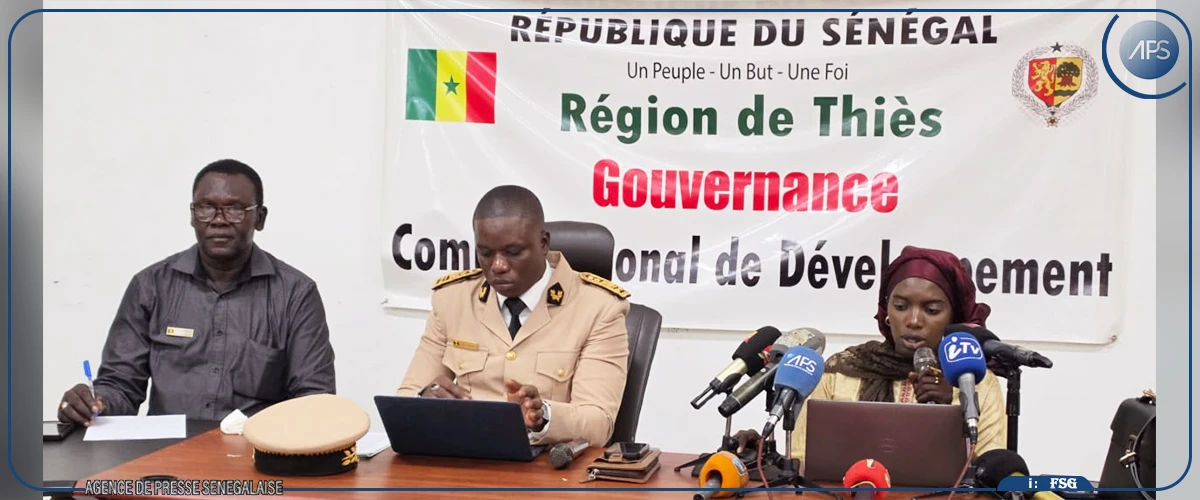
The Senegalese government has introduced the Solution durable à la pollution plastique au Sénégal (SOLUPLAST) project, aiming to contribute to reducing plastic pollution in the country. The project was presented to various stakeholders in the Thiès region, including elected officials and representatives of territorial administration. SOLUPLAST seeks to reduce plastic pollution at its source by limiting single-use plastic packaging in the food and beverage sectors.
The project, which will run for five years, aims to avoid 33,000 tonnes of CO2 equivalent, reduce 9,000 tonnes of toxic waste, and benefit around 4,144,056 people, including 2,041,255 women and 2,102,802 men. It is funded by the Global Environment Facility (GEF) and implemented by the Directorate of Environmental Regulation and Control (DIREC) of the Ministry of Environment and Ecological Transition. SOLUPLAST focuses on prevention and reduction at source, promoting a circular economy and innovation.
Plastic pollution is a significant environmental challenge globally, with the world producing over 430 million tonnes of plastic per year, according to the United Nations Environment Programme (UNEP). In Senegal, despite efforts to address the issue, cities, rural areas, coastlines, and watercourses remain heavily affected by plastic waste accumulation. The country's law on preventing and reducing the environmental impact of plastic products, promulgated in January 2020, aims to mitigate the problem.
The SOLUPLAST project seeks to tackle the structural causes of plastic pollution by promoting sustainable alternatives and encouraging the development of circular economic models. It targets the reduction of unnecessary or problematic plastic products and promotes innovation. Ababacar Sadikh Niang, deputy governor, emphasized that the project is a concrete and inclusive response to the plastic pollution challenge.
The Thiès region, a strategic hub and major economic, industrial, tourist, and agricultural centre, is not spared from the issue of plastic pollution. The region's situation is characterized by blocked water drainage channels, degraded marine and terrestrial ecosystems, threatened livestock, and compromised public health. Niang called on stakeholders, particularly local authorities, to seize the opportunity offered by the SOLUPLAST project to address environmental and ecological challenges.
The project aims to engage various stakeholders, including community-based organizations, civil society, women's and youth associations, and the private sector. Niang encouraged local authorities to use the SOLUPLAST project as a tool to strengthen their local waste management systems. The project's success will depend on the active participation of all stakeholders.
The launch of the SOLUPLAST project demonstrates Senegal's commitment to transitioning to a circular economy, reducing carbon emissions, and protecting the environment. The project's impact is expected to be significant, with benefits extending to a large segment of the population. The government's efforts to address plastic pollution are ongoing, with the SOLUPLAST project being a key initiative in this regard.
Key points
- The SOLUPLAST project aims to reduce plastic pollution in Senegal by limiting single-use plastic packaging in the food and beverage sectors.