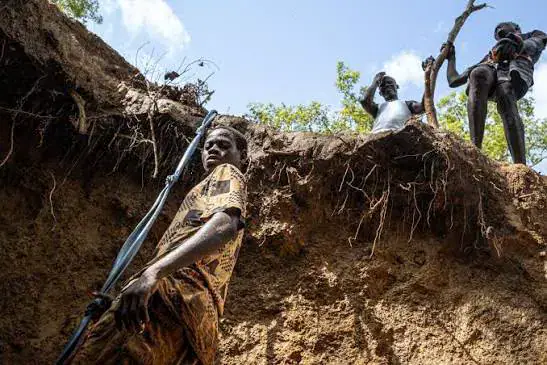
The Senegalese government has initiated a program to formalize artisanal gold mining, a significant economic and social activity in the southeastern regions of Kédougou and Tambacounda. The program aims to better regulate the industry, protect workers, and increase economic benefits. According to estimates from the National Agency of Statistics and Demography, artisanal gold production in the region could reach four tons per year. However, the industry is currently plagued by clandestinity, insecurity, and environmental degradation.
The government has identified 55 landslides that resulted in 92 deaths between 2025 and 2026, highlighting the urgent need for reform. To address these issues, the government has introduced several measures, including biometric identification of miners, issuance of secure professional cards, and the creation of secure corridors for mining activities. As of November 8, 2026, 27,452 people had been registered in the two regions, with 22,081 in Kédougou and 5,371 in Tambacounda.
The program also involves the creation of seven pilot corridors to secure mining activities, with an investment of 488.4 million FCFA. The corridors will be equipped with basic infrastructure, including water boreholes, solar installations, sanitation facilities, places of worship, and childcare centers. The goal is to improve working conditions, reduce accidents, and facilitate monitoring of mining activities. The government aims to establish 35 such corridors by 2029.
Another key aspect of the program is the creation of a national gold trading center, which will help track artisanal gold production, improve knowledge of sold volumes, and reduce clandestine trade. The government hopes that better organization of the industry will increase public revenue and more equitable distribution of wealth generated by gold mining.
The program's success will depend on the cooperation of artisanal miners, effective control by regulatory services, and the ability to balance artisanal mining with environmental protection and community development. The challenge is to formalize the industry without excluding miners, secure activities without undermining livelihoods, and ensure that Senegal's eastern gold benefits those who produce it.
The Senegalese government has taken a significant step towards formalizing artisanal gold mining, a sector that has long been plagued by informality and environmental degradation. The program's impact will be closely watched, as it aims to balance economic development with social and environmental concerns.
The formalization of artisanal gold mining in Senegal is a complex task that requires careful planning and implementation. The government's efforts to improve working conditions, increase economic benefits, and reduce environmental damage will be crucial in determining the program's success.
Key points
- The Senegalese government aims to formalize at least 50% of artisanal gold miners by 2029.
- The program includes the creation of secure corridors for mining activities, equipped with basic infrastructure.
- A national gold trading center will be established to track artisanal gold production and improve knowledge of sold volumes.